




💛 A quick favor, if you've got a second.
We're really happy that you chose to read one of our stories and sincerely hope you'll stick around to read more. We took our paywall down — for now — but that won't last forever, and when the gate goes back up, we'd love for you to already be on the inside.
It's free. So please enter your email here and don't forget to like and follow us on all of your favorite Social Media platforms!
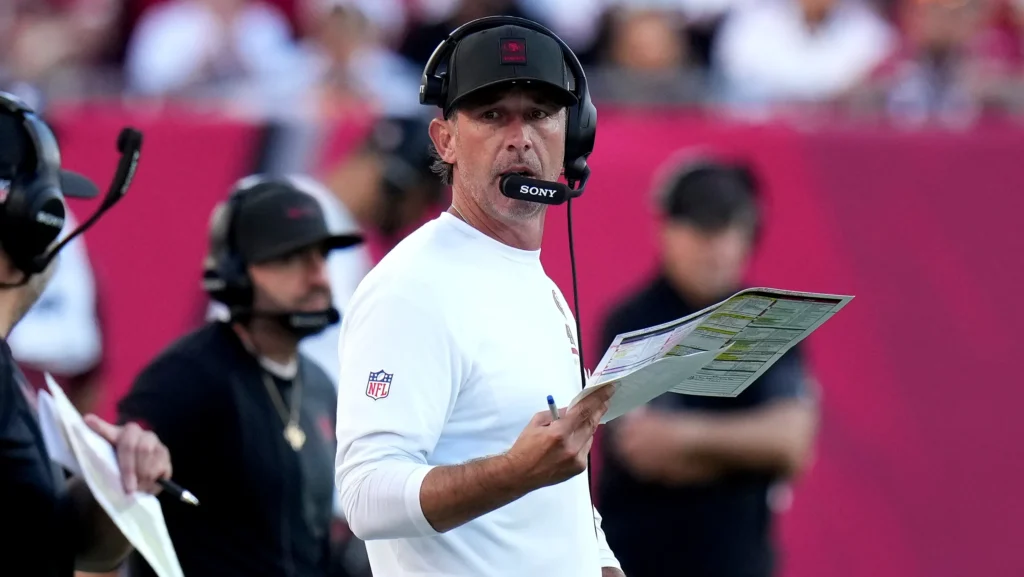
San Francisco 49ers head coach Kyle Shanahan announced his return to the sideline for the team’s preseason opener against Tennessee this week, marking his first game since sustaining multiple injuries in a July automobile accident. The crash left Shanahan with broken ribs, a fractured nose, a broken left hand, facial lacerations and a concussion. Speaking at his first press conference since the incident, for which he has accepted full responsibility, Shanahan revealed the collision has fundamentally altered his perspective on vehicle safety technology and player health protocols.
Shanahan, a longtime Tesla owner of nine years, disclosed that the accident has reshaped his views on the manufacturer’s autopilot feature. He acknowledged dropping his phone and reaching across the vehicle while operating on autopilot, an action that forced him to look away from the road. Though he maintains confidence in the technology overall, Shanahan emphasized that drivers cannot relinquish full attention to automated systems. “It’s a partnership driving. You don’t just turn it over to a computer,” he told reporters, noting that responsibility for safe operation ultimately rests with the driver regardless of technological assistance.
Beyond vehicle safety, Shanahan’s injury experience has granted him deeper insight into concussions affecting his players throughout the NFL season. The coach acknowledged previously treating concussion protocols as logistical matters managed by medical staff rather than fully understanding the player experience. He described his own persistent symptoms—headaches and fatigue—as eye-opening regarding the severity athletes endure during recovery. “I definitely can relate to how scary it is when you don’t know if you will feel right again,” Shanahan said, noting he now recognizes that medical classifications like “mild” or “severe” represent individual experiences rather than standardized outcomes.
Shanahan continues his own recovery, still wearing a cast and managing lingering effects from the crash. He reported that noise sensitivity, particularly loud music at practice, has largely resolved, leaving primarily headaches and fatigue as remaining symptoms. Despite not yet reaching full health, the coach is prepared to resume full coaching duties as the preseason begins.


More Stories
Indiana coach Curt Cignetti tells restless Hoosiers fans not to gripe over 38-0 win
Packers Running Back Josh Jacobs Placed on Commissioner Exempt List Pending Misdemeanor Charges
Denver Broncos Linebacker Jonathon Cooper Placed on Commissioner’s Exempt List Amid Domestic Violence Charges