



💛 A quick favor, if you've got a second.
We're really happy that you chose to read one of our stories and sincerely hope you'll stick around to read more. We took our paywall down — for now — but that won't last forever, and when the gate goes back up, we'd love for you to already be on the inside.
It's free. So please enter your email here and don't forget to like and follow us on all of your favorite Social Media platforms!
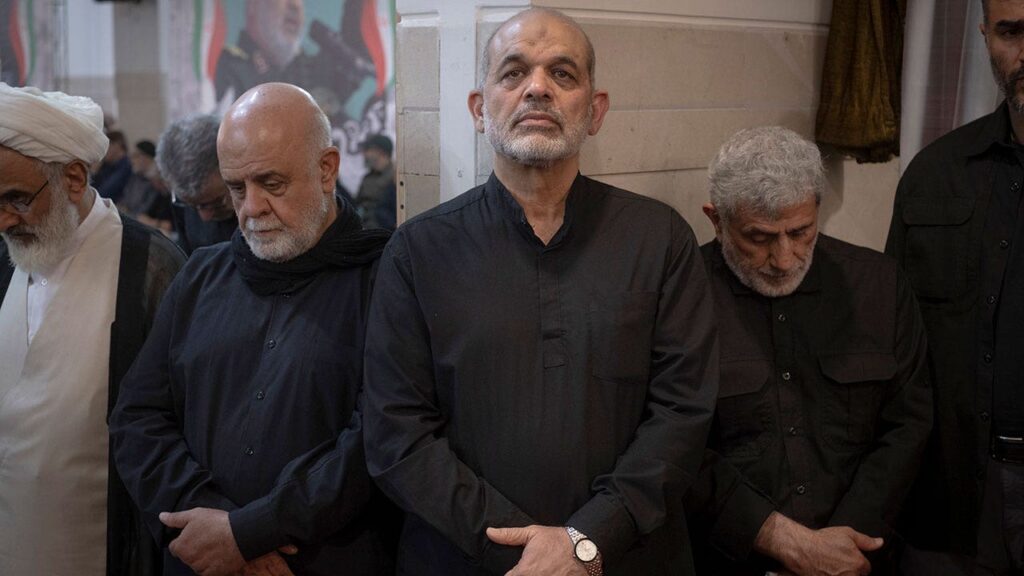
Iran’s newly installed supreme leader Mojtaba Khamenei formalized the appointment of six high-ranking military officials on Monday, completing a significant overhaul of Tehran’s armed forces command structure following months of strikes by American and Israeli forces. The decree, released through official channels and distributed via social media, addresses vacant leadership positions across the military, the Islamic Revolutionary Guard Corps and the Basij militia organization. A counterterrorism analyst cautioned that the timing and rhetoric of these announcements suggest Tehran is bracing for an extended period of hostilities rather than pursuing diplomatic resolution with Washington.
Dr. Omar Mohammed, director of the Antisemitism Research Initiative at George Washington University’s Program on Extremism, told Fox News Digital that the deliberate use of English-language announcements on social media platform X, coinciding with negotiations between Iranian and Omani officials regarding a proposed shipping corridor through the Strait of Hormuz, represents a calculated strategic sequence. “Tehran is establishing its command structure as a fact on the ground before it signs anything,” Mohammed stated. The appointment language specifically references the deaths of predecessors as resulting from attacks by the “Zionist-American enemy,” formally designating the United States as a co-belligerent in official state documentation.
Khamenei appointed Ali Abdollahi as armed forces chief of staff and Kioumars Heydari as deputy chief. Ahmad Vahidi received the position of Islamic Revolutionary Guard Corps commander with the rank of major general, while Mostafa Izadi was named deputy IRGC commander, Ali Azmaei as IRGC Navy commander and Hossein Taeb as Basij commander. Vahidi has been instructed to maintain preparedness for major offensive operations, while Abdollahi will oversee integration of the General Staff into the wartime joint command structure.
According to Mohammed, Iran’s institutionalization of its wartime command apparatus contradicts typical post-conflict patterns. “States exiting a conflict dismantle their wartime command arrangements, but Iran is now institutionalizing its own,” he noted, emphasizing that the decrees reflect leadership preparing for prolonged confrontation rather than settlement.
Multiple newly appointed commanders carry histories of international sanctions or terrorism-related allegations. Vahidi is the subject of an Interpol Red Notice requested by Argentina regarding his alleged role in the 1994 bombing of the AMIA Jewish community center in Buenos Aires that claimed 85 lives. Taeb, a former IRGC Intelligence Organization chief, appears on the U.S. Treasury Department sanctions list, designated in 2010 for involvement in violent crackdowns following Iran’s disputed 2009 presidential election.
Heydari faced U.S. sanctions in 2022 after the Treasury Department documented his public acknowledgment of his forces’ role in responding to Iran’s November 2019 protests, during which hundreds of demonstrators were killed. The European Union has also imposed sanctions on Heydari. The military reorganization follows a series of targeted strikes that eliminated several senior Iranian officials since the conflict began.
Ayatollah Ali Khamenei, who served as supreme leader since 1989, was killed in a February 28 strike. His son Mojtaba was selected as the new supreme leader in March. Ali Larijani, then secretary of Iran’s Supreme National Security Council, and Gholamreza Soleimani, Basij commander, were killed in strikes on March 17. Questions persist regarding Mojtaba Khamenei’s health and public visibility.
President Masoud Pezeshkian claimed Monday that he conducted a nearly seven-hour meeting with Khamenei, only the second publicly disclosed meeting since the new supreme leader assumed office. Khamenei has not made a public appearance since assuming leadership in March and is believed to have sustained injuries in the February 28 strike that killed his father.
The military reconstruction has not extended to Iran’s intelligence sector, according to Mohammed. The IRGC Intelligence Organization and its counterintelligence division lack announced leadership, and Iran currently has no permanent defense or intelligence ministers. These unfilled positions reflect the intelligence failures that enabled the decapitation of the regime’s upper ranks in February.


More Stories
Colombia backs Trump security push while limiting U.S. role in anti-gang operations
Chicago Mayor Issues Executive Order Requiring Contractor Diversity Disclosures and ICE Ties Reporting
Federal Prosecutors Convene Special Grand Jury to Investigate D.C. Schools’ Attendance and Graduation Practices