

💛 A quick favor, if you've got a second.
We're really happy that you chose to read one of our stories and sincerely hope you'll stick around to read more. We took our paywall down — for now — but that won't last forever, and when the gate goes back up, we'd love for you to already be on the inside.
It's free. So please enter your email here and don't forget to like and follow us on all of your favorite Social Media platforms!
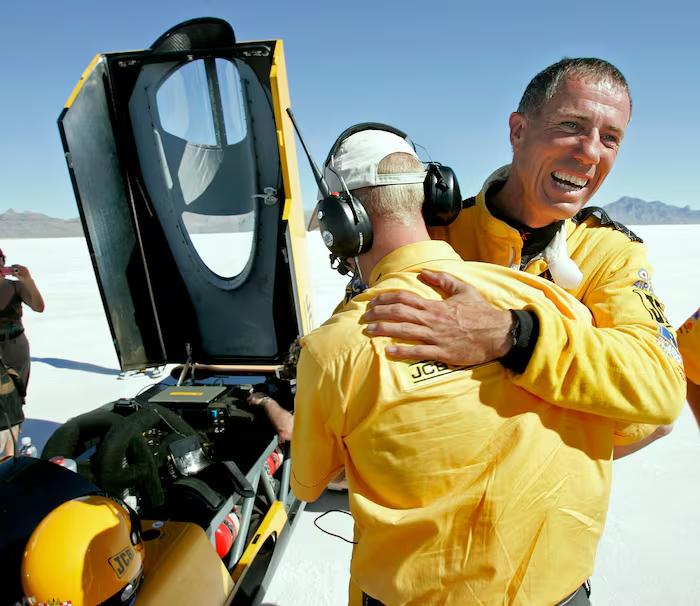
Andy Green, the only person ever to surpass the sound barrier while driving a car, is preparing to challenge another speed record this week at Utah’s Bonneville Salt Flats with a hydrogen-powered vehicle. The British retired Royal Air Force fighter pilot set the diesel-powered land speed record two decades ago at 350.092 mph on the same salt flats and will attempt to exceed that benchmark on Tuesday.
Green will operate the JCB Hydromax, a 32-foot yellow vehicle that resembles an elongated pencil and produces 1,600 horsepower from two hydrogen internal combustion engines. The engines, derived from equipment used in construction machinery manufactured by British firm JCB, combine pressurized hydrogen gas with air to generate propulsive force. Green hopes to demonstrate hydrogen’s viability as a clean energy alternative while simultaneously setting records for hydrogen combustion engines and electric vehicles.
During practice runs last week, Green reached 368.347 mph, but official certification requires validation by the Fédération Internationale de l’Automobile on Tuesday. The 64-year-old emerged from retirement specifically for this project after JCB invested more than $134 million in hydrogen engine development aimed at reducing industrial emissions.
Green achieved his most famous milestone in 1997 when he traveled 763.035 mph using twin jet engines in Nevada’s Black Rock Desert, creating sonic booms that resonated through nearby Gerlach. His upcoming hydrogen attempt will occur considerably slower, though the project carries inherent safety risks given hydrogen’s high pressure and flammability characteristics. The attempt comes one year after driver Chris Raschke died at Bonneville Speed Week when his vehicle lost control at 283 mph.

More Stories
Massachusetts Democrats Split on Age Issue as Moulton Challenges Incumbent Markey in Primary
AI Infrastructure Boom Drives Construction Jobs While Fueling Debate Over Data Centers
X Discovers Massive Chinese Bot Network Orchestrating US AI Policy Influence Campaign