




💛 A quick favor, if you've got a second.
We're really happy that you chose to read one of our stories and sincerely hope you'll stick around to read more. We took our paywall down — for now — but that won't last forever, and when the gate goes back up, we'd love for you to already be on the inside.
It's free. So please enter your email here and don't forget to like and follow us on all of your favorite Social Media platforms!
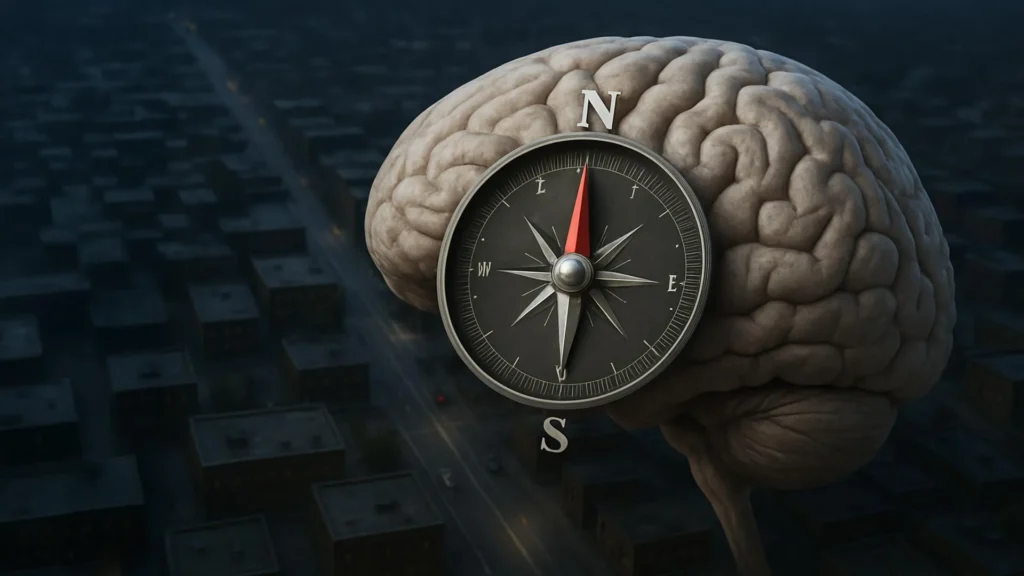
Elevated stress hormones may compromise the brain’s ability to navigate physical space, according to findings from a new magnetic resonance imaging study. Researchers documented that cortisol, released in response to stressful situations, significantly impaired participants’ performance in virtual navigation tasks while simultaneously disrupting the normal firing patterns of grid cells, which are neural structures essential for spatial orientation.
When environmental landmarks were unavailable to guide participants through the virtual setting, the navigation system showed near-total breakdown in function. The research indicates that under high stress conditions, a separate brain region stepped in to attempt compensatory activity, suggesting the brain recruits alternative mechanisms when its primary spatial processing system is compromised.
The study provides neurological evidence linking psychological stress to measurable changes in how the brain processes spatial information and navigates environments.



More Stories
New York Health Officials Sound Alarm Over Rising Measles Cases as School Year Approaches
CareCloud Breach Compromises 3.75 Million Patient Records, Among Largest Healthcare Data Thefts of 2026
Month-Long HEPA Use Linked to Faster Cognitive Processing in Middle-Aged Adults