




💛 A quick favor, if you've got a second.
We're really happy that you chose to read one of our stories and sincerely hope you'll stick around to read more. We took our paywall down — for now — but that won't last forever, and when the gate goes back up, we'd love for you to already be on the inside.
It's free. So please enter your email here and don't forget to like and follow us on all of your favorite Social Media platforms!
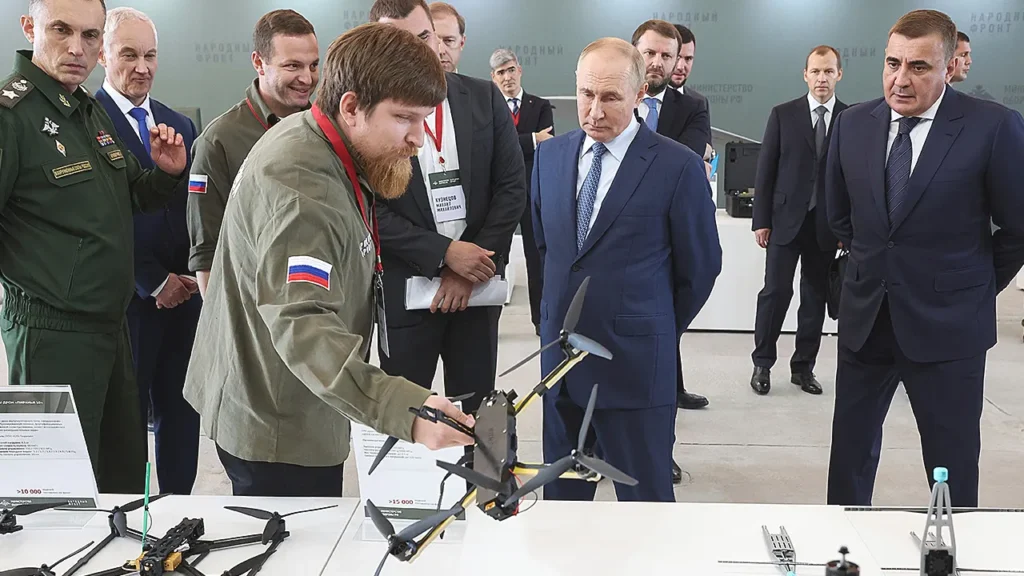
A troubling dimension of the Russia-Ukraine conflict has emerged as operatives from both nations systematically hunt weapons industry leaders and engineers responsible for advancing drone technologies that have fundamentally altered combat operations. Intelligence experts and defense analysts raised alarm over the trend Sunday, noting that targeting civilian defense contractors represents a significant strategic shift in how the adversaries pursue military advantage.
On August 4, Vladimir Tkachuk, chief executive of Russian drone manufacturer Uraldronzavod, sustained life-threatening injuries when his vehicle was bombed near Yekaterinburg, while his driver was killed, Russian state media reported. The company manufactures the Upyr attack drone, a first-person-view model deployed extensively by Russian forces throughout the conflict.
Just days before, Ukrainian sources reported that Andrei Cherezov, heading a competing Russian drone firm, survived three gunshot wounds in an assassination attempt in Tula on July 28-29. Neither attack has been officially attributed to any party, though the pattern suggests coordinated targeting of critical defense personnel.
Cameron Chell, chief executive of drone company Draganfly, explained to Fox News Digital that as conventional infrastructure proves difficult to destroy, eliminating leadership responsible for weapons innovation has become the primary tactical objective. The rapid development cycle of drone technology—with major upgrades occurring every 10 to 30 days—makes individual engineers and product leaders strategically invaluable targets whose removal disrupts battlefield operations immediately.
German authorities have arrested two operatives accused of conducting reconnaissance on a Bavarian drone manufacturer for Russian intelligence, with reports indicating plans to target executive Stefan Thumann. The case follows a disrupted 2024 plot against Rheinmetall CEO Armin Papperger that was intercepted through U.S. and German intelligence cooperation.
As Ukraine and Russia pursue artificial intelligence and autonomous weapons systems, engineers developing these technologies have become exponentially more valuable. Chell noted that autonomous systems represent the next major innovation frontier, potentially explaining increased targeting of defense leadership over the coming 18 months.
The two nations employ distinctly different operational approaches to such campaigns. Ukrainian tactics tend toward direct action—shooters in hallways or vehicle explosives—reflecting the nation’s existential struggle, while Russian methods rely on state-organized structures drawing from Cold War tradecraft, including surveillance networks and infiltration across border countries like Germany.
Defense contractors are implementing enhanced security protocols across both cyber and physical domains to protect executives and sensitive personnel. Industry officials acknowledged the assassination campaign has intensified internal conversations about threat assessment and protection measures, prompting closer coordination with government authorities responsible for counterintelligence.



More Stories
Colombia backs Trump security push while limiting U.S. role in anti-gang operations
Federal Prosecutors Convene Special Grand Jury to Investigate D.C. Schools’ Attendance and Graduation Practices
State Department Reissues Level 3 Travel Advisory for Israel Amid Terrorism and Armed Conflict Concerns