



💛 A quick favor, if you've got a second.
We're really happy that you chose to read one of our stories and sincerely hope you'll stick around to read more. We took our paywall down — for now — but that won't last forever, and when the gate goes back up, we'd love for you to already be on the inside.
It's free. So please enter your email here and don't forget to like and follow us on all of your favorite Social Media platforms!
The 1980s produced some of rock’s most technically proficient guitarists, yet several of the decade’s finest players remain overshadowed by their more famous peers. While Eddie Van Halen and Randy Rhoads achieved legendary status, numerous virtuosos who performed with equal or greater skill languished in relative obscurity. The bands featuring these musicians achieved commercial success, but mainstream audiences largely overlooked the individual contributors driving their sound.
Reb Beach of Winger became an undeserving casualty of the band’s image problems and cultural backlash. The group faced relentless ridicule following Beavis and Butt-Head’s mockery and Lars Ulrich’s public disdain, effectively erasing their credibility despite superior musicianship. Beach’s buttery legato tapping and percussive riffing on the hit single “Seventeen” established him as an underground guitar virtuoso, yet his contributions remain undervalued due to the band’s association with pretty-boy aesthetics and campy production values.
Japan’s Loudness, fronted by guitarist Akira Takasaki, filled a unique niche in the global metal landscape during the mid-1980s. The 1985 album “Thunder in the East” showcased Takasaki’s incendiary lead work and inventive riffing, particularly on “Crazy Nights,” establishing the musician as an influential force in Japanese guitar communities. His technical prowess and creative approach to composition deserved far greater international recognition than the band ultimately achieved.
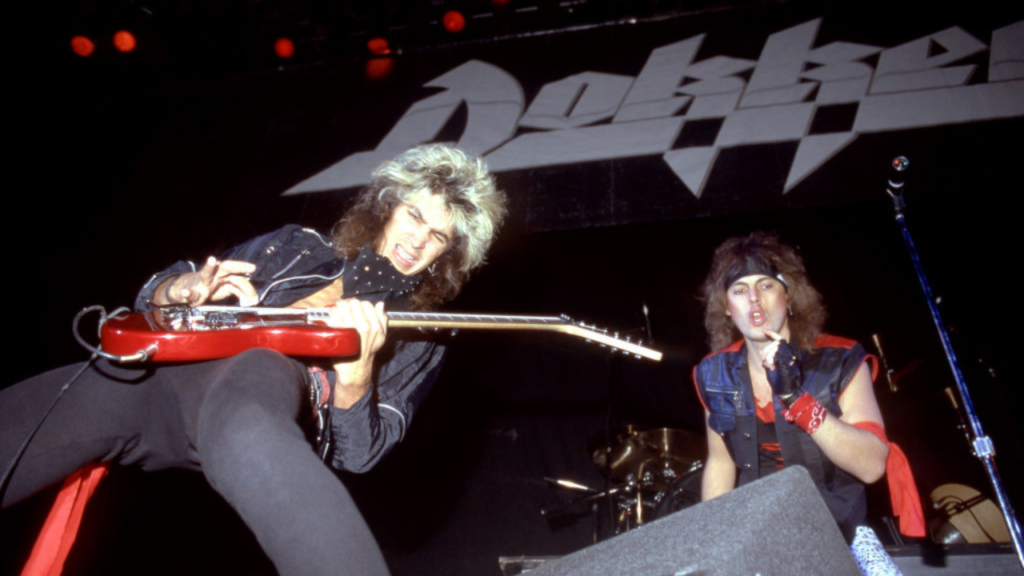
George Lynch of Dokken emerged as a Sunset Strip virtuoso alongside Van Halen, delivering blistering solos and sophisticated hooks throughout the early-to-mid 1980s. Personal conflicts between Lynch and frontman Don Dokken prevented the band’s ascension to superstardom despite the presence of all necessary ingredients for sustained success. Lynch’s status as part of the era’s triumvirate of elite guitarists remains valid despite his historical underappreciation.
Warren DeMartini of Ratt demonstrated compositional talent alongside his technical mastery, contributing as principal songwriter on “Round and Round” and “Lay It Down.” His balanced approach to both radio-friendly songwriting and virtuosic fretwork distinguished him from peers, drawing comparisons to Joe Perry. Despite the band’s 1980s popularity, Ratt functioned as a cohesive unit rather than a vehicle for individual recognition, leaving DeMartini’s contributions largely unheralded.
Dan Spitz performed lead guitar throughout Anthrax’s classic period, appearing on every album from their 1983 debut through 1993’s “Sound of White Noise.” His work on tracks including “Caught in a Mosh,” “Indians,” and “Madhouse” proved essential to the band’s identity, yet he received minimal attention compared to rhythm guitarist Scott Ian. Spitz’s mid-aughts reunion with the band came after the classic thrash revival, resulting in continued historical underestimation of his contributions.

More Stories
Trump Threatens FCC Action Against NBC’s Welker Over Endorsement Coverage
Looney Tunes’ ‘Coyote vs. Acme’ Debuts With $15.5 Million as ‘Spider-Man’ Holds Box Office Crown
Country Music Legend Dolly Parton Laid to Rest; Niece Shares Touching Remembrance