

💛 A quick favor, if you've got a second.
We're really happy that you chose to read one of our stories and sincerely hope you'll stick around to read more. We took our paywall down — for now — but that won't last forever, and when the gate goes back up, we'd love for you to already be on the inside.
It's free. So please enter your email here and don't forget to like and follow us on all of your favorite Social Media platforms!
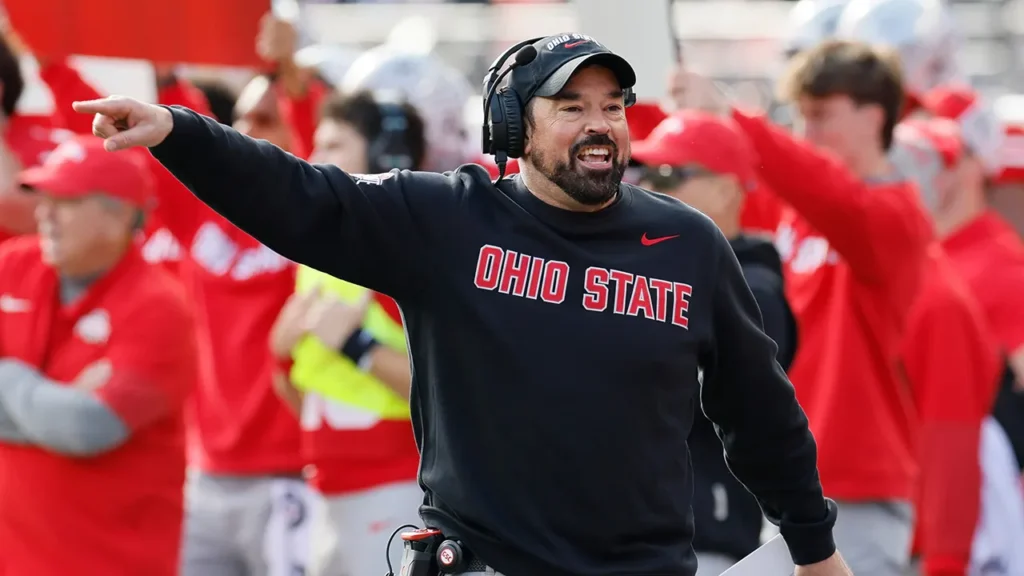
The preseason Coaches Poll has arrived, signaling the approach of college football’s return and sparking widespread debate about team rankings and conference supremacy. The conversation has centered heavily on the rivalry between the SEC and Big Ten conferences following Indiana’s undefeated 16-0 national championship season, a result that surprised many given Texas head coach Steve Sarkisian’s prediction that perfect records would become extinct in the NIL era.
Coaching changes across elite programs complicate the task of accurately assessing team strength heading into 2026. Notable moves include Jon Sumrall taking over at Florida, Lane Kiffin departing Ole Miss for LSU, Pete Golding moving to Oxford, Alex Golesh arriving at Auburn from USF, Matt Campbell replacing James Franklin at Penn State, Kyle Whittingham transitioning from Utah to Michigan, Morgan Scalley assuming Utah’s helm, and Bob Chesney joining UCLA. These widespread transitions make predicting roster composition and team performance more difficult than in typical seasons.
To evaluate the Coaches Poll’s accuracy, comparison against analytics-based ranking systems such as SP+ provides a less subjective measure of team quality. These efficiency-driven metrics assess offensive, defensive, and special teams performance while accounting for opponent strength, often revealing distinctions that traditional polls overlook. The top positions show considerable alignment, with Ohio State and Oregon ranking one-two in both systems, and Georgia placing third in the Coaches Poll and fourth in SP+.
Discrepancies emerge in the middle rankings, where conference prestige appears to influence voter perception. Oklahoma and Ole Miss, both 2025 playoff teams, rank ninth and tenth in the Coaches Poll but twelfth and sixteenth in SP+, suggesting voters may have overvalued their performances based on SEC affiliation. Florida and LSU experienced similar overvaluations in 2025, ranking fifteenth and ninth in the preseason AP Poll before finishing 4-8 and 7-6 respectively.
Conversely, several teams appear undervalued by coaches compared to analytical projections. LSU ranks thirteenth in the poll but tenth in SP+, benefiting from a strong transfer portal quarterback class under Kiffin’s direction. Tennessee sits eighteenth in the Coaches Poll versus fifteenth in SP+, positioning the Volunteers on the playoff bubble despite their quality metrics. Texas Tech, ranked twelfth by coaches but seventh by SP+, utilized the portal and NIL particularly effectively to rebuild its program, posting a top-ten offense and top-eleven defense.
Houston represents perhaps the most significant polling oversight, appearing at number twenty-four in the Coaches Poll while ranking only thirty-sixth in SP+, a gap that will become apparent when the Cougars face Texas Tech in Week 3. Despite occasional misevaluations, the Coaches Poll generally maintains reasonable alignment with advanced metrics, typically placing teams within several positions of their analytics-based rankings.
The unpredictability of college football remains its defining characteristic, exemplified by Indiana’s journey from nineteenth in preseason rankings to national champions. For programs positioned between tenth and twentieth in current rankings, the path to contention remains viable, keeping the sport’s competitive landscape uncertain through the season’s conclusion.

More Stories
Indiana coach Curt Cignetti tells restless Hoosiers fans not to gripe over 38-0 win
Packers Running Back Josh Jacobs Placed on Commissioner Exempt List Pending Misdemeanor Charges
Denver Broncos Linebacker Jonathon Cooper Placed on Commissioner’s Exempt List Amid Domestic Violence Charges