



💛 A quick favor, if you've got a second.
We're really happy that you chose to read one of our stories and sincerely hope you'll stick around to read more. We took our paywall down — for now — but that won't last forever, and when the gate goes back up, we'd love for you to already be on the inside.
It's free. So please enter your email here and don't forget to like and follow us on all of your favorite Social Media platforms!
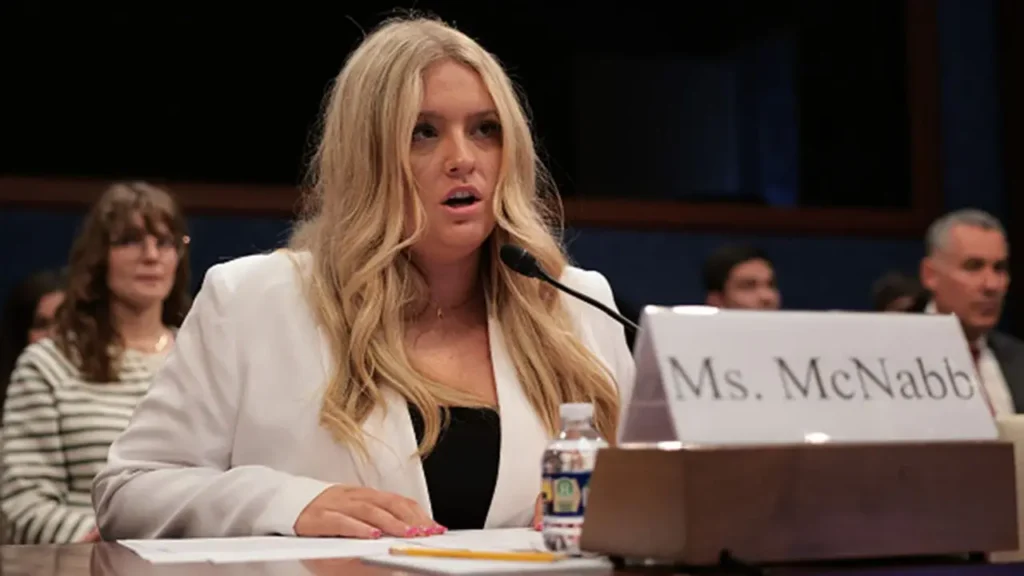
Payton McNabb’s advocacy for women’s sports protection stems from a life-altering incident that occurred during her high school volleyball career in North Carolina. After sustaining a traumatic brain injury and partial paralysis from an opponent’s spike, McNabb transformed her personal tragedy into legislative action, eventually testifying before Congress in defense of Title IX protections. Now 21, she continues championing safeguards for female athletes across all competitive levels.
McNabb has become increasingly vocal about what she views as a double standard now playing out in professional women’s basketball. In an exclusive interview, the advocate expressed strong admiration for Indiana Fever guard Sophie Cunningham’s willingness to challenge the current conversation surrounding transgender participation in women’s sports. McNabb emphasized that Cunningham’s courage stands out precisely because few high-profile athletes are willing to take similar public positions.
The activist criticized Minnesota Lynx head coach Cheryl Reeve for her public support of transgender inclusion in sports, including Reeve’s decision to wear a “Trans Kids Belong” shirt during a recent game. McNabb argued that such positions undermine the very protections Title IX was designed to provide and represent a contradiction in advocating for expanded opportunities for female athletes. She highlighted the irony of calling for equal treatment with men’s sports while simultaneously opening women’s categories to biological males.
McNabb pointed to Julie Tétart, a 6-foot-3 biological male currently competing in France’s women’s basketball league, as a potential test case for the WNBA’s stated principles. She suggested the league’s progressive stance might quickly shift once confronted with direct competitive consequences at the professional level. Despite her concerns, McNabb stressed she supports protections for all female athletes, regardless of their personal positions on the transgender inclusion debate.
Regarding superstar Caitlin Clark, McNabb acknowledged the basketball icon’s reluctance to engage publicly in the transgender sports controversy but argued her enormous influence makes her participation in the conversation significant. The Title IX advocate contended that Clark’s voice could prove enormously persuasive to the next generation of young female athletes and that embracing her role as a product of Title IX protections could amplify awareness of these issues.
McNabb’s own journey illustrates the stakes involved in these debates. Three years after her initial injury, she experienced significant health improvements that doctors said could take that long to materialize. The former volleyball player has since testified before lawmakers and become an ambassador for women’s sports advocacy, dedicating herself to ensuring other girls do not face similar circumstances.

More Stories
Indiana coach Curt Cignetti tells restless Hoosiers fans not to gripe over 38-0 win
Packers Running Back Josh Jacobs Placed on Commissioner Exempt List Pending Misdemeanor Charges
Denver Broncos Linebacker Jonathon Cooper Placed on Commissioner’s Exempt List Amid Domestic Violence Charges