




💛 A quick favor, if you've got a second.
We're really happy that you chose to read one of our stories and sincerely hope you'll stick around to read more. We took our paywall down — for now — but that won't last forever, and when the gate goes back up, we'd love for you to already be on the inside.
It's free. So please enter your email here and don't forget to like and follow us on all of your favorite Social Media platforms!
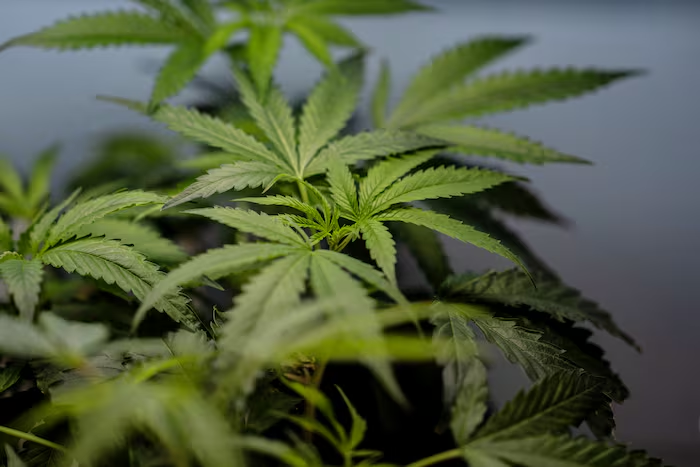
Federal health researchers documented a significant rise in emergency room visits for cannabis hyperemesis syndrome throughout the United States over the past year, with diagnoses climbing 16 percent between October and May, according to a CDC report released Thursday. The syndrome, characterized by severe nausea, uncontrollable vomiting and acute abdominal pain in chronic marijuana users, had been substantially underdiagnosed prior to the introduction of a dedicated diagnostic code last fall.
The Centers for Disease Control and Prevention’s analysis examined emergency department data from approximately 7,500 healthcare facilities nationwide through May. Between January 2023 and summer 2025, nearly 200,000 visits related to the syndrome occurred across U.S. emergency rooms, researchers found. The authors emphasized that the “abruptness and sustained magnitude” of the increase reflects improved detection and accurate documentation of a previously overlooked condition rather than solely an uptick in cases.
The diagnostic code introduced in October streamlined identification of the syndrome, eliminating the previous requirement to combine separate codes for nausea, vomiting and cannabis use. Prior to this change, the condition frequently went unrecognized due to physician unfamiliarity or misattribution to other ailments, though research estimates approximately 2.75 million Americans experience the syndrome annually.
Young people aged 15 to 24 showed the most pronounced increase in diagnoses, alongside teenage girls, women, Black Americans and American Indian and Alaska Natives. The findings surprised researchers, including CDC study lead author Alana Vivolo-Kantor, who noted the unexpected prevalence among adolescents raises questions about patterns of early cannabis use and chronic consumption in younger populations.
Health officials are calling for expanded public awareness campaigns targeting teens and young adults alongside additional research into high-potency THC products and hemp-derived alternatives, including vapes, drinks and gummies increasingly popular among younger Americans. The CDC report underscores the need for continued monitoring and study of cannabis consumption methods and their health impacts across age groups.



More Stories
New York Health Officials Sound Alarm Over Rising Measles Cases as School Year Approaches
CareCloud Breach Compromises 3.75 Million Patient Records, Among Largest Healthcare Data Thefts of 2026
Month-Long HEPA Use Linked to Faster Cognitive Processing in Middle-Aged Adults