

💛 A quick favor, if you've got a second.
We're really happy that you chose to read one of our stories and sincerely hope you'll stick around to read more. We took our paywall down — for now — but that won't last forever, and when the gate goes back up, we'd love for you to already be on the inside.
It's free. So please enter your email here and don't forget to like and follow us on all of your favorite Social Media platforms!
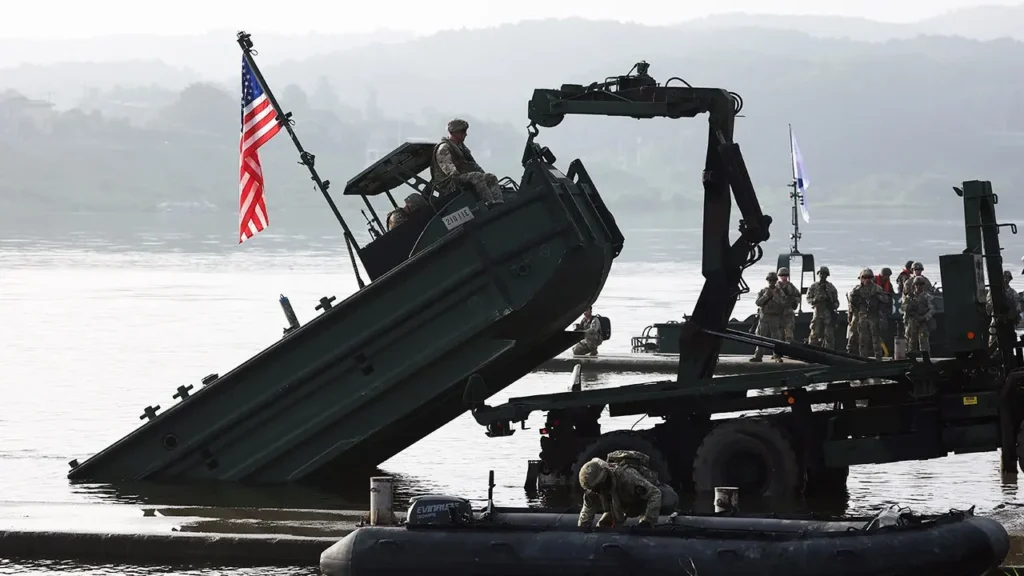
North Korea conducted a ballistic missile launch Thursday that U.S. military officials characterized as posing no immediate threat to American personnel, territory, or regional partners. The short-range projectile was detected originating from the Wonsan area on North Korea’s east coast around 5 p.m. local time, according to South Korea’s Joint Chiefs of Staff. U.S. Indo-Pacific Command confirmed awareness of the test and emphasized continued commitment to defending the American homeland and allied nations in the region.
The missile launch occurred as the United States and South Korea prepare for large-scale joint military exercises scheduled later this month. Officials from both nations, along with Japan, have intensified coordination and surveillance activities in response to the test. Japanese Defense Minister Shinjiro Koizumi reported the weapon landed in waters east of North Korea and caused no damage to Japanese territory, though Tokyo lodged a formal protest through its Beijing embassy.
South Korea’s presidential national security council condemned the launch as a violation of United Nations Security Council resolutions and called for an immediate halt to such provocations. The test marked North Korea’s first ballistic missile launch since late June, when leader Kim Jong Un observed weapons trials and ordered military forces to strengthen their offensive capabilities. Seoul and Washington have characterized the forthcoming Ulchi Freedom Shield exercises as defensive training designed to strengthen allied coordination and response readiness against various security threats.
North Korea has historically viewed the joint drills as invasion rehearsals and frequently responds with weapons testing, according to the Associated Press. Military officials from both the U.S. and South Korea stress the exercises focus on building coordination among Combined Forces Command, United States Forces Korea, the United Nations Command, and South Korean leadership, incorporating live, virtual, and field-based training components.

More Stories
Colombia backs Trump security push while limiting U.S. role in anti-gang operations
Chicago Mayor Issues Executive Order Requiring Contractor Diversity Disclosures and ICE Ties Reporting
Federal Prosecutors Convene Special Grand Jury to Investigate D.C. Schools’ Attendance and Graduation Practices