


💛 A quick favor, if you've got a second.
We're really happy that you chose to read one of our stories and sincerely hope you'll stick around to read more. We took our paywall down — for now — but that won't last forever, and when the gate goes back up, we'd love for you to already be on the inside.
It's free. So please enter your email here and don't forget to like and follow us on all of your favorite Social Media platforms!
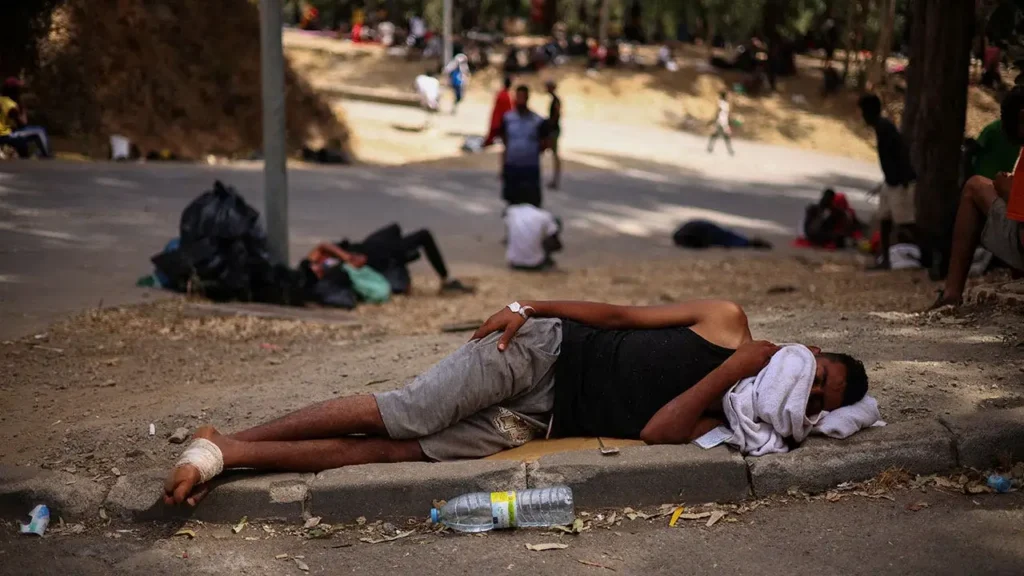
Between 3,000 and 5,000 migrants remain trapped in the Spanish territory of Ceuta following a massive surge from Morocco in late July, according to the enclave’s president. Juan Jesus Vivas disclosed the figures during testimony before the European Parliament’s Committee on Civil Liberties, Justice and Home Affairs on Thursday, characterizing the situation as a humanitarian catastrophe that has left the city unable to return to normal operations.
The border crossing saw approximately 80,000 people—nearly equivalent to Ceuta’s entire population—pour into the territory over a 48-hour period on July 30 and 31. Vivas reported that roughly 100 individuals died during the chaotic influx, while about 75,000 have since returned to Morocco. The remaining migrants have overwhelmed reception facilities designed for far smaller numbers.
Vivas labeled the event an “invasion” and “one of the most difficult moments” in Ceuta’s recent history, echoing characterizations from Spanish President Pedro Sánchez, who called it an attack on Spain’s territorial integrity. The president emphasized that the city’s reception centers for adult and minor migrants have collapsed under the strain, creating what authorities describe as a major humanitarian emergency alongside significant public safety concerns.
Calling for European support, Vivas outlined demands including expulsion of remaining Moroccan migrants, expanded resources for migrant facilities, and an economic assistance package he termed “More Spain and More Europe.” He stressed that Ceuta’s vulnerability had been exposed globally and that the city’s security now depends heavily on Morocco’s cooperation.



More Stories
Federal voting arrest in New Jersey adds new pressure point in Sherrill-Trump standoff
Colombia backs Trump security push while limiting U.S. role in anti-gang operations
Former NFL cheerleader and ex-aide face off in close Rhode Island GOP primary