



💛 A quick favor, if you've got a second.
We're really happy that you chose to read one of our stories and sincerely hope you'll stick around to read more. We took our paywall down — for now — but that won't last forever, and when the gate goes back up, we'd love for you to already be on the inside.
It's free. So please enter your email here and don't forget to like and follow us on all of your favorite Social Media platforms!
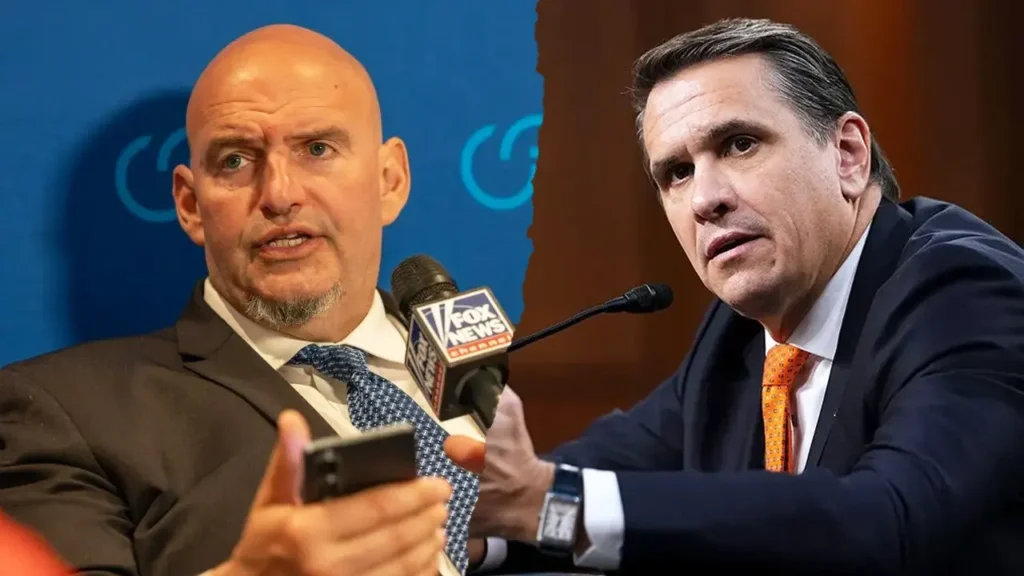
Pennsylvania Senator John Fetterman announced Wednesday that he will vote against Todd Blanche’s nomination to serve as attorney general, breaking ranks with his earlier support for other Trump Cabinet selections. Speaking on comedian Jon Stewart’s podcast, the Democratic senator clarified his position after facing questions about why Democrats had not mounted a filibuster campaign against the administration’s nominees.
Fetterman stated he has selectively opposed several Trump picks for Cabinet positions while supporting others, emphasizing his approach of evaluating each nominee individually. “I really try to call balls and strikes,” he told Stewart, noting that Blanche does not meet his standard for the role, even as he acknowledged voting to confirm approximately half of Trump’s Cabinet nominees.
The senator’s stance marks a notable shift from his previous willingness to cross party lines. He was the sole Democrat to back Pam Bondi when she was nominated for the same position, and he cast the deciding vote to advance Markwayne Mullin’s nomination for Homeland Security secretary out of committee before joining all Republicans to confirm him.
Fetterman’s opposition to Blanche leaves the nominee with reduced support than Bondi, who secured confirmation in a 54-46 vote. Republican Senator Susan Collins of Maine has also publicly opposed Blanche, citing concerns that his actions have compromised the department’s independence, while Senators Bill Cassidy of Louisiana and Lisa Murkowski of Alaska remain undecided on his confirmation.
The Senate Judiciary Committee advanced Blanche’s nomination along strict party lines in a 12-10 vote. His path to full Senate confirmation comes after he agreed to abandon plans for an anti-weaponization fund, a concession that shifted the positions of two Republicans who had initially opposed him: Senators John Cornyn of Texas and Thom Tillis of North Carolina.



More Stories
Federal voting arrest in New Jersey adds new pressure point in Sherrill-Trump standoff
Colombia backs Trump security push while limiting U.S. role in anti-gang operations
Former NFL cheerleader and ex-aide face off in close Rhode Island GOP primary