

💛 A quick favor, if you've got a second.
We're really happy that you chose to read one of our stories and sincerely hope you'll stick around to read more. We took our paywall down — for now — but that won't last forever, and when the gate goes back up, we'd love for you to already be on the inside.
It's free. So please enter your email here and don't forget to like and follow us on all of your favorite Social Media platforms!
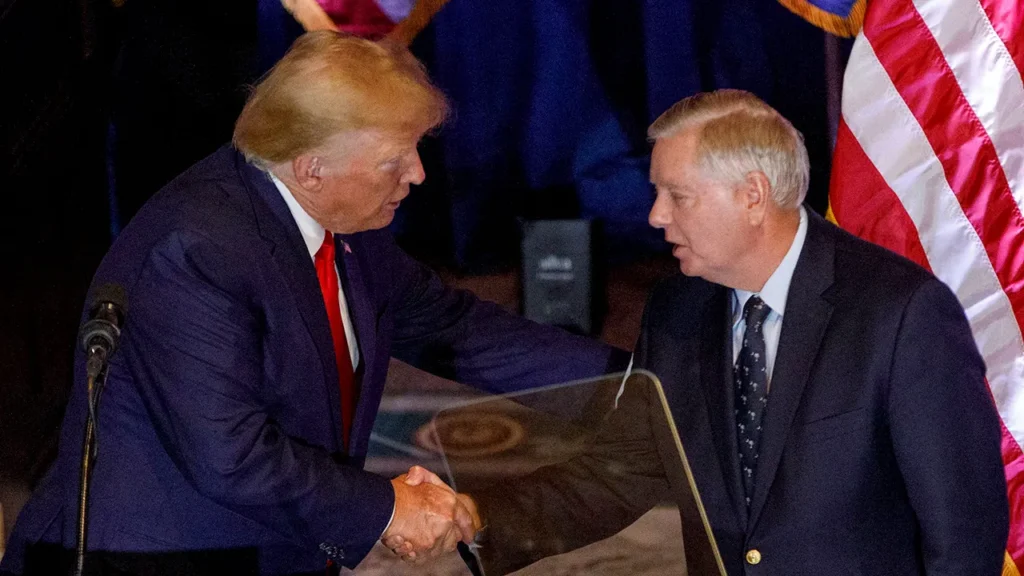
Former Vice President Mike Pence has issued a call for Congress to complete legislation bearing the name of the late South Carolina Republican senator Lindsey Graham, who spent more than 30 years addressing critical national security questions and America’s international standing. Graham’s lengthy career was defined by his conviction that military strength and unwavering determination, rather than compromise with adversaries, preserve global peace. Pence described Graham as a steadfast champion of American values and acknowledged the personal loss his passing represents.
The Lindsey O. Graham Sanctioning Russia and Iran Act of 2026 represents the culmination of Graham’s push to restrict President Vladimir Putin’s access to financial resources, advanced technology and worldwide cooperation that sustains Russia’s military operations in Ukraine. The Senate has already advanced the measure with broad bipartisan support, and Pence is now pressing the House to act quickly to ensure this final policy goal of Graham’s career reaches completion.
More than four years into Russia’s unprovoked invasion, Putin continues bankrolling military operations via oil sales, banking systems and schemes designed to circumvent current restrictions. Despite existing economic penalties imposing measurable harm, the Russian leader has demonstrated the capacity to adjust strategy, including establishing a covert maritime fleet to transport petroleum globally while relying on overseas enterprises to maintain weapons production. Numerous countries sustain commercial ties to Russian energy suppliers despite publicly objecting to Moscow’s military aggression.
The proposed legislation would establish mandatory economic penalties targeting Russia’s top political figures, banking sector, state-controlled energy companies and intermediaries facilitating sanctions circumvention. The bill specifically addresses the shadow fleet moving Russian oil internationally, reinforces trade and financial limitations, and implements selective levies to pressure major Russian energy buyers into withdrawing their economic support for the Kremlin’s war effort. The measure maintains presidential discretion to waive sanctions when deemed necessary for national security.
Pence contends the legislation fundamentally aims to reestablish deterrence mechanisms that discourage authoritarian leaders from misconstruing American restraint as weakness. Throughout history, permitting aggression without response has repeatedly prompted further conflicts, he argued, noting that every petrodollar and financial transaction funding Moscow strengthens the military arsenal deployed against Ukraine and emboldens other autocratic nations questioning the free world’s commitment to its principles.
Graham’s final diplomatic undertaking involved visiting Kyiv to reaffirm American commitment to Ukraine’s population alongside President Volodymyr Zelenskyy. Graham maintained confidence that the sanctions framework could prompt Putin toward negotiation and accelerate the war’s conclusion. Pence has echoed that assessment, suggesting Graham’s legislative legacy offers the most meaningful tribute Congress could provide.

More Stories
Federal voting arrest in New Jersey adds new pressure point in Sherrill-Trump standoff
Colombia backs Trump security push while limiting U.S. role in anti-gang operations
Former NFL cheerleader and ex-aide face off in close Rhode Island GOP primary