


💛 A quick favor, if you've got a second.
We're really happy that you chose to read one of our stories and sincerely hope you'll stick around to read more. We took our paywall down — for now — but that won't last forever, and when the gate goes back up, we'd love for you to already be on the inside.
It's free. So please enter your email here and don't forget to like and follow us on all of your favorite Social Media platforms!
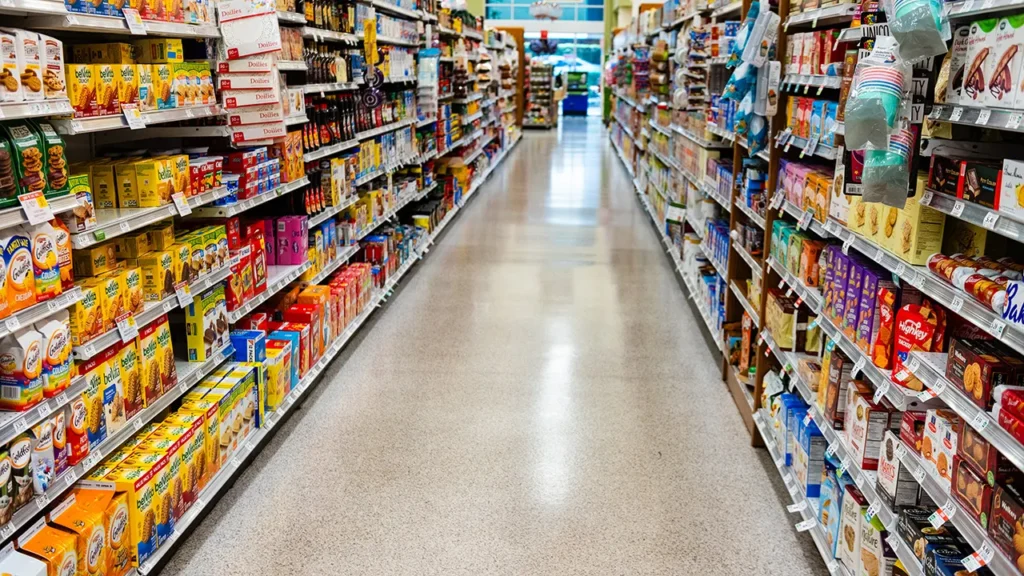
Chicago’s attempt to operate government-funded grocery stores has unraveled after Save A Lot ended its licensing agreement with Yellow Banana, the retail platform managing the locations. The setback has triggered fresh examination of whether taxpayer-financed supermarkets can effectively address food access challenges in economically disadvantaged neighborhoods, with critics questioning the sustainability of such initiatives.
The city invested $13.5 million in the grocery stores, which were designed to tackle food insecurity in areas designated as food deserts. Seven Save A Lot locations on Chicago’s South and West sides have now shuttered, partly due to declining SNAP purchases and broader financial constraints, according to policy analysts and retail industry leaders.
Rob Karr, president and CEO of the Illinois Retail Merchants Association, contends that government-operated grocery experiments have collapsed in every jurisdiction where they were attempted. He pointed to similar failed proposals in New York and Seattle, where municipalities attempted to artificially suppress prices through public funding—an approach Illinois rejected as fundamentally flawed and disconnected from market realities.
Bryce Hill, director of fiscal and economic analysis at Illinois Policy, attributed store failures partly to Chicago’s punitive tax environment. The city levies commercial property taxes at 250 percent higher rates than residential properties and maintains the second-highest sales tax among major U.S. cities at 10.5 percent as of August 1, he noted.
Chicago’s predicament mirrors a 2022 closure of a Whole Foods in Englewood that had received an $11 million Tax Increment Financing subsidy from the city. State Rep. Sonya Harper expressed disappointment, noting the retailer had pledged to prioritize community food access over profitability.
Industry advocates urge policymakers to address underlying operational obstacles rather than launching costly government-backed ventures. Karr recommended that cities examine permitting procedures, licensing requirements, labor regulations, and property tax structures that make grocery retail operations financially unviable in their jurisdictions.



More Stories
Looney Tunes’ ‘Coyote vs. Acme’ Debuts With $15.5 Million as ‘Spider-Man’ Holds Box Office Crown
Trump Calls NASA to Congratulate Agency on Roman Space Telescope Launch
Meta Ordered to Implement Sweeping Teen Safety Restrictions Under Settlement