




💛 A quick favor, if you've got a second.
We're really happy that you chose to read one of our stories and sincerely hope you'll stick around to read more. We took our paywall down — for now — but that won't last forever, and when the gate goes back up, we'd love for you to already be on the inside.
It's free. So please enter your email here and don't forget to like and follow us on all of your favorite Social Media platforms!
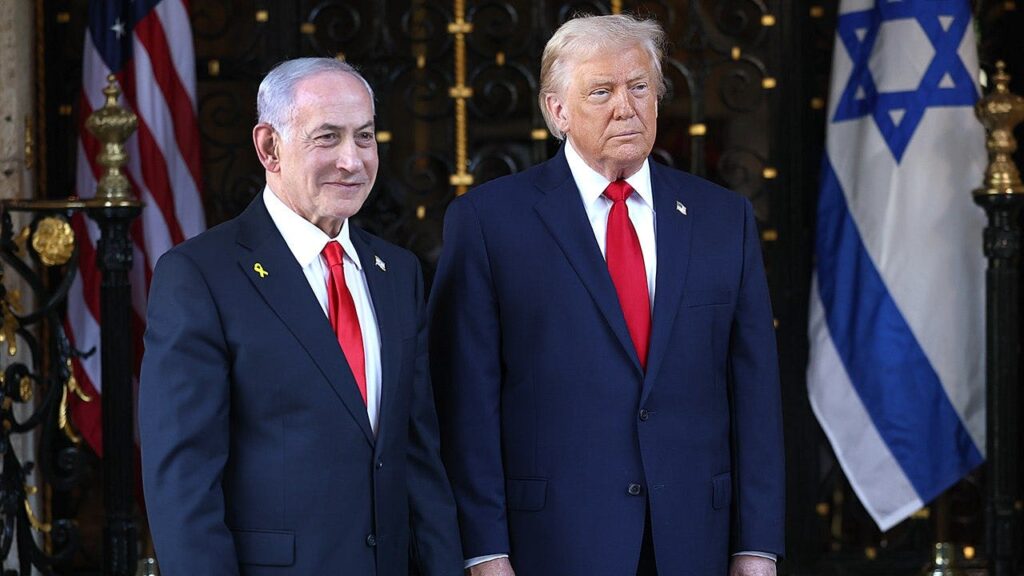
The question resurfaces periodically in American political discourse: Why does the United States allocate billions of dollars in aid to Israel? With national debt approaching $40 trillion and annual defense spending near $1 trillion, the inquiry merits serious examination. Yet the conversation routinely examines only what America provides to Israel while overlooking what the nation gains from the partnership, according to former U.S. Ambassador Gordon Sondland.
Sondland, who served as ambassador and spent decades in business, contends that measuring the relationship solely from a charitable perspective misses the fundamental calculus. The U.S.-Israel connection operates as a strategic partnership advancing core American security interests rather than an act of generosity. He emphasizes that his support stems from pragmatic national security considerations, not religious or ethnic affinity.
Israel occupies a unique position among American allies by combining world-class intelligence gathering, battle-tested military innovation, advanced cyber capabilities, missile-defense systems, and technological entrepreneurship while positioned in the world’s most volatile region. The relationship evolved over decades, beginning with President Harry Truman’s recognition of Israel in 1948 and expanding dramatically during and after the Cold War as terrorism replaced superpower competition as America’s primary security concern.
The annual security assistance to Israel totals roughly $3.8 billion, representing less than half of 1 percent of America’s defense budget. Israeli intelligence has helped expose terrorist plots, monitored Iran’s military and nuclear programs, and advanced missile-defense systems including Iron Dome, David’s Sling, and Arrow. Much of this assistance circulates back into the American economy through defense purchases and coproduction arrangements that support domestic workers and the defense industrial base.
Israel remains the Middle East’s only stable liberal democracy where governments change through elections and courts challenge executive authority. Sondland acknowledges that friendship requires candid criticism when disagreements arise, similar to historical disputes with Britain, France, Germany, Japan, and Turkey. However, abandoning the alliance would prove far costlier than maintaining it, as Iran would likely dominate the region and extremist movements would gain momentum globally.
Foreign policy decisions should reflect long-term strategic advantage rather than sentiment or short-term political considerations. By this standard, few international partnerships have contributed more substantially to American security than the U.S.-Israel alliance, making it among the nation’s most valuable foreign policy investments despite its fiscal costs.



More Stories
Federal voting arrest in New Jersey adds new pressure point in Sherrill-Trump standoff
Colombia backs Trump security push while limiting U.S. role in anti-gang operations
Former NFL cheerleader and ex-aide face off in close Rhode Island GOP primary