
💛 A quick favor, if you've got a second.
We're really happy that you chose to read one of our stories and sincerely hope you'll stick around to read more. We took our paywall down — for now — but that won't last forever, and when the gate goes back up, we'd love for you to already be on the inside.
It's free. So please enter your email here and don't forget to like and follow us on all of your favorite Social Media platforms!
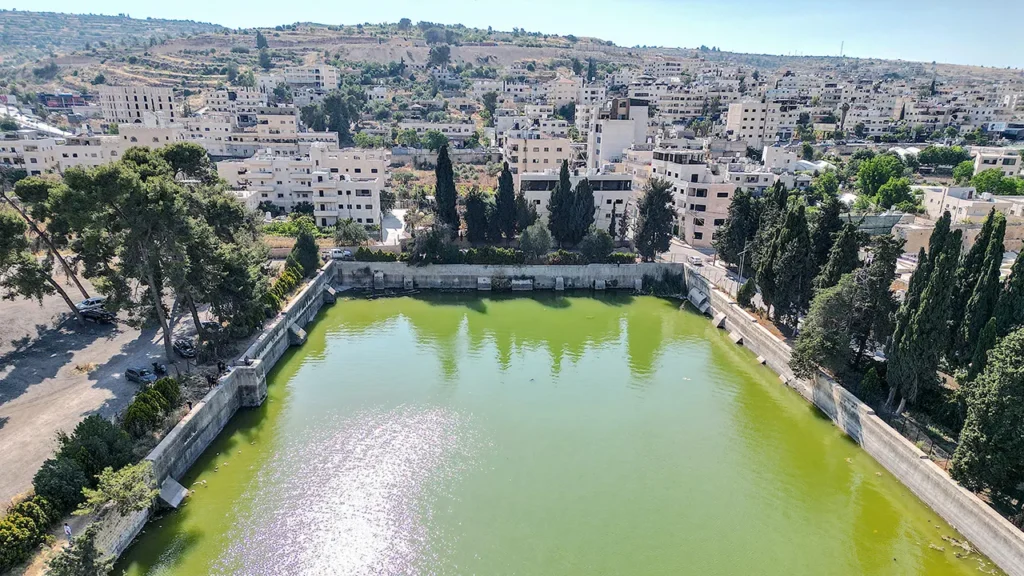
A pair of ancient reservoirs built millennia ago to quench Jerusalem’s thirst has ignited a modern geopolitical standoff between Israeli and Palestinian officials. Solomon’s Pools, three interconnected cisterns constructed between Efrat and Bethlehem south of Jerusalem, now sits at the nexus of competing claims over historical stewardship and territorial authority in the contested West Bank.
Most scholars trace the reservoirs’ origins to the second century B.C. during the Hasmonean period, with subsequent expansions attributed to Herod the Great between 37–4 B.C. to supply his palatial compound at Herodium. The three pools collectively store approximately 288,000 cubic meters of water and historically sustained Jerusalem year-round through the Arrub and el-Biyar aqueducts supplemented by seasonal rainfall.
The 1993 Oslo Accords partitioned the West Bank into zones of varying control, with Solomon’s Pools designated for Palestinian civil and security oversight in Area A. Israeli officials contend the placement resulted from a mapping error, asserting that then-Prime Minister Yitzhak Rabin negotiated to retain the site alongside other religiously significant locations like Rachel’s Tomb.
Efrat’s municipal leadership now alleges systematic deterioration under Palestinian Authority stewardship. Yonatan Marcus, chief of staff of the Efrat Municipality, claims sewage has been deliberately diverted into the reservoirs, contaminating what once provided fresh water and earning the pools the title “Jerusalem’s beach” during the British Mandate era.
Palestinian Authority officials reject these allegations, with Fatah spokesman Ahmad Fattouh asserting that Israeli water diversions upstream caused the reservoirs’ decline. Fattouh stated the authority has restored the site as a tourist attraction and accused Israeli leaders of weaponizing the preservation issue to justify territorial expansion.
Visits by Israeli officials, including Finance Minister Bezalel Smotrich, have reportedly prompted temporary cleanup efforts, prompting debate over whether external pressure drives maintenance or merely provides propaganda value. The competing narratives underscore deeper tensions over archaeological heritage, water rights and sovereignty across the fractured territories.
More Stories
Federal voting arrest in New Jersey adds new pressure point in Sherrill-Trump standoff
Colombia backs Trump security push while limiting U.S. role in anti-gang operations
Former NFL cheerleader and ex-aide face off in close Rhode Island GOP primary