




💛 A quick favor, if you've got a second.
We're really happy that you chose to read one of our stories and sincerely hope you'll stick around to read more. We took our paywall down — for now — but that won't last forever, and when the gate goes back up, we'd love for you to already be on the inside.
It's free. So please enter your email here and don't forget to like and follow us on all of your favorite Social Media platforms!
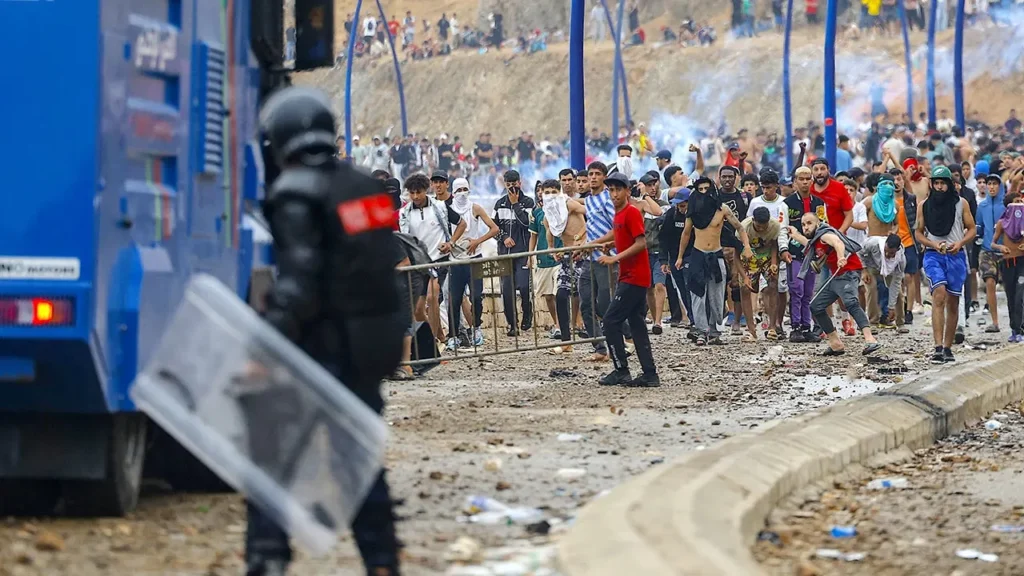
Roughly 2,000 migrants remained in Spain’s North African enclave of Ceuta on Tuesday following a chaotic mass crossing from Morocco that saw approximately 72,000 people enter the territory, with about 70,000 subsequently returning home. Spanish officials are examining whether the surge provided cover for known criminals or individuals suspected of jihadist connections to reach European soil undetected.
The Spanish National Police and Guardia Civil reviewed video footage and cross-referenced remaining migrants against criminal and counterterrorism databases to identify potential security threats. Interior Ministry officials acknowledged that the unprecedented scale of the crossing created genuine infiltration risks, according to reporting by El Confidencial citing government sources.
Reception facilities in the small enclave became overwhelmed as authorities struggled to process 862 migrant minors, who receive legal protections under Spanish law and cannot be immediately returned. The European Union announced emergency financial assistance to reinforce Ceuta’s border defenses following an emergency meeting of bloc ministers in Brussels.
An open-source intelligence analysis traced an extensive online mobilization campaign across social media platforms including TikTok, Facebook, Instagram and WhatsApp that preceded the crossing. The campaign generated more than 11 million potential impressions through misleading interpretations of Spanish immigration law and practical crossing information, including maps, routes and suggested departure times.
Spain’s Supreme Court ruling issued July 8 concerning migrant returns near Ceuta and Melilla became the subject of simplified and inaccurate online presentations that suggested people reaching Spanish territory would be permitted to remain and obtain legal status. Morocco’s Interior Ministry spokesman Rachid El Khalfi acknowledged that digital platform exploitation, human-trafficking networks and legal misinterpretations fueled the surge, with Moroccan prosecutors opening investigations.
Researchers at the Hudson Institute noted that Islamist movements in Morocco have leveraged the crisis to attack confidence in the monarchy ahead of September national elections. The messaging has portrayed Europe as a place where prosperity and legal status are easily obtained while characterizing Morocco’s government as overly secular and pro-Western.
Spanish intelligence officials reportedly concluded that Morocco did not plan the crossing but allowed it to proceed as border controls were relaxed, though Morocco has denied deliberately orchestrating the event. Juan Jesus Vivas Lara, president of Ceuta, told El País that many residents believe Morocco orchestrated or permitted the surge, stating “There’s no alternative but to put in place whatever means are necessary to ensure it cannot do this again.”



More Stories
Federal voting arrest in New Jersey adds new pressure point in Sherrill-Trump standoff
Colombia backs Trump security push while limiting U.S. role in anti-gang operations
Former NFL cheerleader and ex-aide face off in close Rhode Island GOP primary