




💛 A quick favor, if you've got a second.
We're really happy that you chose to read one of our stories and sincerely hope you'll stick around to read more. We took our paywall down — for now — but that won't last forever, and when the gate goes back up, we'd love for you to already be on the inside.
It's free. So please enter your email here and don't forget to like and follow us on all of your favorite Social Media platforms!
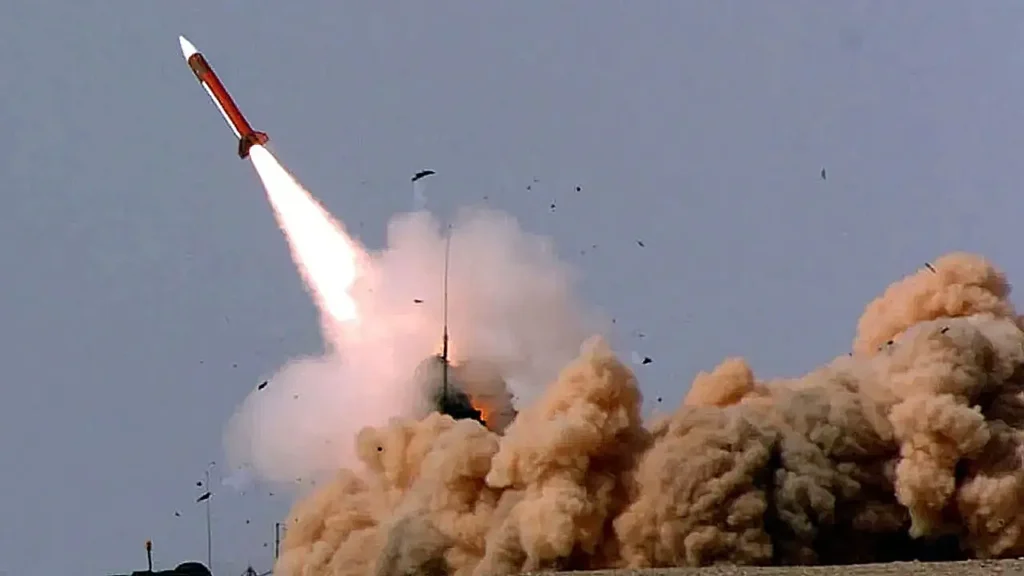
The Trump administration has forcefully rejected a report indicating that sustained military operations against Iran have exhausted nearly all U.S. stocks of two critical missile systems. According to Reuters, citing internal military data sources, the Army has depleted “virtually all” of its Army Tactical Missile Systems (ATACMS) and Precision Strike Missiles (PrSM) during the five-month conflict, raising concerns about future readiness against potential adversaries.
Military officials worry the significant drawdown could hamper America’s capacity to respond to future crises involving major powers such as China and Russia. The conflict has also substantially reduced stockpiles of Patriot and THAAD air-defense interceptors along with Tomahawk cruise missiles, though Pentagon officials maintain the military retains sufficient capability for worldwide operations.
President Trump responded with a statement to Fox News Digital, asserting the nation possesses more munitions than any other country. He criticized the previous administration for transferring weapons to Ukraine and Europe without charge, while noting that defense manufacturers are currently producing munitions at record levels and expanding facilities to boost output further.
Pentagon spokesman Sean Parnell issued a statement defending U.S. military readiness, declaring America’s armed forces remain the world’s most powerful with complete arsenal capacity to execute presidential directives. The exact figures for U.S. weapons stockpiles remain classified on national security grounds.
Independent analysts from the Center for Strategic and International Studies have corroborated concerns about depleted inventories, estimating the U.S. has expended roughly 65 percent of its Patriot interceptor supply while THAAD stockpiles have fallen by at least 38 percent since the Iran conflict began. These figures align with internal military data obtained by Reuters sources.
ATACMS and PrSM represent the Army’s most advanced long-range precision strike systems, capable of striking targets hundreds of miles distant without risking pilots. Military strategists value these weapons particularly against well-defended adversaries for eliminating command posts, air defenses and logistics centers beyond enemy air-defense range.
Pentagon leadership has increasingly emphasized the challenge of sustaining prolonged high-intensity conflicts against major powers while replenishing advanced weapons consumed in operations. This concern has driven accelerated development of lower-cost, rapidly producible drone and autonomous systems to supplement expensive precision missiles.
Trump has met repeatedly with defense industry executives, urging production acceleration and manufacturing expansion. Following a March White House meeting, Trump announced companies had agreed to quadruple production of advanced missile systems, with the president reiterating urgency at subsequent June and July meetings.
The administration’s budget priorities reflect this production emphasis, with Trump’s proposed $1.5 trillion defense budget more than tripling drone and autonomous systems spending while increasing investments in munitions production, missile defense and Tomahawk cruise missile procurement.



More Stories
Trump Threatens FCC Action Against NBC’s Welker Over Endorsement Coverage
Looney Tunes’ ‘Coyote vs. Acme’ Debuts With $15.5 Million as ‘Spider-Man’ Holds Box Office Crown
Trump Backs Christian-Led Initiative for Expedited U.S. Entry for Canadian Jews Facing Antisemitism