


💛 A quick favor, if you've got a second.
We're really happy that you chose to read one of our stories and sincerely hope you'll stick around to read more. We took our paywall down — for now — but that won't last forever, and when the gate goes back up, we'd love for you to already be on the inside.
It's free. So please enter your email here and don't forget to like and follow us on all of your favorite Social Media platforms!
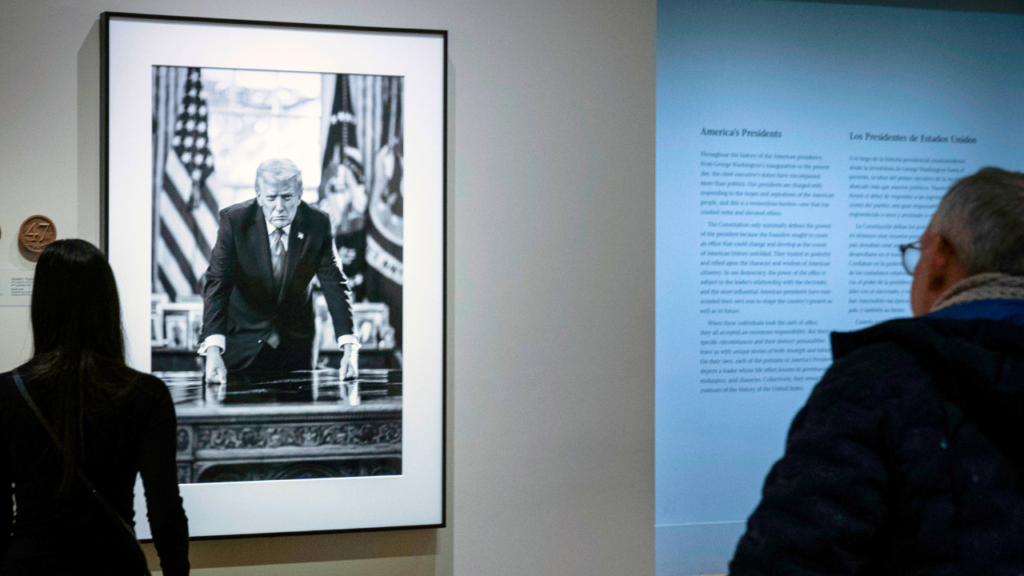
The Trump administration has launched an aggressive review of the Smithsonian Institution, which operates 21 museums, the National Zoo and approximately 157 million objects while receiving over $1 billion annually in federal funding. The sweeping examination marks one of the most extensive White House scrutinies of the institution in recent decades and has positioned the taxpayer-supported cultural complex at the center of a nationwide debate surrounding patriotism, historical interpretation and the role of federally funded museums in shaping America’s historical narrative.
In March 2025, President Trump signed an executive order titled “Restoring Truth and Sanity to American History” directing the White House Domestic Policy Council and Vice President JD Vance, serving as a Smithsonian Regent, to review exhibits and programs at the institution. The order asserts that federal cultural institutions have advanced “divisive” ideological narratives and instructs the administration to restore what it characterizes as a more patriotic presentation of American history.
Over 16 months, administration officials examined museum exhibits, educational materials, internal records, leadership statements and conducted on-site walkthroughs while interviewing curators. The review focused extensively on the National Museum of American History and eight other Smithsonian museums, with investigators documenting what they characterized as exhibits emphasizing restorative history, decolonization, immigration activism and social justice while downplaying America’s Founders and national achievements.
White House officials sent Smithsonian Secretary Lonnie Bunch formal letters directing the institution to produce exhibition plans, educational materials, internal policies and governance records by January 13, 2026. The correspondence outlined requirements for museums to begin revising public-facing content within 120 days and outlined concerns about the absence of special Independence Day programming in 2025 and the discontinuation of traditional Flag Day ceremonies.
The White House criticized the Smithsonian’s 250th anniversary exhibition, which features 250 objects including Thomas Jefferson’s writing desk, George Washington’s uniform and the Star-Spangled Banner, for repackaging existing displays rather than creating substantive founding-era content. Administration officials argued the exhibition failed to meaningfully celebrate America’s Founders, the Declaration of Independence and the American Revolution during the nation’s milestone celebration.
The White House Domestic Policy Council released a 162-page report titled “Saving America’s Story” concluding that the National Museum of American History has undergone “ideological capture” and recommends removing what it describes as political activism from exhibits. The comprehensive report included images of contested displays and spent substantial sections analyzing how the museum portrayed illegal immigration in its exhibitions.
Hours after the report’s release, Trump signed a second executive order, “Restoring Trust in the Smithsonian Institution,” directing the Interior Department, Office of Management and Budget, General Services Administrator and the White House Domestic Policy Council to encourage the Smithsonian to address the findings. The order also instructs the National Park Service to install temporary signs outside the National Museum of American History directing visitors to the report and describing the administration’s concerns with the museum’s historical presentation.
The Smithsonian has maintained that its mission involves preserving and presenting the nation’s history through scholarship, research and public education, positioning the institution’s approach in direct contrast with the administration’s stated objectives. The dispute sets the stage for continued conflict over how America’s historical narrative should be presented to the public through federally supported cultural institutions.

More Stories
Former NFL cheerleader and ex-aide face off in close Rhode Island GOP primary
Trump Threatens FCC Action Against NBC’s Welker Over Endorsement Coverage
Chicago Mayor Issues Executive Order Requiring Contractor Diversity Disclosures and ICE Ties Reporting