


💛 A quick favor, if you've got a second.
We're really happy that you chose to read one of our stories and sincerely hope you'll stick around to read more. We took our paywall down — for now — but that won't last forever, and when the gate goes back up, we'd love for you to already be on the inside.
It's free. So please enter your email here and don't forget to like and follow us on all of your favorite Social Media platforms!
Five months into the conflict, American military forces have achieved remarkable tactical success against Iran, degrading command centers, missile launchers, drone facilities, and air defenses through sustained air and naval operations. U.S. servicemembers have demonstrated exceptional professionalism and precision in these engagements. Yet military historians recognize a critical distinction: battlefield victories do not automatically produce strategic triumph.
Iran has adapted more effectively than anticipated, dispersing forces, hardening underground facilities, and shifting to mobile launchers while continuing offensive operations despite intensive bombing campaigns. The regime’s resilience reflects deeper roots than military infrastructure alone—an ideology reinforced by clerical authority, the Islamic Revolutionary Guard Corps, security apparatus, and cultural veneration of martyrdom that cannot be eliminated through strikes on physical targets.
Washington’s campaign assumes that eliminating senior leadership will precipitate systemic collapse, a theory that may overestimate decapitation’s effectiveness against ideologically committed adversaries. The central question remains whether consecutive military successes are advancing defined political objectives or creating a cycle of retaliation without clear resolution.
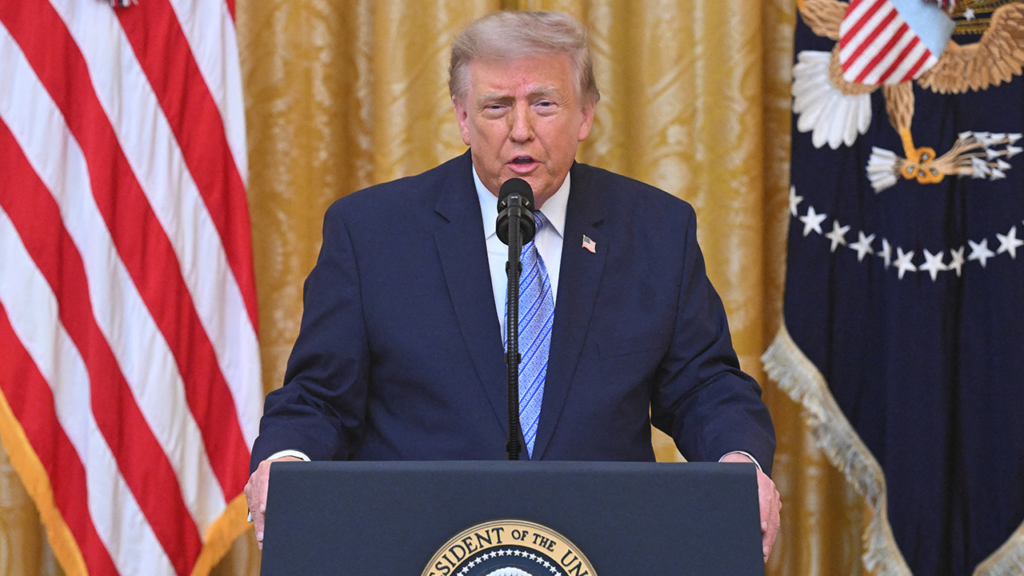
President Trump’s credibility and America’s broader standing have become the strategic center of gravity in this conflict. Beijing, Moscow, Pyongyang, and regional actors are evaluating whether U.S. warnings and red lines translate into sustained commitment or erode when tested by time and public opinion.
An AP-NORC survey indicates roughly two-thirds of Americans view the war as unworthy, with support softening even among Republicans who worry about unclear objectives and expanding costs. Democratic societies cannot indefinitely sustain costly military operations without public confidence in their purposes.
Allied nations closely monitor American strategy and staying power. Israel prioritizes immediate security, Gulf partners seek infrastructure protection, and NATO allies assess Washington’s capacity managing multiple crises simultaneously. Indo-Pacific partners question whether Middle Eastern engagement diminishes America’s long-term commitment to Asia—a calculation China is studying with particular intensity.
Beijing is analyzing American logistics, missile defense, precision strike capabilities, munitions replenishment rates, and the sustainability of democratic consensus during prolonged conflict. China may conclude that American firepower cannot easily convert to political submission, and that dispersed forces and extended campaigns can strain American inventories and erode domestic support—lessons potentially applicable to Taiwan scenarios.
President Trump should define limited, achievable objectives: denying Iran nuclear weapons, halting attacks on American forces and regional shipping, and establishing predictable consequences for renewed nuclear activity. Regime change should not become the unstated victory standard. Clear deterrence parameters should replace open-ended retaliation, specifying what triggers strikes, pauses, and negotiation opportunities.
Rather than pursuing extraordinarily risky ground seizures of hardened nuclear sites, Washington should repeatedly deny Iranian access through infrastructure destruction, surveillance, and strikes on renewed excavation. Broadening the coalition to share burden for protecting the Strait of Hormuz would distribute both responsibility and credibility among Gulf partners, NATO allies, and maritime nations.
Ultimately, Trump must restore strategic focus toward America’s principal long-term competitor. Iran represents a dangerous regional power requiring containment, yet China poses the greater challenge to American security and prosperity. Military victories endure in historical memory only when they produce political results, strengthen American credibility, and enhance national security.


More Stories
Chicago Mayor Issues Executive Order Requiring Contractor Diversity Disclosures and ICE Ties Reporting
Federal Prosecutors Convene Special Grand Jury to Investigate D.C. Schools’ Attendance and Graduation Practices
University of Pennsylvania Climate Scientist Demands Supreme Court Packing Pledge From Democratic Candidates