


💛 A quick favor, if you've got a second.
We're really happy that you chose to read one of our stories and sincerely hope you'll stick around to read more. We took our paywall down — for now — but that won't last forever, and when the gate goes back up, we'd love for you to already be on the inside.
It's free. So please enter your email here and don't forget to like and follow us on all of your favorite Social Media platforms!
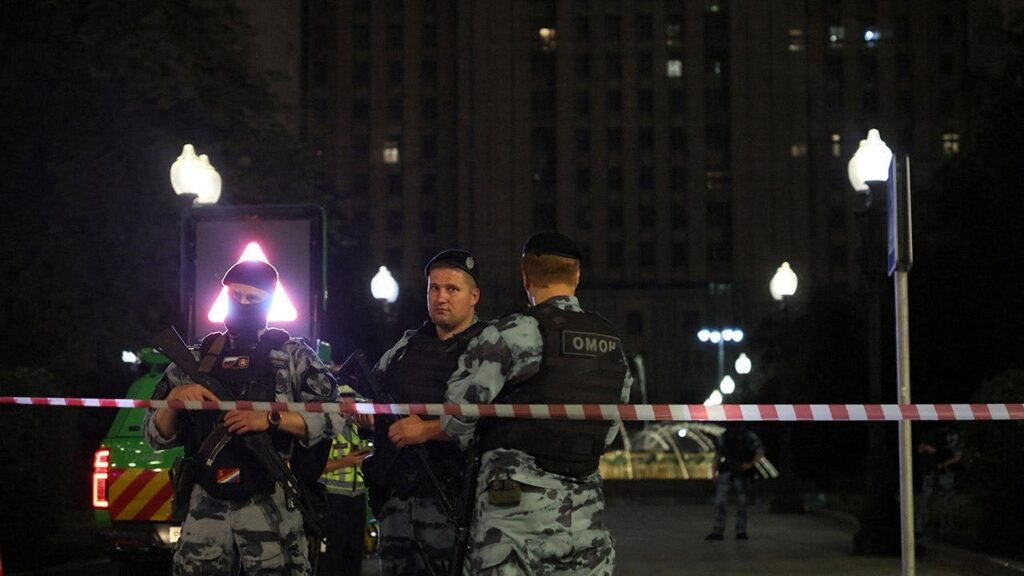
A deadly explosion at a Moscow restaurant on August 1 has raised questions about the security practices of Russia’s top military brass, according to a Eurasia research fellow at the Quincy Institute for Responsible Statecraft. The blast, which struck an upscale dining establishment, reportedly targeted Col. Gen. Alexander Chaiko, the recently appointed chief of Russia’s aerospace forces who previously led the failed 2022 assault on Kyiv. While the identity of the intended victim remains unconfirmed, analysts say the incident illustrates broader vulnerabilities in how Russian elites conduct themselves during wartime.
Dr. Mark Episkopos told Fox News Digital that high-ranking military officers continue to disregard operational security protocols despite repeated attacks across Russian territory. Russian military figures have been holding private celebrations in public venues despite the ongoing conflict with Ukraine, creating predictable targets for adversaries. The pattern suggests that efforts by President Vladimir Putin to maintain an appearance of normalcy in major cities like Moscow and St. Petersburg may have inadvertently created security blind spots that can be exploited.
Russia’s National Anti-Terrorism Committee reported that an unidentified woman carried an improvised explosive device into the Balzi Rossi restaurant and was intercepted at the entrance before detonation. The Moscow Mayor’s office confirmed that the blast killed five people and wounded 19 others. Russian investigators suggested the woman may not have known what she was transporting, with the device remotely detonated after her apprehension.
Episkopos noted that the attack’s execution—using a civilian courier with a remotely triggered explosive—mirrors previous operations inside Russia attributed to Ukrainian intelligence. He cited similar incidents involving Lt. Gen. Igor Kirillov, Lt. Gen. Yaroslav Moskalik, Lt. Gen. Fanil Sarvarov, and pro-Kremlin blogger Vladlen Tatarsky. Ukraine has not publicly claimed responsibility for the restaurant bombing, and no independent confirmation of the target has been established.
The analyst highlighted how Ukraine has adapted to Russia’s conventional military advantages by developing asymmetric tactics that exploit geographic and intelligence vulnerabilities. Kyiv’s smaller territory and better-controlled borders make such operations more difficult to execute there, whereas Russia’s vast expanse presents significant defensive challenges. Meanwhile, Western intelligence support enhances Ukraine’s targeting capabilities against high-value Russian military and political figures.

More Stories
Packers Running Back Josh Jacobs Placed on NFL Commissioner’s Exempt List Following Domestic Arrest
Federal Prosecutors Convene Special Grand Jury to Investigate D.C. Schools’ Attendance and Graduation Practices
Denver Broncos Linebacker Jonathon Cooper Placed on Commissioner’s Exempt List Amid Domestic Violence Charges