


💛 A quick favor, if you've got a second.
We're really happy that you chose to read one of our stories and sincerely hope you'll stick around to read more. We took our paywall down — for now — but that won't last forever, and when the gate goes back up, we'd love for you to already be on the inside.
It's free. So please enter your email here and don't forget to like and follow us on all of your favorite Social Media platforms!
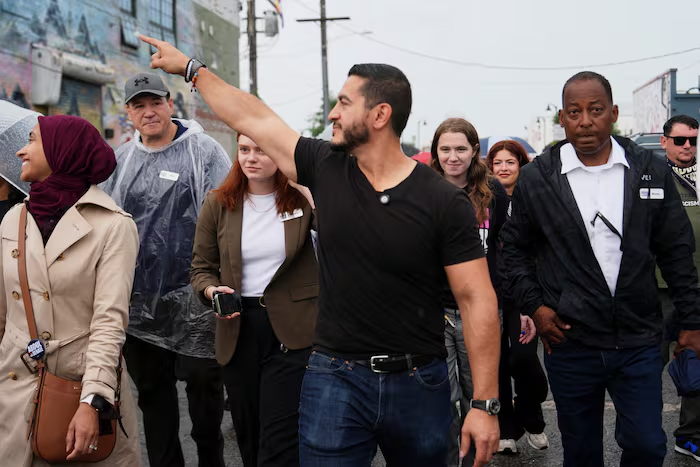
Abdul El-Sayed and U.S. Rep. Haley Stevens converged on Detroit’s Black churches Sunday as the Michigan Democratic Senate primary entered its final stretch, with both candidates seeking to mobilize crucial voting blocs before Tuesday’s election. El-Sayed attended services at multiple congregations across the city while Stevens made her own appearances at competing churches, underscoring the intense competition for support among voters who historically decide the state’s Democratic primaries.
The race has emerged as a defining test of the Democratic Party’s ideological direction. El-Sayed, a progressive endorsed by Sen. Bernie Sanders and left-leaning national figures, has positioned himself against the party establishment, while Stevens, a four-term congresswoman backed by Senate Democratic leader Chuck Schumer and Michigan’s top Democratic officials, has emphasized experience and electability as her chief qualifications.
At Kingdom Covenant Church, El-Sayed pitched a vision centered on economic opportunity and equal rights, telling congregants they deserve quality schools, healthcare, and jobs regardless of background. His Detroit appearances included support from Democratic Reps. Summer Lee of Pennsylvania and Ayanna Pressley of Massachusetts, as well as Yusef Jackson, president of Rainbow PUSH Coalition.
Stevens highlighted her year-round presence in Detroit-area churches and emphasized connections to former President Barack Obama, citing her role as chief of staff during the auto industry rescue from 2009 to 2011. Her campaign has invested heavily in advertising these credentials to Black voters, recognizing that Detroit-area turnout will likely determine the primary outcome.
The two candidates pursued divergent strategies for the final full day of campaigning, with El-Sayed remaining in Detroit to drive turnout through his 12,000-person volunteer operation while Stevens traveled west to maximize support in Democratic strongholds including Grand Rapids and Kalamazoo. The different schedules reflect both campaigns’ focus on converting already-committed supporters into actual voters rather than persuading undecided voters.
The winner of Tuesday’s primary will face Republican Mike Rogers in November for an open Senate seat critical to Democratic hopes of controlling the chamber. Both candidates acknowledged the necessity of reunifying a fractured party coalition to defeat Rogers and hold the seat that Democrats view as essential to their Senate strategy.

More Stories
Former NFL cheerleader and ex-aide face off in close Rhode Island GOP primary
Trump Threatens FCC Action Against NBC’s Welker Over Endorsement Coverage
Chicago Mayor Issues Executive Order Requiring Contractor Diversity Disclosures and ICE Ties Reporting