


💛 A quick favor, if you've got a second.
We're really happy that you chose to read one of our stories and sincerely hope you'll stick around to read more. We took our paywall down — for now — but that won't last forever, and when the gate goes back up, we'd love for you to already be on the inside.
It's free. So please enter your email here and don't forget to like and follow us on all of your favorite Social Media platforms!
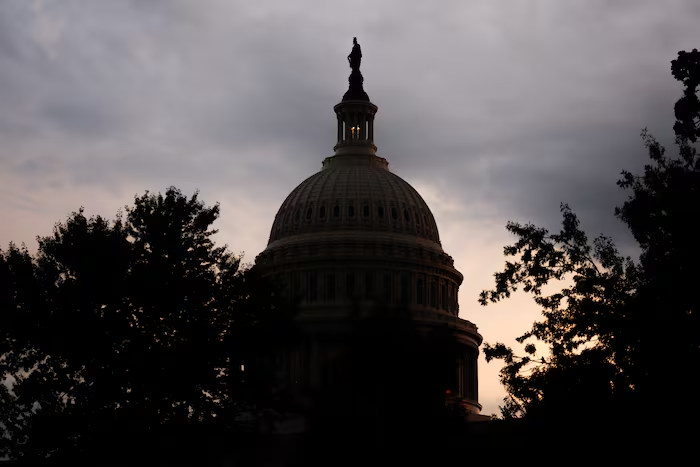
Senate leadership announced a temporary spending package Sunday that would maintain federal agency operations beyond the midterm election cycle and into early December, marking an effort to sidestep a potential government shutdown during peak campaign activity. Lawmakers intend to vote on the legislation before adjourning for their traditional August break, a recess many senators plan to dedicate to reelection efforts rather than legislative work in the capital.
The measure sustains current federal spending levels through December 11, though the House-passed version excluded several White House-backed provisions still under Senate negotiation. Among the rejected requests was a $1 billion allocation for construction of “Trump-class” battleships, which Democratic senators highlighted as excluded from the final agreement.
Senate Majority Leader John Thune identified the bill’s passage as his primary objective before the August break, citing public fatigue from recent shutdown episodes. The nation experienced two record-breaking closures within the previous ten months, and Thune stressed the necessity of preventing another disruption to federal operations.
The early action on temporary funding represents a departure from standard congressional practice, which typically sees extensions negotiated in the final hours before deadline. This year’s proactive approach, occurring two months ahead of the fiscal year’s September 30 conclusion, reflects parties’ shared desire to avoid electoral complications from a shutdown.
Republicans and Democrats have struggled to finalize the twelve required annual appropriations bills before the deadline. The stopgap extension provides additional time for negotiating a comprehensive budget, though significant partisan divisions remain on spending priorities, with Republicans pushing an aggressive 44 percent defense increase while seeking 10 percent cuts to non-defense programs.
The agreement also delays implementation of a contentious Trump administration grants rule that would require political appointees to review federal grant proposals based partly on alignment with presidential policy goals. Republican Senator Susan Collins and Democratic Senator Patty Murray both backed the postponement, with Collins expressing concerns about potential politicization of research funding affecting rural communities and biomedical science.


More Stories
Former NFL cheerleader and ex-aide face off in close Rhode Island GOP primary
Trump Threatens FCC Action Against NBC’s Welker Over Endorsement Coverage
Chicago Mayor Issues Executive Order Requiring Contractor Diversity Disclosures and ICE Ties Reporting