


💛 A quick favor, if you've got a second.
We're really happy that you chose to read one of our stories and sincerely hope you'll stick around to read more. We took our paywall down — for now — but that won't last forever, and when the gate goes back up, we'd love for you to already be on the inside.
It's free. So please enter your email here and don't forget to like and follow us on all of your favorite Social Media platforms!
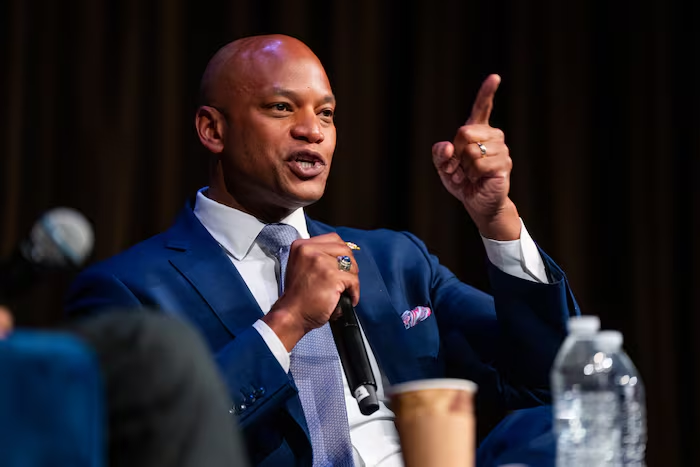
Maryland Gov. Wes Moore voiced serious alarm about the Trump administration’s potential use of federal power to disrupt this fall’s midterm elections during remarks in Oklahoma City. The governor, who is assuming the chairmanship of the National Governors Association, detailed concerns about mail voting restrictions, state voter data requests, and possible deployment of federal personnel at polling locations.
Moore emphasized that Trump’s actions are occurring openly rather than covertly. The 47-year-old Democrat called for the bipartisan governors’ group to safeguard states’ constitutional authority over election administration and rejected the notion that Trump is concealing his intentions on this front.
As Moore takes the helm of the NGA—a position previously held by Bill Clinton when he served as Arkansas governor—his national standing continues to grow amid persistent speculation about a 2028 presidential bid. Moore has visited early primary states including South Carolina and Nevada, though he maintains he will focus on his current responsibilities through the November elections.
Moore’s agenda as NGA chair centers on a new national initiative called “Service United,” designed to connect young people to workforce development through service-oriented employment. The program launches with $10 million in philanthropic funding and builds on similar efforts Moore implemented in Maryland, including a $5 million apprenticeship program expansion announced this week.
Kaiser Permanente and the Andrew Carnegie Foundation are among supporters backing the initiative. Carnegie Foundation President Dame Louise Richardson expressed hope that service years eventually become as common in résumés as college degrees.
Despite Moore’s warm reception for the program from departing NGA chair Oklahoma Gov. Kevin Stitt, deep partisan divisions persist within the governors’ association. Stitt cautioned against “big government” approaches while endorsing the apprenticeship model’s workforce benefits.
Moore addressed artificial intelligence’s impact on entry-level employment opportunities for young workers, criticizing the White House’s approach of using executive orders to prevent states from addressing workforce challenges. He stressed the need for viable career pathways regardless of college attendance decisions.
Relations between Moore and Trump have been contentious. The president previously attempted to exclude Moore and Colorado Gov. Jared Polis from a White House NGA meeting earlier this year, though Stitt’s intervention secured their attendance. Little progress has been made in improving the relationship since then.
Tensions could escalate at the NGA’s traditional February meeting in Washington. Moore characterized Trump’s approach to national security and economic policy as consistently ideological rather than pragmatic.
Moore faces internal Democratic Party challenges as well. He has encountered difficulties securing legislative support in Maryland for a constitutional amendment on redistricting, and the party remains fractured over progressive candidates winning primaries nationwide.
When asked about democratic socialists gaining ground in Democratic primaries across major cities, Moore avoided taking a definitive stance. He argued that party members—not party leaders—should determine nominee selections, suggesting voters rather than figures like Senate Democratic Leader Chuck Schumer should have final say.
Moore clarified his own ideological positions by rejecting left-wing proposals to abolish police and prisons or establish open borders. These distinctions underscored his effort to navigate competing party factions.
North Carolina Gov. Josh Stein, whose state features a competitive Senate race, echoed Moore’s election security concerns. Stein warned that federal interference signals are “very worrisome” but expressed confidence voters can overcome obstacles to cast ballots as intended.
White House spokeswoman Abigail Jackson countered Democratic concerns by calling for passage of the SAVE America Act, a strict citizenship verification voting requirement currently stalled in the Senate. She suggested Democrats opposing this bill lack genuine commitment to election security.
Stitt expressed confidence states can conduct elections independently while supporting stricter voting requirements. He maintained that states should retain control over their own electoral processes without federal involvement.
Moore drew a historical parallel to segregation-era arguments for states’ rights, invoking Bull Connor, Birmingham’s infamous public safety commissioner who deployed fire hoses and attack dogs against Civil Rights protesters. The governor said Trump’s presidency has fundamentally altered his perspective on the importance of strong state governors.
More Stories
Former NFL cheerleader and ex-aide face off in close Rhode Island GOP primary
Trump Threatens FCC Action Against NBC’s Welker Over Endorsement Coverage
Chicago Mayor Issues Executive Order Requiring Contractor Diversity Disclosures and ICE Ties Reporting