

💛 A quick favor, if you've got a second.
We're really happy that you chose to read one of our stories and sincerely hope you'll stick around to read more. We took our paywall down — for now — but that won't last forever, and when the gate goes back up, we'd love for you to already be on the inside.
It's free. So please enter your email here and don't forget to like and follow us on all of your favorite Social Media platforms!
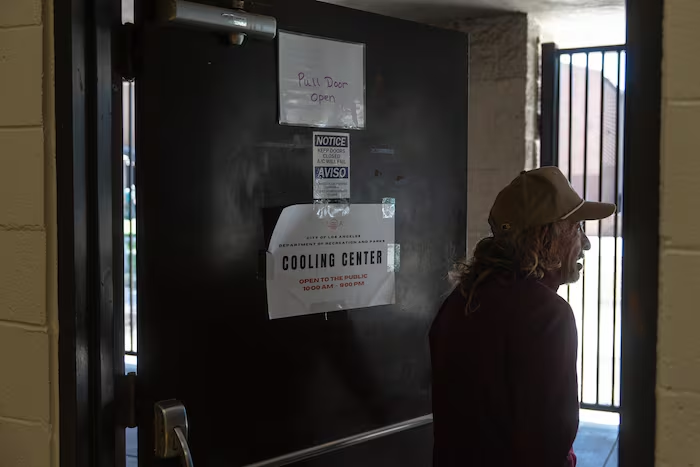
A severe heat dome is expected to grip large portions of the Western United States this weekend, bringing potentially record-shattering temperatures while amplifying the threat of wildfires in already parched regions. The National Weather Service has issued warnings urging residents to remain indoors and maintain hydration as dangerous conditions persist through Sunday. The atmospheric ridge of high pressure responsible for this extreme event will be relatively brief, though its intensity poses immediate health and safety risks.
Las Vegas is forecast to reach 115 degrees Fahrenheit on Saturday, marking the hottest temperature recorded there this year, while Phoenix is expected to hit 116 degrees. El Centro, California may set a new record at 118 degrees, and even Montana will experience dangerous heat, with Great Falls projected to reach 104 degrees. According to National Weather Service meteorologist Morgan Stessman, Saturday’s forecast high in Las Vegas is 10 degrees above normal, with Sunday’s high expected at 114 degrees.
The combination of extreme daytime heat and overnight lows remaining in the upper 80s to low 90s Fahrenheit creates particularly hazardous conditions by preventing human bodies from recovering during nighttime hours. “There’s just no relief overnight,” Stessman noted. The August record for Las Vegas stands at 116 degrees, while the all-time record of 120 degrees was set in July 2024 during what became the hottest summer on record.
In Montana, the entire eastern portion of the state is under an extreme heat warning, with Great Falls expected to surpass its previous record of 101 degrees and Helena likely to match or exceed its record of 102 degrees. The current heat wave is milder than one occurring in mid-July when Billings reached 111 degrees on July 12. By Sunday, most of Montana will see highs drop to the 70s, according to National Weather Service meteorologist Jeff Kitsmiller.
Meteorologists warn that the combination of extreme heat and moisture loss from previous warming will significantly elevate wildfire danger throughout the Western region. Most of Montana is under a red flag warning, with fires already burning and high winds expected throughout the weekend. In Nevada, afternoon relative humidity is forecast to bottom out in single digits across numerous areas, further amplifying fire risk.
The U.S. Forest Service has indicated enhanced wildfire risk will persist through Sunday across most of Southern California, excluding coastal areas. Climate change driven by fossil fuel combustion is intensifying heat waves while contributing to prolonged droughts and increasingly destructive wildfires. This year’s extreme weather is also being influenced by El Niño, a natural warming phenomenon in the equatorial Pacific that alters global weather patterns.
The current El Niño event is tracking to become among the most intense periods since the National Weather Service began systematic monitoring in 1950, with United Nations officials warning Friday that it has already set records for early-stage intensity.

More Stories
New York’s Colombian Community Mobilizes Relief Efforts Following Recent Earthquakes
Nepal Buries Hundreds of Flood Victims in Mass Graves as Identification Efforts Lag
Hurricane Karina Intensifies Over Pacific, Potential Major Storm Looms This Week