



💛 A quick favor, if you've got a second.
We're really happy that you chose to read one of our stories and sincerely hope you'll stick around to read more. We took our paywall down — for now — but that won't last forever, and when the gate goes back up, we'd love for you to already be on the inside.
It's free. So please enter your email here and don't forget to like and follow us on all of your favorite Social Media platforms!
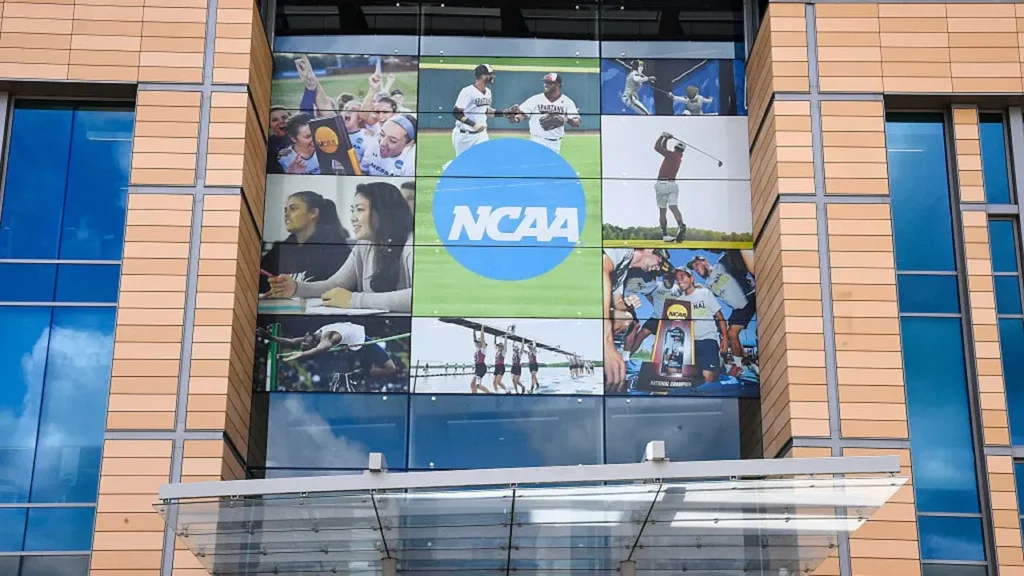
The NCAA’s newly implemented five-and-five eligibility rule suffered a significant legal setback this week when U.S. District Court Judge Charlotte Sweeney of Colorado issued a class-wide preliminary injunction. The ruling requires the NCAA to create a blanket waiver providing an extra year of eligibility for athletes from the 2022 class who exhausted their four years under the previous ruleset.
Multiple lawsuits filed across the nation by athletes from the 2022 class challenged the NCAA’s new eligibility framework, contending it violated their rights to earn income through name, image and likeness deals. Legal arguments centered on the assertion that players who completed four years of eligibility under prior rules should have been grandfathered into the new system rather than barred from competing.
Judge Sweeney’s order specifically addresses athletes who began competing in collegiate sports during the 2022-2023 season in NCAA Division I programs and completed four years of eligibility by the conclusion of the 2025-2026 season. The directive prevents the NCAA from blocking these athletes from playing a fifth season under the newly adopted Five-Year Eligibility Rule.
The NCAA faces a decision on whether to appeal the injunction to the Tenth Circuit Court or grant a universal waiver across all sports to avoid prolonged litigation. Compliance departments at multiple universities are already grappling with logistical questions regarding roster management and the applicability of the ruling to football and basketball players who went undrafted in recent months.
The ruling comes as the NCAA also upheld a reduced two-game suspension for Tennessee linebacker Arion Carter, who declared for the NFL Draft but was deemed ineligible after declaring, hiring an agent and accepting travel assistance. The case highlights the organizational confusion surrounding eligibility determinations as federal courts increasingly scrutinize NCAA policies.


More Stories
University of Pennsylvania Climate Scientist Demands Supreme Court Packing Pledge From Democratic Candidates
Missouri Division II Football Player Dies Following On-Field Medical Emergency
William Jewell College Running Back Dies After Medical Emergency During Season Opener