



💛 A quick favor, if you've got a second.
We're really happy that you chose to read one of our stories and sincerely hope you'll stick around to read more. We took our paywall down — for now — but that won't last forever, and when the gate goes back up, we'd love for you to already be on the inside.
It's free. So please enter your email here and don't forget to like and follow us on all of your favorite Social Media platforms!
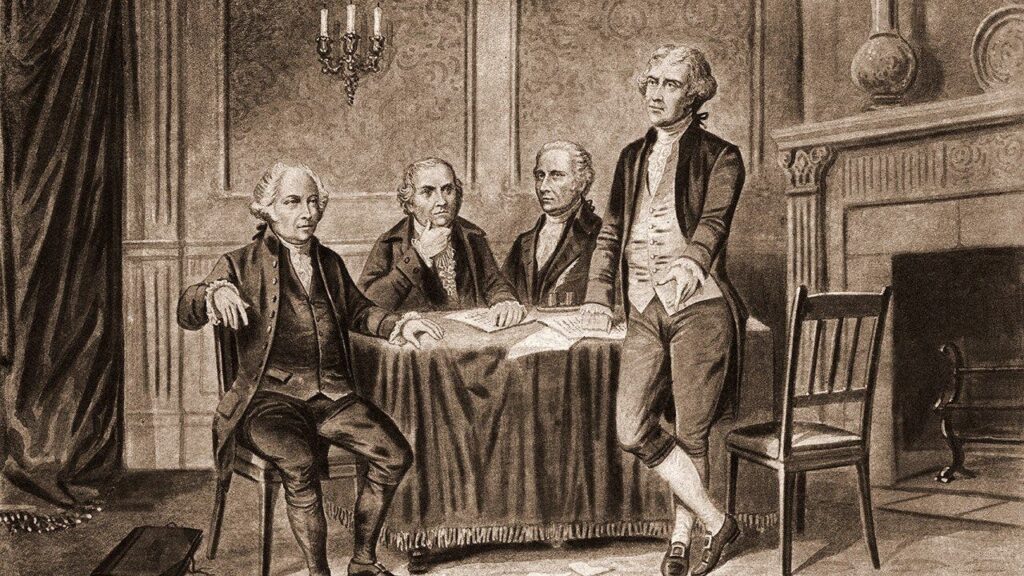
A centuries-old warning from founding father John Adams about the self-destructive nature of democracies has gained renewed relevance as the United States confronts an accelerating fiscal crisis. Adams cautioned that free societies face their greatest peril not from external adversaries but from internal decay caused by negligence and erosion of foundational principles. Today’s runaway national debt exemplifies precisely the kind of internal corrosion Adams feared, experts argue.
The U.S. national debt has climbed to nearly $40 trillion, with annual deficits adding $2 trillion to $3 trillion yearly to the burden. Despite warnings from fiscal experts, economists and government officials, the scale of this crisis barely penetrates public consciousness. The federal government’s own financial reports have long characterized America’s fiscal trajectory as “unsustainable,” yet Congress continues authoritarian spending patterns with no meaningful corrective action.
Military and fiscal leaders have sounded alarms for years. Admiral Mike Mullen, former Chairman of the Joint Chiefs of Staff, declared in 2010 that national debt represented “the most significant threat to our national security.” The debt-to-GDP ratio now exceeds 125 percent, a level economists have traditionally identified as dangerous territory. In 2025 alone, roughly $10 trillion in borrowing will be required to service maturing debt and finance current deficits.
Historical precedent demonstrates that great powers cannot sustain dominance after abandoning fiscal discipline. Greece’s debt crisis nearly destroyed its economy before European Union intervention provided rescue. The United States faces no such safety net: America’s economy comprises such a substantial portion of global financial systems that a collapse in confidence in U.S. debt would trigger worldwide catastrophe exceeding Great Depression devastation.
The fiscal breakdown could materialize swiftly if international investors demand higher interest rates or question America’s ability to manage its finances responsibly. Citizens must grasp the magnitude of this threat and demand immediate action from elected officials, analysts say, before the cumulative weight of deficits becomes impossible to manage.


More Stories
Chicago Mayor Issues Executive Order Requiring Contractor Diversity Disclosures and ICE Ties Reporting
University of Pennsylvania Climate Scientist Demands Supreme Court Packing Pledge From Democratic Candidates
State Department Reissues Level 3 Travel Advisory for Israel Amid Terrorism and Armed Conflict Concerns