

💛 A quick favor, if you've got a second.
We're really happy that you chose to read one of our stories and sincerely hope you'll stick around to read more. We took our paywall down — for now — but that won't last forever, and when the gate goes back up, we'd love for you to already be on the inside.
It's free. So please enter your email here and don't forget to like and follow us on all of your favorite Social Media platforms!
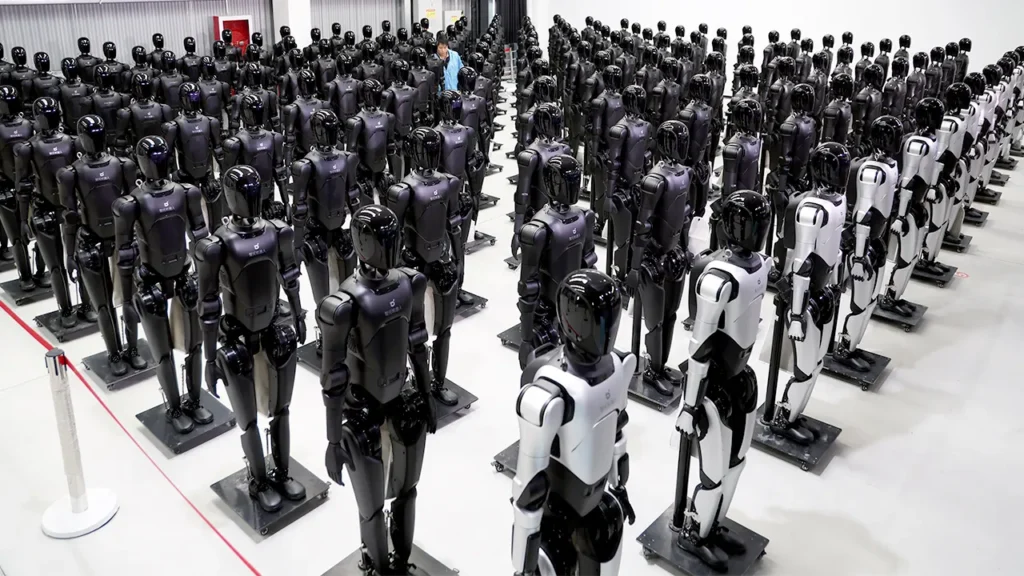
The Trump administration moved to restrict advanced robotics and connected electrical equipment from foreign manufacturers, citing national security vulnerabilities. On July 28, the Federal Communications Commission placed foreign-produced humanoid robots and connected power inverters on its Covered List, effectively barring new models from receiving authorization for import and sale in the United States. While the restriction applies broadly to foreign equipment, China has emerged as the primary target of the crackdown.
Officials justify the action by pointing to potential surveillance risks and cyberattack exposure inherent in connected machines equipped with cameras and internet access. Humanoid robots increasingly deployed in factories, warehouses and research facilities can transmit sensitive information beyond secure locations, according to federal national security agencies. Power inverters, which convert electricity for solar panels and batteries across America’s energy infrastructure, present similar vulnerabilities when remotely accessible.
The restrictions target new product authorizations rather than existing equipment already in American hands or retail channels. Previously approved models can remain available, though the FCC retains authority to revoke earlier approvals. Companies may petition for conditional approval if federal security reviewers determine acceptable risk levels, with non-Chinese suppliers expected to receive exemptions more readily.
Chinese robotics manufacturer Unitree, which holds nearly one-fifth of the global humanoid robot market according to Counterpoint Research, appears poised to face the heaviest impact. The company has collaborated with Nvidia on artificial intelligence platforms and counts numerous American universities and research institutions among its customers. China’s government condemned the FCC decision as unfair targeting and warned of potential retaliation.
The policy creates competing pressures on the American innovation ecosystem. Domestic manufacturers gain competitive advantages in a restricted market, but researchers and startups relying on affordable Chinese hardware for software testing and artificial intelligence training may face higher costs and limited options. Building a competitive U.S. robotics supply chain requires substantial investment, skilled labor and secured component sourcing.
Consumers using robot vacuums, lawn mowers and security devices should verify FCC identification numbers on products and review manufacturer privacy policies. Check whether devices store camera footage locally or upload to cloud servers, disable remote viewing features when unnecessary, and utilize guest networks to isolate connected devices from computers and sensitive files.

More Stories
Federal voting arrest in New Jersey adds new pressure point in Sherrill-Trump standoff
Colombia backs Trump security push while limiting U.S. role in anti-gang operations
Former NFL cheerleader and ex-aide face off in close Rhode Island GOP primary