

💛 A quick favor, if you've got a second.
We're really happy that you chose to read one of our stories and sincerely hope you'll stick around to read more. We took our paywall down — for now — but that won't last forever, and when the gate goes back up, we'd love for you to already be on the inside.
It's free. So please enter your email here and don't forget to like and follow us on all of your favorite Social Media platforms!
The women’s professional basketball league is suddenly advocating for a return to sport-centered discussions, yet this pivot reveals inconsistencies in how media figures and league officials have addressed the intersection of athletics and politics. Members of the WNBA media establishment are now calling for conversations to center on gameplay rather than broader cultural matters, but only after determining which athletes can speak and what statements merit amplification.
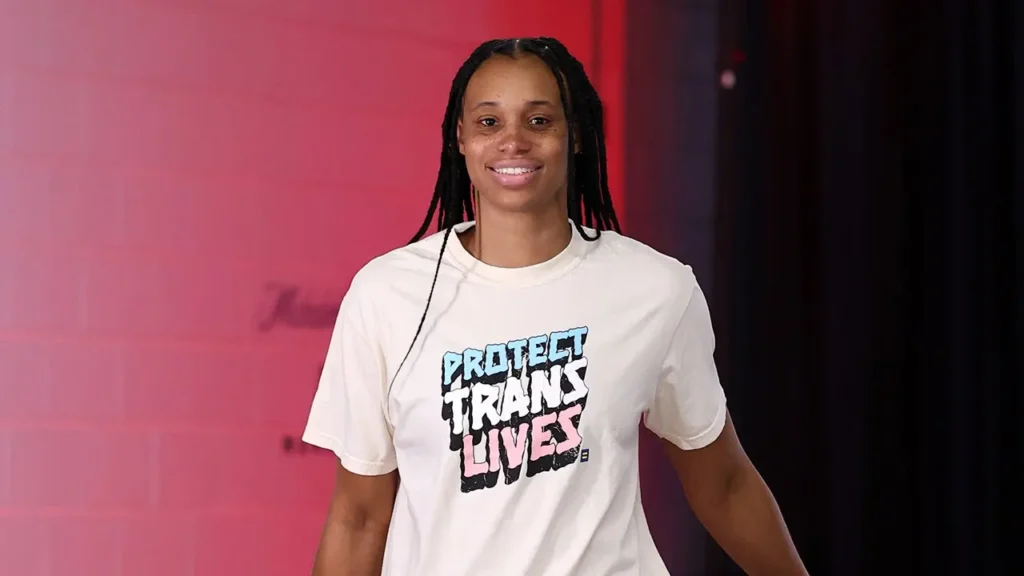
The disconnect became evident during a Seattle Storm game against the Indiana Fever on Tuesday, when center Stefanie Dolson wore a shirt stating “Trans rights are human rights.” This appearance arrived one week after guard Sophie Cunningham had publicly stated her opposition to biological males competing in women’s sports. The Storm’s official social media accounts promoted Dolson’s shirt with added emojis to ensure visibility, demonstrating institutional endorsement of the message.
After the game, a credentialed journalist attempted to question Fever coach Stephanie White regarding a pregame demonstration outside the arena supporting Cunningham’s position. Rather than presenting it neutrally, the reporter characterized it as an “anti-trans rally” and noted that Cunningham’s comments had “ignited right-wing and anti-trans supporters.” An Indiana Fever public relations representative intervened, clarifying that neither Cunningham nor the organization had involvement with the demonstration and redirected focus toward winning games.
Former WNBA player and current ESPN analyst Chiney Ogwumike recently appeared on the network’s “First Take” program to advocate for resetting conversations around the league and star player Caitlin Clark. Ogwumike stated that discussions had “strayed so far away from the sport” and argued that ESPN programs should exercise editorial discretion regarding story coverage, shifting focus to “beautiful basketball” during the league’s 30th season.
Yet Ogwumike’s position represents a significant departure from her previous public statements. In 2020, she defended athletes using their platforms for political and social advocacy, declaring that activism exists “in our DNA” for players seeking social change. That same year, she served as executive producer for ESPN’s documentary “144,” which celebrated the 2020 WNBA season’s social activism and political organizing as defining league characteristics.
The league itself deliberately integrated progressive politics into its product over years. Beginning in 2014, the WNBA launched an official Pride initiative and subsequently became the first professional sports league to march in New York City’s Pride parade. During the 2016 season, players wore shirts referencing police violence victims and Black Lives Matter, prompting initial fines that were rescinded following union pushback.
The 2020 season marked an escalation of political integration. The WNBA and players’ union launched the Justice Movement and established a Social Justice Council designed to drive conversations about race, voting rights, LGBTQ advocacy and gun control. The league placed Black Lives Matter imagery on courts and honored Breonna Taylor on player uniforms, making activism an official component of the season rather than individual expression.
Players subsequently wore “Vote Warnock” shirts during nationally televised games in support of Democratic Senate candidate Raphael Warnock, who challenged Republican Sen. Kelly Loeffler, then a co-owner of the Atlanta Dream. This marked a shift from social advocacy to partisan electoral engagement conducted within WNBA arenas. In 2024, the league utilized its Commissioner’s Cup to promote civic engagement and reproductive health advocacy, with league operations head Bethany Donaphin calling the WNBA “the most progressive league in professional sports.”
The current demand for sports-focused coverage conflicts with the league’s deliberate political positioning. When guard Angel Reese amplified a coaching complaint from Toronto’s Sandy Brondello on social media—adding a clown emoji and framing it through a racial lens despite Brondello’s explanation that “protected species” is common Australian sports terminology—she received public support. After the league suspended Brondello and accepted Reese’s interpretation, Reese expressed gratitude and called for moving forward to “play winning basketball.”
ESPN’s coverage has similarly reflected selective emphasis. A feature published during All-Star Weekend quoted season-ticket holders lamenting that “politics has killed my hobby,” reinforcing narratives about fan exhaustion with political content. The same story acknowledged the WNBA’s longstanding relationship with Democratic politicians and noted the league is never entirely devoid of political discourse, creating contradictions about whether politics represents an essential identity component or an unfortunate distraction.
The league’s current posture suggests that progressive politics remained acceptable as central to the WNBA’s brand, but conservative or dissenting viewpoints have rendered the political landscape uncomfortable for league leadership and allied media figures. Caitlin Clark’s arrival brought millions of new viewers with diverse political perspectives, expanding the conversation beyond the progressive orthodoxy that previously dominated league discourse.
Conservative media outlets began covering the league, Republican lawmakers posed questions to leadership and players like Cunningham challenged prevailing progressive consensus. The WNBA’s political conversation became more ideologically diverse, yet the league that consistently emphasizes diversity values appears resistant to political diversity within its fanbase and organizational sphere.
League officials and media defenders increasingly conflate online harassment with legitimate criticism, characterizing all challenges to the WNBA’s preferred narrative as bigotry or hatred. This approach sidesteps substantive responses to questions about selective standards regarding political expression and editorial judgment regarding which voices receive amplification within the sport’s media ecosystem.
The WNBA cannot simultaneously leverage marquee events to advance progressive causes, celebrate players influencing elections through on-court advocacy and market activism as central to league identity, then demand exclusively basketball-focused questions because ideological opponents have entered the conversation. The league explicitly told its audience that politics belonged in women’s basketball; what it meant, judged by current actions, was that progressive politics belonged there.

More Stories
Former NFL cheerleader and ex-aide face off in close Rhode Island GOP primary
Trump Threatens FCC Action Against NBC’s Welker Over Endorsement Coverage
Chicago Mayor Issues Executive Order Requiring Contractor Diversity Disclosures and ICE Ties Reporting