



💛 A quick favor, if you've got a second.
We're really happy that you chose to read one of our stories and sincerely hope you'll stick around to read more. We took our paywall down — for now — but that won't last forever, and when the gate goes back up, we'd love for you to already be on the inside.
It's free. So please enter your email here and don't forget to like and follow us on all of your favorite Social Media platforms!
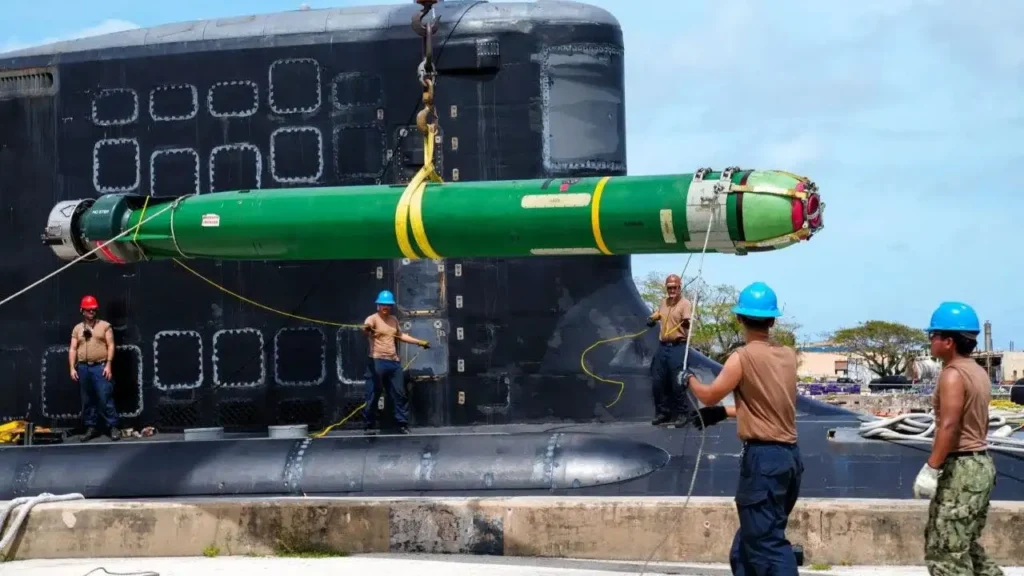
The U.S. Navy is embarking on a significant restructuring of its undersea weapons arsenal following congressional budget approval that reflects a strategic pivot toward preparing for two major regional conflicts at once. Lawmakers have signaled that the nation requires sufficient quantities of torpedoes to sustain simultaneous military operations across multiple theaters, according to Naval News. Defense contractors are now accelerating production of the MK-48 Advanced Capability (ADCAP) heavyweight torpedoes and MK-54 lightweight torpedoes to satisfy minimum inventory thresholds established by the latest budget allocation.
While the Navy has not disclosed exact procurement numbers for undersea weapons, the new requirements are based on internal assessments of potential confrontations with near-peer military forces. The service branch is also mandated to develop expansion protocols for massively ramping up torpedo manufacturing if circumstances demand it during wartime or peacetime. This overhaul arrives as the broader U.S. military apparatus confronts the urgent task of replenishing missile and weapons stocks that have been substantially depleted.
Recent military operations against Iran have strained American arsenals considerably. The 12-day exchange of strikes involving Israeli and Iranian forces, during which the U.S. and Israel defended key installations, cost between $1.48 billion to $1.58 billion, according to analysis by the Jewish Institute for National Security of America (JINSA). The United States deployed Terminal High Altitude Area Defense (THAAD) interceptors extensively, accounting for nearly half of all successful interceptions due to limitations in Israel’s Arrow defense system.
The U.S. had approximately 632 THAAD interceptors before June 13, when Israel launched its offensive operations. Current assessments indicate roughly 540 remain available, representing a 14 percent depletion of the global stockpile. At existing production rates, restocking the THAAD systems consumed during the conflict would require three to eight years. Patriot interceptor production proceeds at a faster pace, though significant quantities are being allocated to Ukraine, creating uncertainty about remaining domestic reserves.


More Stories
Former NFL cheerleader and ex-aide face off in close Rhode Island GOP primary
Trump Threatens FCC Action Against NBC’s Welker Over Endorsement Coverage
Chicago Mayor Issues Executive Order Requiring Contractor Diversity Disclosures and ICE Ties Reporting