



💛 A quick favor, if you've got a second.
We're really happy that you chose to read one of our stories and sincerely hope you'll stick around to read more. We took our paywall down — for now — but that won't last forever, and when the gate goes back up, we'd love for you to already be on the inside.
It's free. So please enter your email here and don't forget to like and follow us on all of your favorite Social Media platforms!
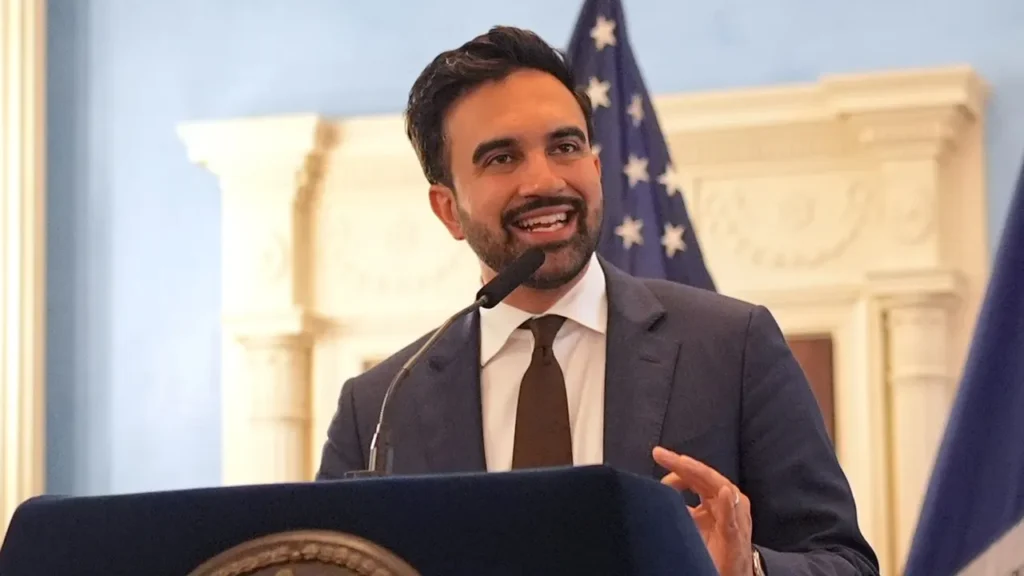
New York City Mayor Zohran Mamdani stopped short of committing to direct cash payments for slavery reparations during a Tuesday interview, instead signaling his willingness to consider recommendations from the city’s official commission studying the issue. When asked by journalist Charles Blow whether he would support cash reparations if recommended, Mamdani deferred to the pending findings rather than take a position in advance.
Mamdani reiterated campaign statements acknowledging New York City’s active role in the slave trade and its continuation through discriminatory policies and institutions. He emphasized that the city bears responsibility for this historical complicity and said he anticipated the commission’s work would properly document this reality. “This is critically important because this is also what it looks like to acknowledge what history truly was,” Mamdani stated.
The New York City Commission on Racial Equity, established in 2024 under Local Law 92, is tasked with examining how city government contributed to slavery and perpetuated its harms. A companion initiative under Local Law 91 created a “Truth, Healing and Reconciliation” process enabling public acknowledgment of slavery’s history and ongoing impact on the city.
According to CORE’s timeline, the commission plans to release its final report on the reparations study in July 2027, with implementation recommendations for the truth and reconciliation plan due by June 18, 2028. The separate “Truth, Healing and Reconciliation Planning Process” final report is scheduled for June 2027.
Linda Tigani, chair and executive director of NYC CORE, praised Mamdani for using his platform to highlight the city’s slavery history. She noted that New York housed the second-largest enslaved population in America after Charleston, South Carolina, and that enslaved people’s labor built Wall Street’s early economy.
The commission, however, criticized Mamdani’s Preliminary Citywide Racial Equity Plan released in April, arguing it lacked adequate racial equity strategy, disaggregated data standards, and transparent funding mechanisms tied to equity outcomes. CORE has committed $500,000 in 2026 to community groups participating in the reparations research and dialogue network.
Political strategist Tyrik Washington, who partnered with CORE on the reparations study, predicted that implementing such policies could produce measurable reductions in occupational segregation and meaningful progress toward pay equity for Black New Yorkers within five to ten years. The commission hosted what Forbes reported as the city’s largest reparations gathering during a Juneteenth event this year.


More Stories
Former NFL cheerleader and ex-aide face off in close Rhode Island GOP primary
Modern Science Finally Supports & Strengthens Biblical Account of the Crucifixion of Jesus Christ
Trump Threatens FCC Action Against NBC’s Welker Over Endorsement Coverage