



💛 A quick favor, if you've got a second.
We're really happy that you chose to read one of our stories and sincerely hope you'll stick around to read more. We took our paywall down — for now — but that won't last forever, and when the gate goes back up, we'd love for you to already be on the inside.
It's free. So please enter your email here and don't forget to like and follow us on all of your favorite Social Media platforms!
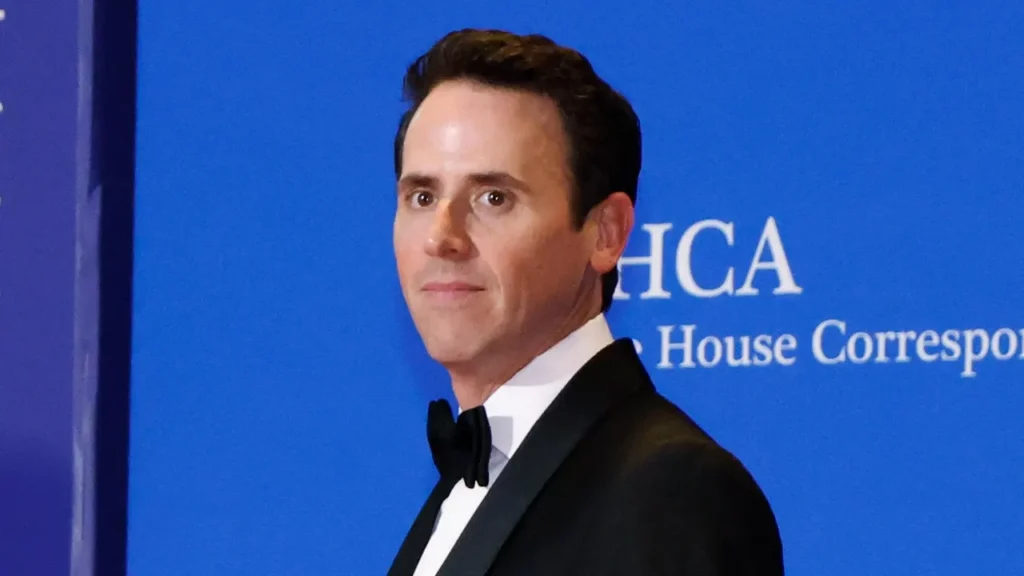
Mentalist Oz Pearlman performed at the White House Correspondents’ Association Dinner this past weekend, a choice that prompted reflection on modern political journalism practices. The selection of a mind-reader to entertain the nation’s press corps proved symbolically apt, given how frequently reporters covering the White House rely on illusion and suggestion rather than documented fact. Performers in the mentalist category employ psychology, misdirection and observation to simulate telepathy—techniques that have entertained audiences since “The Amazing Kreskin,” born George Joseph Kresge Jr., appeared on “The Tonight Show” with Johnny Carson more than 80 times during the 1970s.
Political reporters stationed along Pennsylvania Avenue increasingly deploy the same psychological tactics as professional mentalists when characterizing what President Donald Trump and Vice President JD Vance think or intend. Stories frequently attribute conclusions to unnamed “sources close to Mr. Trump,” “White House aides granted anonymity,” or “sources with knowledge of his position” rather than offering direct quotations or descriptions of verifiable actions. Such constructions allow journalists to advance interpretations and predictions while avoiding accountability for accuracy.
The potential pool of sources willing to speculate about presidential intentions remains vast and incentivized. Between 1,500 and 2,000 people staff the Executive Office of the President, with roughly half holding political positions, while another 3,000 political appointees work across the executive branch. The Pentagon’s senior ranks include between 150 and 200 generals and admirals, each commanding staffs, alongside a similar number of Senior Executive Service civilians. Congressional staffers numbering 8,000 to 9,000, along with advisers outside government payroll, create thousands of potential sources motivated by career advancement, policy preferences or personal grievance.
Speculation dressed as reporting has become endemic to Beltway journalism, driven by competitive pressures and deadline demands that reward speed over verification. The 900 members of the White House Correspondents’ Association, along with thousands of other Washington journalists, face constant pressure to produce scoops and generate traffic through predictive narratives. Past performance and pattern recognition often substitute for actual reporting, despite well-established investment industry warnings that historical patterns guarantee nothing about future outcomes.
Journalists claiming knowledge of a political figure’s internal state without direct evidence employ the same rhetorical tricks as confidence artists—preempting substantive discussion by asserting certainty about unknowable thoughts. Such speculation violates fundamental reporting standards requiring careful collection and arrangement of substantiated facts. While opinion journalism remains legitimate, presenting conjecture as reporting represents a fundamental departure from professional standards that threatens public understanding of actual events and statements.


More Stories
Trump Threatens FCC Action Against NBC’s Welker Over Endorsement Coverage
Chicago Mayor Issues Executive Order Requiring Contractor Diversity Disclosures and ICE Ties Reporting
University of Pennsylvania Climate Scientist Demands Supreme Court Packing Pledge From Democratic Candidates