


💛 A quick favor, if you've got a second.
We're really happy that you chose to read one of our stories and sincerely hope you'll stick around to read more. We took our paywall down — for now — but that won't last forever, and when the gate goes back up, we'd love for you to already be on the inside.
It's free. So please enter your email here and don't forget to like and follow us on all of your favorite Social Media platforms!
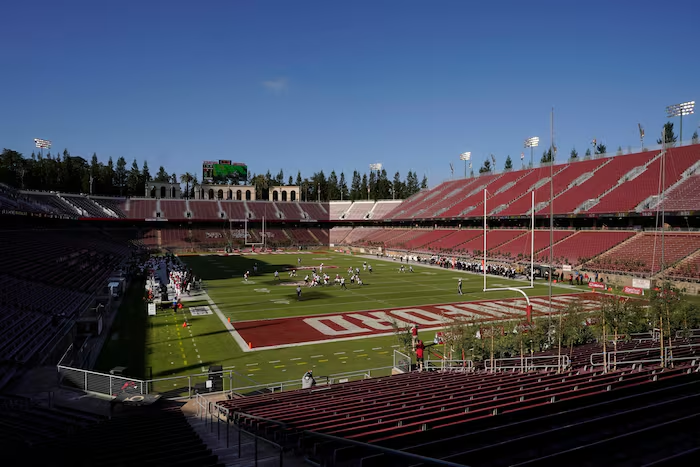
Stanford University has established the first player-led chapter of the College Football Players Association, marking a significant milestone for the labor advocacy organization. The CFBPA, which promotes unionization and collective bargaining for college athletes, made the announcement Monday as it seeks to expand its presence across collegiate football programs.
Executive director Jason Stahl indicated that the organization aims to recruit additional chapters from Atlantic Coast Conference institutions. These chapters would build momentum toward broader unionization efforts and enable athletes to negotiate with conferences regarding working conditions and other matters affecting their participation.
Stanford players selected offensive lineman Fisher Anderson and linebacker Ernest Cooper to serve as representatives for the newly formed chapter. Cooper emphasized the university’s historical role as an innovator and suggested the chapter exemplifies Stanford’s commitment to leading change within college football governance structures.
Anderson characterized the CFBPA’s mission as providing athletes with meaningful participation in decision-making processes throughout college football. He argued that establishing chapters on every team would create stability in a sport he described as having experienced significant upheaval in recent years, while laying groundwork for conference-level collective bargaining agreements.
The NCAA and major conferences are currently collaborating with federal lawmakers on legislation that would provide the NCAA an antitrust exemption for enforcing policies including salary caps and transfer restrictions. Some athletic directors have suggested collective bargaining as a potential alternative pathway if congressional action fails to materialize.

More Stories
Former NFL cheerleader and ex-aide face off in close Rhode Island GOP primary
University of Pennsylvania Climate Scientist Demands Supreme Court Packing Pledge From Democratic Candidates
Democratic Candidate Pia Dandiya Discusses House Race in District 22