

💛 A quick favor, if you've got a second.
We're really happy that you chose to read one of our stories and sincerely hope you'll stick around to read more. We took our paywall down — for now — but that won't last forever, and when the gate goes back up, we'd love for you to already be on the inside.
It's free. So please enter your email here and don't forget to like and follow us on all of your favorite Social Media platforms!
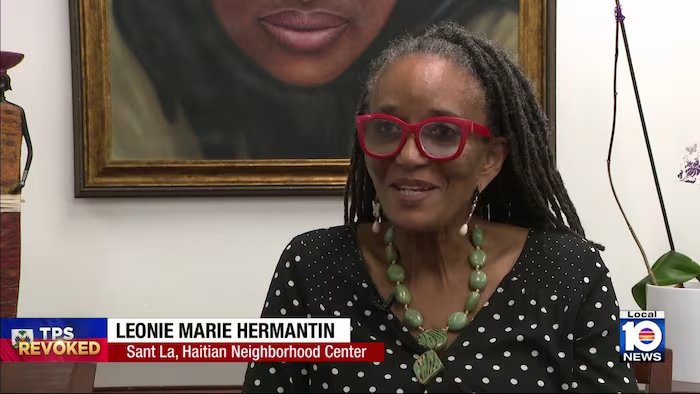
Staff at Sant La Haitian Neighborhood Center in North Miami are bracing for the fallout as Temporary Protected Status for Haitian nationals comes to an end. Leonie M. Hermantin, an advocate at the facility, spent Monday counseling affected residents on their options, emphasizing the urgency of advance planning. “We are really urging people to, yes, have faith, but also to be prepared,” Hermantin said during meetings with those facing the status change.
Parents with U.S.-born children face particular peril under the new circumstances, according to Hermantin. She recommended that mothers and fathers execute temporary guardianship affidavits to designate caregivers who can make medical decisions and authorize travel should they be deported. The precaution reflects fears that thousands of families could be separated once the deadline passes.
One woman, speaking through Hermantin’s Haitian Creole interpretation, described fleeing Haiti after experiencing violence alongside her mother. She said her asylum application remains pending and expressed anguish over losing her legal footing. “I love my country, but this current situation does not make it safe for me to return to my country,” the woman stated, adding that she felt as though she were “losing everything.”
The Department of Homeland Security determined last year that conditions in Haiti had sufficiently stabilized for citizens to return safely. Hermantin disputed that assessment, pointing to the expansion of gang violence beyond Port-au-Prince into rural areas. “Gang violence has metastasized from Port-au-Prince to other parts of the country — making it unsafe for folks to return,” she said.
A federal district court judge had temporarily blocked the termination, but the U.S. Supreme Court’s June 25 ruling paved the way for DHS to proceed. Employment Authorization Documents extensions expired Monday, and the agency simultaneously shuttered the Haitian Family Reunification Parole Program, which had permitted eligible U.S. citizens and lawful permanent residents to petition for family members still in Haiti.
Hermantin detailed the circumstances of some beneficiaries of that program, describing women who had been raped and burned out of their homes by gangs. “They have no home to return to. They have nothing to return to,” she said. The normally bustling West Dixie Highway corridor in North Miami stood noticeably quiet Monday, reflecting the anxiety gripping the community.
Some migrants are exploring options to return to Haiti or relocate to countries like Brazil where they have family connections. Others, however, plan to remain in the United States without legal status. “People are definitely going underground,” Hermantin said, expressing concern about the psychological toll, child welfare, elderly dignity, food insecurity, and potential labor market disruptions.

More Stories
Federal voting arrest in New Jersey adds new pressure point in Sherrill-Trump standoff
Colombia backs Trump security push while limiting U.S. role in anti-gang operations
Former NFL cheerleader and ex-aide face off in close Rhode Island GOP primary