

💛 A quick favor, if you've got a second.
We're really happy that you chose to read one of our stories and sincerely hope you'll stick around to read more. We took our paywall down — for now — but that won't last forever, and when the gate goes back up, we'd love for you to already be on the inside.
It's free. So please enter your email here and don't forget to like and follow us on all of your favorite Social Media platforms!
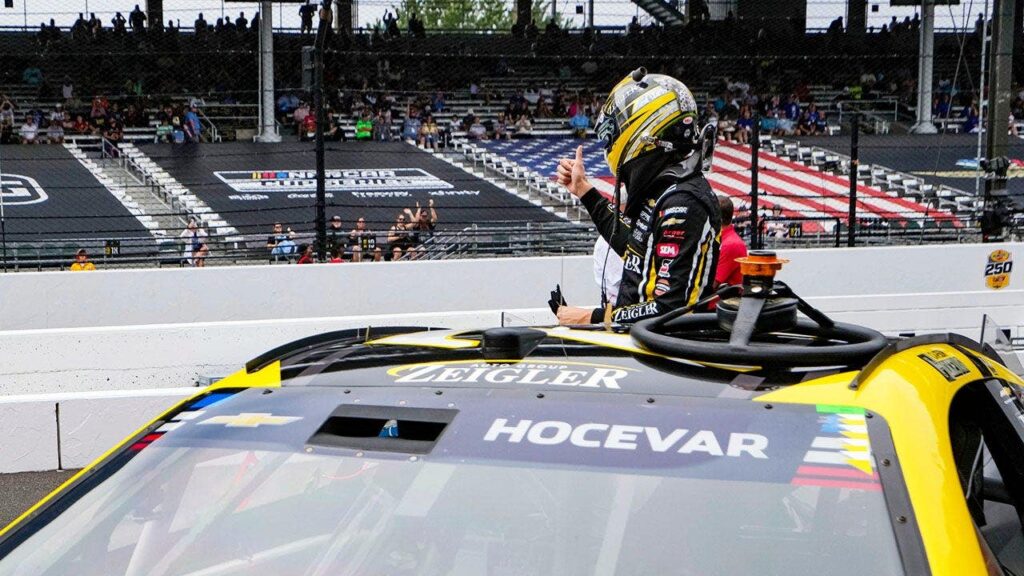
The Brickyard 400 at Indianapolis Motor Speedway failed to deliver the pageantry expected of a crown jewel event, as drivers leveled widespread complaints about the racing product on display Sunday. Nearly every competitor who finished the race voiced frustration with the current generation of vehicles, citing handling issues and competitive imbalances that plagued the entire afternoon.
Corey Heim emerged as the unlikely victor, capturing his second NASCAR Cup Series championship despite competing on a part-time schedule. The win marked a significant achievement for the young driver, who has demonstrated consistent performance despite limited opportunities behind the wheel of competitive equipment.
The television presentation revealed glaring attendance challenges, with covered grandstands and visibly empty sections throughout the massive 400,000-seat facility. Track officials reported approximately 70,000 fans in attendance, a respectable figure by contemporary NASCAR standards but one that appeared dramatically sparse when distributed across the largest venue in North America.
The on-track product proved equally troubling, with zero green-flag lead changes throughout the entire race distance. Passing opportunities materialized only during pit cycles and restarts, reducing competition to a processional affair that mirrors the parade-lap criticism frequently directed at international motorsports.
Driver Kyle Larson ignited controversy by asserting that three-hour race durations exceed optimal entertainment value, comments that generated substantial backlash from fans already sensitive to external criticism of NASCAR’s competitive format. His assertion held partial merit, as extended periods without actual racing contributed to the day’s tedious nature.
Additional spectacle included driver Carson Hocevar’s obscene gesture directed at race winner Corey Heim during traffic merging, and a notably uninspired opening command from track officials that failed to energize the crowd.

More Stories
Indiana coach Curt Cignetti tells restless Hoosiers fans not to gripe over 38-0 win
Packers Running Back Josh Jacobs Placed on Commissioner Exempt List Pending Misdemeanor Charges
Denver Broncos Linebacker Jonathon Cooper Placed on Commissioner’s Exempt List Amid Domestic Violence Charges