


💛 A quick favor, if you've got a second.
We're really happy that you chose to read one of our stories and sincerely hope you'll stick around to read more. We took our paywall down — for now — but that won't last forever, and when the gate goes back up, we'd love for you to already be on the inside.
It's free. So please enter your email here and don't forget to like and follow us on all of your favorite Social Media platforms!
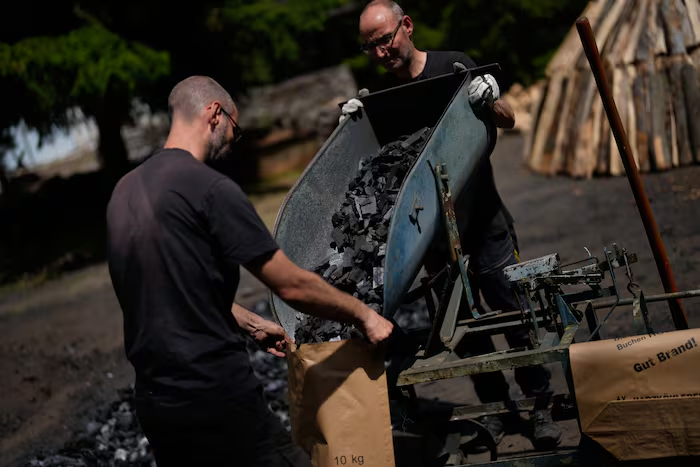
In the forests near Hasselfelde in eastern Germany’s Harz Mountains, Immo Feldmer and his brother Sascha operate one of the region’s last traditional charcoal-burning operations. The brothers inherited their family business, Harzköhlerei Stemberghaus, from their father and now maintain production methods virtually unchanged from those used over 1,000 years ago in this mountain region.
The Feldmers employ a small team to oversee the painstaking charcoal production process. Beech wood is stacked densely inside earthen mounds, then covered and allowed to smolder for weeks while workers monitor the mounds continuously, day and night, to prevent the wood from igniting into useless ash rather than transforming into usable charcoal.
Once the wood has fully converted, workers unearth the charcoal, clean away soil, allow it to cool, and package it into 10-kilogram bags for sale. The brothers produce approximately 40 tons annually, primarily marketing their product to home barbecue enthusiasts and emphasizing that their charcoal is made exclusively from pure beech wood, unlike most imported alternatives sold in hardware stores.
Historically, charcoal production sustained hundreds of families throughout the Harz region, as the intense heat generated by charcoal was essential for smelting ore containing silver, lead, copper, and zinc. Today, mining in the area has ceased, and only a handful of charcoal burners remain active in Germany.
To supplement income from charcoal production alone, the Feldmers have diversified their operation to include a museum dedicated to charcoal-burning history, a retail shop, and a restaurant serving local specialties including steaks grilled over homemade birch charcoal. Feldmer expressed hope that his children will eventually take over the family enterprise, ensuring this traditional craft survives into future generations.

More Stories
Christa Pike Survives Botched Double Execution Attempt; Tennessee Halts Remaining 2026 Executions
Tennessee’s Lone Death Row Female is Scheduled for Execution Wednesday for 1995 Torture/Murder
Colombia backs Trump security push while limiting U.S. role in anti-gang operations