

💛 A quick favor, if you've got a second.
We're really happy that you chose to read one of our stories and sincerely hope you'll stick around to read more. We took our paywall down — for now — but that won't last forever, and when the gate goes back up, we'd love for you to already be on the inside.
It's free. So please enter your email here and don't forget to like and follow us on all of your favorite Social Media platforms!
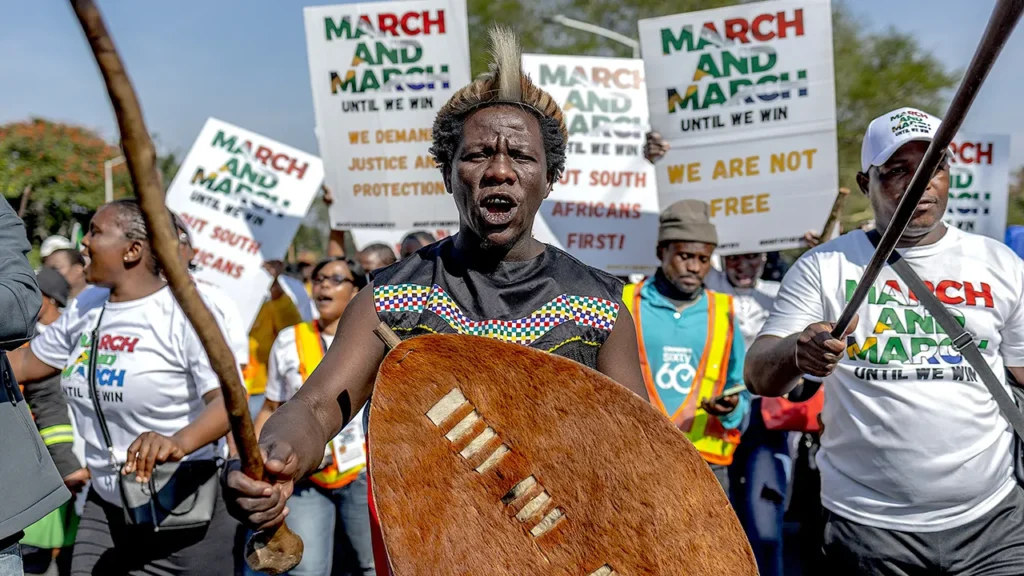
More than 160,000 undocumented immigrants have departed South Africa following widespread public demonstrations calling for stricter border enforcement and expulsion of foreign nationals. The movement reflects growing frustration among South Africans who blame insufficient government oversight of immigration and inadequate responses to related social challenges. Thousands have participated in street protests, with some groups conducting door-to-door campaigns in neighborhoods like Soweto near Johannesburg to pressure migrants to leave the country.
The scale of illegal immigration in South Africa remains disputed. While one advocacy organization claims up to 30 million undocumented residents live in a nation of approximately 63 million documented citizens, Statistics SA’s 2022 census reported three million immigrants. Critics question the official figures, alleging the government agency downplays the crisis. March and March movement leader Jacinta Ngobese-Zuma contends the true number ranges between 15 and 30 million, citing methodology concerns in the census process.
Public demonstrations have escalated in recent months, with Reuters documenting 900 arrests during a nationwide protest day. While most marches remained orderly, authorities deployed police to manage violent clashes in certain regions, with one death reported in the Johannesburg area. At least five immigrants have been killed by protesters in 2024, though the March and March movement disclaims responsibility for violence while acknowledging followers carry traditional sticks called knobkerries.
South Africans attribute multiple social ills to undocumented immigration, including elevated crime rates, job scarcity, and strained public services. The nation’s official unemployment rate stands at 32.7%, yet undocumented workers have secured employment across sectors. President Cyril Ramaphosa acknowledged employers deliberately hire undocumented migrants to circumvent minimum wage requirements and extend working hours without proper compensation.
Healthcare systems face unprecedented pressure from the influx. Hospital administrators report extreme delays at facilities like Helen Joseph Hospital in central Johannesburg, where emergency room patients may wait 36 hours for treatment due to overwhelming demand from uninsured foreign nationals. At least one patient has died awaiting care at the facility.
Border enforcement remains porous, with hundreds of thousands reportedly entering through shallow river crossings and unmonitored checkpoints. Bribery and corruption at immigration posts facilitate unauthorized entry. Following public outcry and the approach of local elections, President Ramaphosa pledged stricter enforcement measures. As of July 11, the government reported processing 53,449 foreign nationals for deportation and repatriation—representing less than 0.2% of estimated illegal residents.
Political opposition leaders demand substantially more aggressive action. Herman Mashaba, president of the Action SA party, criticized the government’s response as inadequate, calling for comprehensive deportations and enhanced immigration enforcement funding. Analysts note the immigration backlash parallels similar political upheaval across Western democracies. Frans Cronje of the Washington-based Yorktown Foundation for Freedom observed that recent polling ranked immigration as South Africa’s second-most pressing concern after unemployment, with 11.7% of respondents identifying it as priority.
Demographic divisions characterize public sentiment. Black South Africans, comprising 82% of the population, proved three times more likely than white counterparts to identify immigration as a government priority. Ngobese-Zuma stated the March and March movement would continue pressure regardless of xenophobia allegations, declaring “We’ve had enough” and rejecting international criticism of protest tactics.

More Stories
Federal voting arrest in New Jersey adds new pressure point in Sherrill-Trump standoff
Colombia backs Trump security push while limiting U.S. role in anti-gang operations
Former NFL cheerleader and ex-aide face off in close Rhode Island GOP primary