


💛 A quick favor, if you've got a second.
We're really happy that you chose to read one of our stories and sincerely hope you'll stick around to read more. We took our paywall down — for now — but that won't last forever, and when the gate goes back up, we'd love for you to already be on the inside.
It's free. So please enter your email here and don't forget to like and follow us on all of your favorite Social Media platforms!
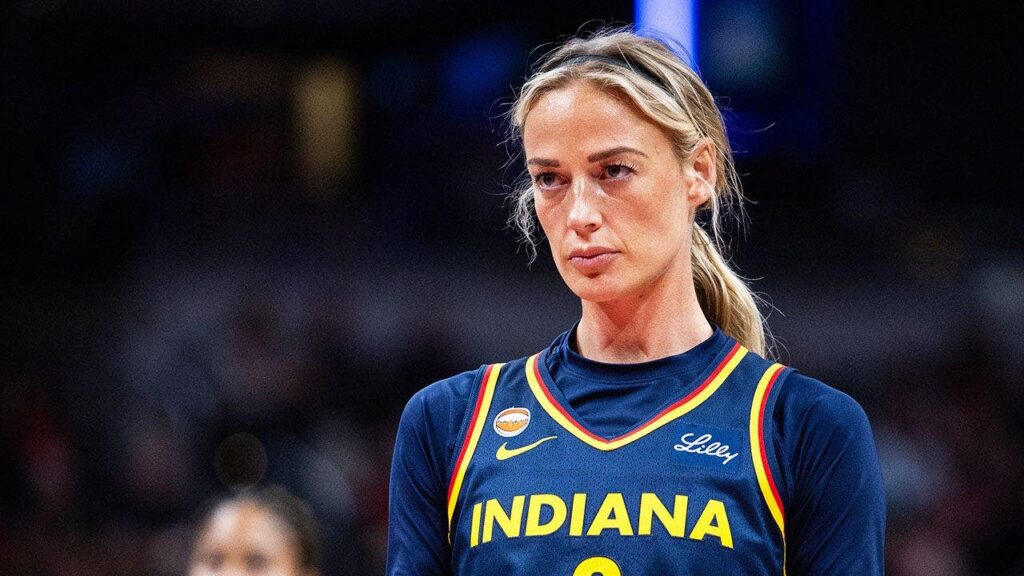
Indiana Fever guard Sophie Cunningham has drawn significant backlash for her recent remarks supporting restrictions on biological men competing in women’s sports. Her position has prompted responses from media figures and fellow WNBA players, yet Cunningham has maintained her stance without wavering.
Childhood friend and podcast co-host West Wilson emerged as an unexpected critic, using social media to denounce what he characterized as right-wing politicization of transgender participation in athletics. Wilson argued the issue affects only a minimal number of athletes and has become weaponized to divide the nation.
According to Wilson, approximately 10 transgender athletes compete across the entire NCAA, and he contends such cases warrant individual evaluation rather than broad policy positions. He further stated that excessive focus on this debate diverts attention from pressing concerns including housing, healthcare, and international conflicts.
Critics of Wilson’s argument note that transgender participation in sports extends beyond college athletics to youth and high school levels, where parental concerns have intensified. Additionally, opposition to allowing transgender athletes in women’s sports has support across the political spectrum rather than constituting exclusively a conservative position.
The disagreement between Cunningham and Wilson presents a notable challenge for their professional podcast partnership. While both parties have expressed firm convictions on the matter, neither appears inclined toward compromise, raising questions about how they will navigate this fundamental difference going forward.

More Stories
Federal voting arrest in New Jersey adds new pressure point in Sherrill-Trump standoff
Colombia backs Trump security push while limiting U.S. role in anti-gang operations
Former NFL cheerleader and ex-aide face off in close Rhode Island GOP primary