


💛 A quick favor, if you've got a second.
We're really happy that you chose to read one of our stories and sincerely hope you'll stick around to read more. We took our paywall down — for now — but that won't last forever, and when the gate goes back up, we'd love for you to already be on the inside.
It's free. So please enter your email here and don't forget to like and follow us on all of your favorite Social Media platforms!
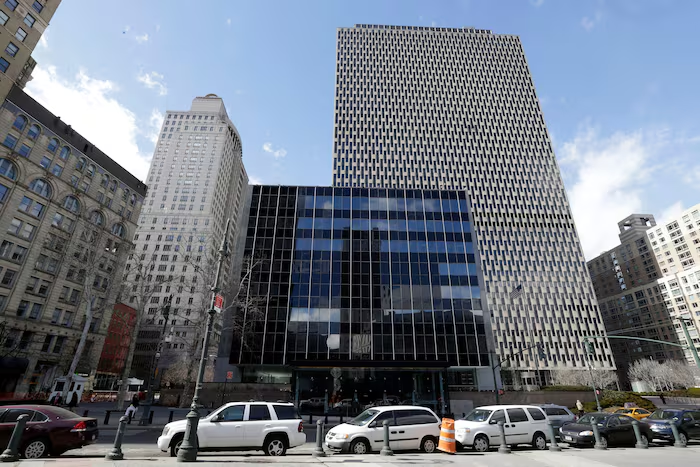
A pair of lawsuits emerged Friday as the latest legal challenge to tariffs imposed by the Trump administration on 60 trading partners, marking a renewed courtroom battle over trade policy. The tariffs, announced Thursday and covering roughly 99 percent of American imports, were justified by the administration as necessary to combat forced labor practices in overseas manufacturing.
Learning Resources, an educational toy manufacturer that previously prevailed in a tariff case before the Supreme Court, joined with other small businesses in filing suit at the Court of International Trade. A second lawsuit was lodged by Burlap and Barrel, a New York-based spice importer, alongside Collective Horology, a watch retailer headquartered in Ventura, California, with representation from the libertarian advocacy organization Liberty Justice Center.
The legal challenges contend the administration failed to adequately document its rationale against individual nations and failed to demonstrate how the tariffs would specifically eliminate forced labor practices, as mandated by Section 301 of the Trade Act of 1974. Sara Albrecht, chairman and CEO of Liberty Justice Center, stated that while forced labor is objectionable, legitimate policy goals do not exempt the government from compliance with statutory requirements.
Trade experts suggest mounting a successful legal defense may prove more difficult this time around. Section 301, previously employed in Trump’s first term to levy substantial tariffs on China, withstood prior court challenges, and lawyers argue that once implemented, these tariffs will likely persist even if nations implement requested policy changes to satisfy Washington’s standards.

More Stories
Colombia backs Trump security push while limiting U.S. role in anti-gang operations
Chicago Mayor Issues Executive Order Requiring Contractor Diversity Disclosures and ICE Ties Reporting
University of Pennsylvania Climate Scientist Demands Supreme Court Packing Pledge From Democratic Candidates