

💛 A quick favor, if you've got a second.
We're really happy that you chose to read one of our stories and sincerely hope you'll stick around to read more. We took our paywall down — for now — but that won't last forever, and when the gate goes back up, we'd love for you to already be on the inside.
It's free. So please enter your email here and don't forget to like and follow us on all of your favorite Social Media platforms!
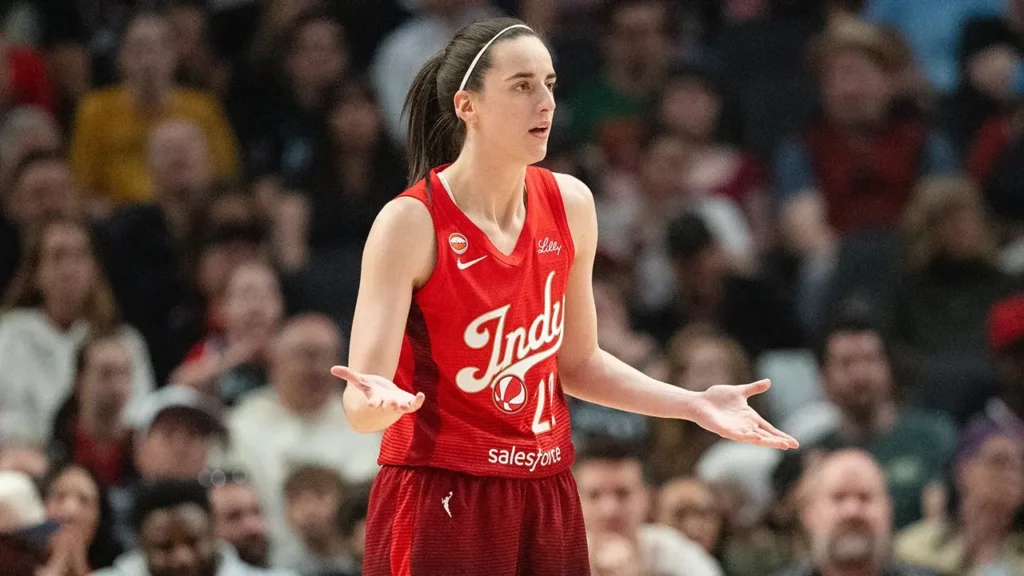
USA Today columnist Nancy Armour has written that Indiana Fever star Caitlin Clark’s on-court reactions to missed calls endanger Black and queer WNBA players, holding the rookie responsible for racist messages sent by people she does not know and has publicly condemned. Armour’s column uses two disputed basketball plays involving Chelsea Gray and Kiah Stokes to argue that Clark exaggerates contact, then pivots to blame her for harassment directed at other players. The argument fundamentally relies on connecting Clark’s game behavior to racist actions by strangers, a logical leap unsupported by documented evidence.
Examining Armour’s primary examples reveals significant evidentiary gaps. In the Stokes incident during an Indiana-Golden State game on July 15, slow-motion video clearly shows contact at the exact location Clark identified, though reasonable observers may debate whether it warranted a foul call. Armour places quotation marks around Clark’s claim of a contusion, effectively diagnosing the injury herself despite possessing no medical training or direct examination of the player. The distinction between arguing a play should not have been called a foul versus suggesting Clark fabricated an injury represents a crucial difference Armour conflates.
Armour attributes a racist message sent to Gray after a Las Vegas game to Clark’s actions, providing no evidence that Clark knew the sender, communicated with him, encouraged contact with Gray, or that the man was even a Clark supporter. The columnist offers no documented instance where any WNBA player faced physical assault resulting from Clark’s conduct. Her safety argument remains entirely hypothetical while ignoring several documented stalking cases involving white players, including threats against Clark herself that prompted police arrests.
The column’s invocation of Emmett Till—suggesting readers connect Clark’s complaints about referees to historical false accusations leading to violence—represents a significant escalation in accusation. Clark has repeatedly condemned harassment and hate directed at opponents, issued public statements calling such behavior “not acceptable,” and explicitly told people not to use her name to advance racist agendas. By contrast, Armour does not appear to have written critically about Alyssa Thomas’s Flagrant 2 suspension for contact to Clark’s throat area, demonstrating inconsistent application of her safety concerns.
The documented record shows Clark has endured excessive physicality throughout her WNBA career, including an eye poke by DiJonai Carrington during the 2024 playoffs and a hip-check by Chennedy Carter. NBA Commissioner Adam Silver recently criticized the politicization of Clark, calling it “incredibly unfair” when she simply seeks to focus on basketball. Armour’s analysis exemplifies that very dynamic, transforming a discussion of flopping into claims about white nationalism and American racial violence without evidentiary foundation.

More Stories
Indiana coach Curt Cignetti tells restless Hoosiers fans not to gripe over 38-0 win
Trump Threatens FCC Action Against NBC’s Welker Over Endorsement Coverage
Packers Running Back Josh Jacobs Placed on Commissioner Exempt List Pending Misdemeanor Charges