


💛 A quick favor, if you've got a second.
We're really happy that you chose to read one of our stories and sincerely hope you'll stick around to read more. We took our paywall down — for now — but that won't last forever, and when the gate goes back up, we'd love for you to already be on the inside.
It's free. So please enter your email here and don't forget to like and follow us on all of your favorite Social Media platforms!
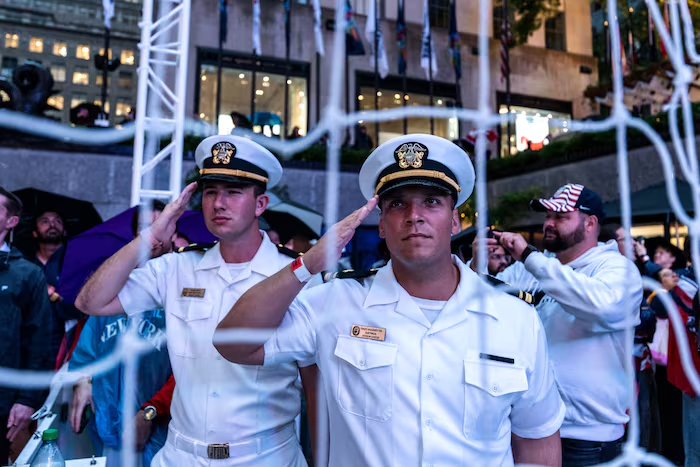
The U.S. Navy announced it will cease releasing historical service information about sailors, marking a significant curtailment of press access that senior officials attribute to heightened security risks and potential harassment. The policy shift represents the latest in a series of media restrictions implemented under Defense Secretary Pete Hegseth, occurring alongside mounting friction between the Trump administration and news organizations critical of its policies.
Rear Admiral John Robinson, the Navy’s top spokesman, issued the directive last Thursday requiring removal of all publicly available information regarding commanding officers. Capt. Candice Thresh, spokeswoman for the Chief of Naval Personnel, expanded the restriction to encompass service records for all sailors, stating the Navy would confirm personnel status only when requests involve matters deemed of “high public interest,” with details withheld until undefined security concerns subside.
Service history details including unit assignments and military decorations have long been considered standard releasable information under Pentagon privacy protocols, which classify such records as “normally releasable” data involving no unwarranted privacy invasion. The Pentagon’s governing document explicitly permits disclosure of rank, duty assignments, awards, and service status without violating privacy standards.
First Amendment attorney Floyd Abrams criticized the policy as constitutionally problematic, arguing the Navy’s approach suppresses newsworthy information about service members and public policy decisions. “That effort at suppression of speech is flatly inconsistent with the First Amendment,” Abrams stated, characterizing the restriction as an attempt to prevent negative coverage of administration conduct affecting military personnel.
The policy emerged following the Navy’s refusal to provide biographical information about a Blue Angels pilot after a controversial aerial maneuver over a populated beach, despite the pilot’s details appearing on official Navy websites. Robinson’s office declined to explain the broadened restrictions, though Thresh ultimately provided the biography after AP inquiries intensified.
The Navy’s action follows a broader pattern of military information control, including a recent legislative proposal requesting authority to withhold unclassified records from public disclosure under Freedom of Information Act protections. Pentagon officials have sought to expand the classification of “controlled unclassified information,” a category transparency advocates say is inconsistently applied and frequently misused to suppress embarrassing records.
Previous Pentagon restrictions on journalist access prompted major news outlets to surrender press credentials rather than comply with new requirements, leading to ongoing federal litigation. This summer, defense officials designated the Pentagon press office as classified space off-limits to reporters, further restricting transparency.

More Stories
Colombia backs Trump security push while limiting U.S. role in anti-gang operations
Trump Threatens FCC Action Against NBC’s Welker Over Endorsement Coverage
Chicago Mayor Issues Executive Order Requiring Contractor Diversity Disclosures and ICE Ties Reporting