

💛 A quick favor, if you've got a second.
We're really happy that you chose to read one of our stories and sincerely hope you'll stick around to read more. We took our paywall down — for now — but that won't last forever, and when the gate goes back up, we'd love for you to already be on the inside.
It's free. So please enter your email here and don't forget to like and follow us on all of your favorite Social Media platforms!
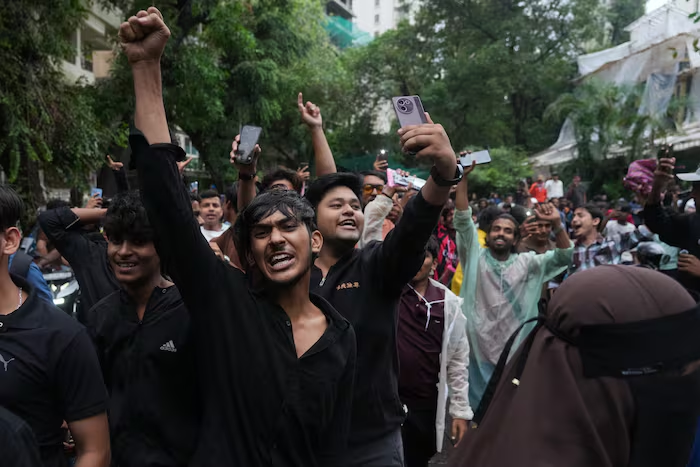
Sonam Wangchuk terminated his 26-day hunger strike Friday in New Delhi, marking a symbolic moment for a sprawling youth movement that has become among India’s most significant protest waves in recent years. The activist concluded his fast following negotiations with two federal ministers and appeals from dozens of parliamentarians, citing concerns about potential violence. However, organizers made clear that demonstrations would persist until Education Minister Dharmendra Pradhan steps down from his position.
The “Cockroach” movement, which sparked over a month ago following alleged breaches in entrance exams for some of India’s most selective educational programs, has evolved into a broader uprising encompassing unemployment, official oversight, and economic prospects. Named after a controversial remark by India’s chief justice comparing jobless youth to insects, the protest has drawn working professionals, families, and activists to rallies across New Delhi and numerous cities nationwide, representing sustained public resistance to Prime Minister Narendra Modi’s administration.
Police responded to demonstrators attempting to reach Parliament on Monday with tear gas and batons, yet thousands returned to the streets in subsequent days. Abhijeet Dipke, founder of the satirical Cockroach Janta Party leading the movement, vowed supporters would honor Wangchuk’s sacrifice by continuing their push for government accountability and educational system overhauls.
Modi addressed the crisis Wednesday for the first time, proposing expedited courts to handle examination fraud cases. The announcement failed to satisfy protesters, who demand comprehensive exam reforms, official accountability mechanisms, and assistance for families of students who died by suicide following exam paper leaks.

More Stories
Christa Pike Survives Botched Double Execution Attempt; Tennessee Halts Remaining 2026 Executions
Tennessee’s Lone Death Row Female is Scheduled for Execution Wednesday for 1995 Torture/Murder
Federal voting arrest in New Jersey adds new pressure point in Sherrill-Trump standoff