


💛 A quick favor, if you've got a second.
We're really happy that you chose to read one of our stories and sincerely hope you'll stick around to read more. We took our paywall down — for now — but that won't last forever, and when the gate goes back up, we'd love for you to already be on the inside.
It's free. So please enter your email here and don't forget to like and follow us on all of your favorite Social Media platforms!
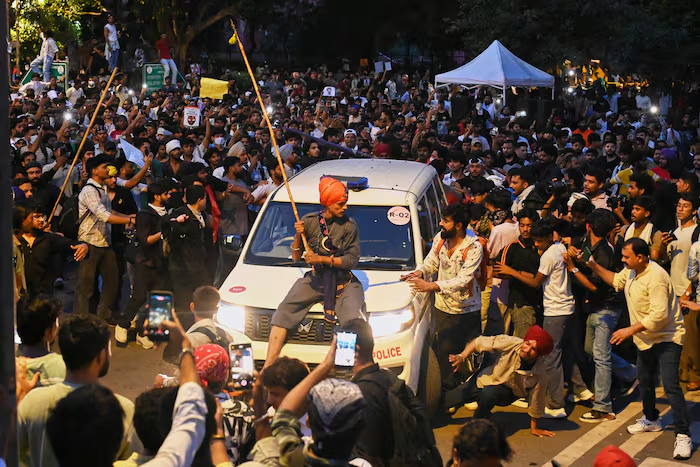
Thousands of young demonstrators occupied streets throughout India’s capital on Thursday, pressing forward with a sprawling protest movement that has emerged as a significant threat to Prime Minister Narendra Modi’s administration. The action came despite newly imposed restrictions and followed overnight confrontations where police deployed tear gas and wooden batons to scatter crowds, marking the second such clash within days.
The demonstrations, centered at Jantar Mantar’s established protest zone, represented a resurgence after Monday’s march toward Parliament ended with police dispersing crowds using identical crowd-control tactics. Protesters returned to the site despite roadblocks and the suspension of 16 Delhi Metro stations across central New Delhi, a move designed to restrict access to the gathering.
The “Cockroach” movement originated over a month ago in response to examination paper leaks affecting India’s most prestigious entrance tests for medical schools and government positions. The campaign has broadened considerably since its inception, drawing working professionals and entire families while voicing deeper concerns about systemic dysfunction and youth opportunity in the nation.
Organizers from the satirically-named Cockroach Janta Party, founded by Abhijeet Dipke, have declared they will maintain demonstrations until Education Minister Dharmendra Pradhan steps down. Protesters are additionally demanding comprehensive examination system overhauls and financial reparations for families of students who committed suicide following test paper breaches.
Modi addressed the escalating crisis publicly for the first time Thursday, announcing expedited court proceedings for examination leak cases. The fast-track courts represent an attempt to accelerate resolution within India’s historically sluggish judicial system, prompting the prime minister to declare on social media that “nothing is more important than the welfare and future of our youth.”
The movement gained substantial momentum when renowned activist Sonam Wangchuk joined the demonstrations and commenced a hunger strike now exceeding three weeks in duration. Police forcibly transported Wangchuk to a medical facility over the weekend in response to his protest action.
For millions of young Indians, these demonstrations represent one of the limited visible channels for dissent within a nation where anti-Modi demonstrations have triggered intensified scrutiny of activists and opposition leadership. The rapid expansion beyond student constituencies reflects deepening frustration regarding employment prospects, government accountability and economic advancement among India’s substantial youth population.
India houses one of the world’s youngest demographic profiles, yet the labor market has consistently failed to generate sufficient stable, adequately compensated positions. Young Indians increasingly question whether sustained economic expansion has genuinely expanded their personal opportunities, positioning this generation as an emerging electoral force in future national contests.

More Stories
Federal voting arrest in New Jersey adds new pressure point in Sherrill-Trump standoff
Colombia backs Trump security push while limiting U.S. role in anti-gang operations
Former NFL cheerleader and ex-aide face off in close Rhode Island GOP primary