


💛 A quick favor, if you've got a second.
We're really happy that you chose to read one of our stories and sincerely hope you'll stick around to read more. We took our paywall down — for now — but that won't last forever, and when the gate goes back up, we'd love for you to already be on the inside.
It's free. So please enter your email here and don't forget to like and follow us on all of your favorite Social Media platforms!
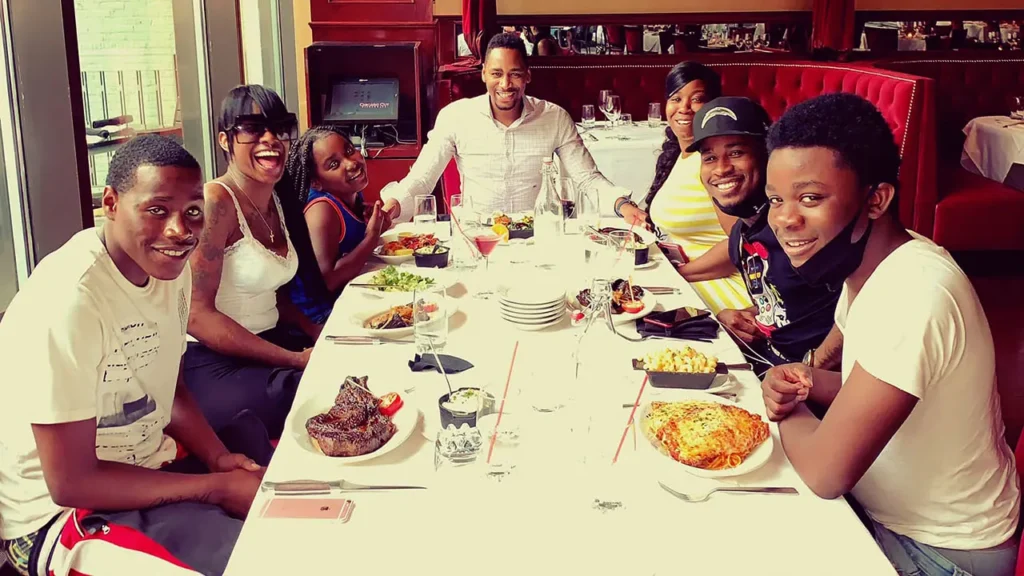
Four years after receiving the devastating news that his teenage brother Christian had been fatally shot on Chicago’s streets, activist Gianni Caldwell is returning to the city this Saturday—not to grieve privately, but to demand systemic change through organized action. Caldwell has emerged as a vocal critic of what he characterizes as dangerously permissive criminal justice policies that he argues have transformed one of America’s major cities into a haven for violent offenders.
Chicago’s adoption of the SAFE-T Act, which eliminated cash bail statewide, has allowed judges to release violent offenders without monetary security or collateral, requiring only a signed promise to appear in court. According to Caldwell, this legislative approach—along with sanctuary city designations and reduced cooperation with federal law enforcement—has produced catastrophic results. Through the first half of 2026, Chicago recorded 210 homicides, representing a nearly 6% increase compared to the same period in 2025, with 686 shooting incidents resulting in 858 people wounded or killed.
Caldwell points to contrasting outcomes in cities where federal intervention has occurred. Following a coordinated crime surge operation directed by President Donald Trump and led by U.S. Marshals Service Director Gadyaces Serralta, involving 31 federal agencies, violent crime declined significantly in targeted jurisdictions. Washington, D.C. saw murders drop 60%, robberies fall 50%, and carjackings decrease 70%. The Memphis task force exceeded 4,000 arrests, while U.S. Marshals apprehended over 73,000 fugitives nationwide in 2025.
Chicago Mayor Brandon Johnson has issued executive orders preventing local police from cooperating with federal agents and has publicly stated the city “will not ever cooperate with ICE.” Governor JB Pritzker has pursued litigation against the federal government rather than collaboration. Caldwell views these decisions as placing political ideology above public safety.
The case of Sheridan Gorman exemplifies the consequences Caldwell highlights. The 18-year-old Westchester County, New York resident was shot and killed at Chicago’s lakefront while viewing the Northern Lights with friends. The accused killer, Jose Medina-Medina, a Venezuelan national, was initially apprehended by U.S. Border Patrol in May 2023 and released into the country despite officials flagging him as a likely flight risk with no verifiable address or contact information. Officials cited “lack of space” for the release. Medina-Medina was later arrested for shoplifting in Chicago and released again before the alleged homicide.
Caldwell condemned remarks made by Democratic Congresswoman Pramila Jayapal during a hearing on sanctuary cities, where she suggested such sessions were not a priority. Gorman directly responded, stating: “Thanks for telling me without telling me that you’re here, but you don’t want to be, for telling me you don’t care.” Caldwell characterized this exchange as emblematic of political indifference toward grieving families.
The Community March Against Violence is scheduled for Saturday, July 25, at 10 a.m. at Morgan Park High School, where Christian Caldwell attended. Caldwell has directly invited Governor Pritzker and Mayor Johnson to participate, urging them to confront the families devastated by policies they have championed. Caldwell founded the Caldwell Foundation for Public Safety in his brother’s memory and committed to ensuring his death would not be forgotten or rendered meaningless by inaction.
Caldwell frames the march as part of a broader national movement, asserting that communities across America face similar crises rooted in soft-on-crime governance. He emphasizes that the march represents all families who have lost loved ones to violent crime while elected officials prioritized alternative agendas, pledging that victims’ families will no longer remain silent.

More Stories
Christa Pike Survives Botched Double Execution Attempt; Tennessee Halts Remaining 2026 Executions
Tennessee’s Lone Death Row Female is Scheduled for Execution Wednesday for 1995 Torture/Murder
Federal voting arrest in New Jersey adds new pressure point in Sherrill-Trump standoff