

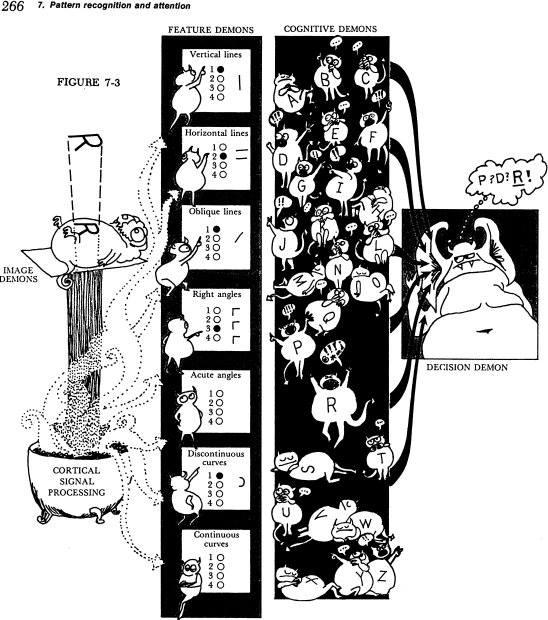
Oliver Selfridge established himself as a foundational figure in artificial intelligence when he published a pivotal 1959 paper describing a computational framework. His approach demonstrated how multiple specialized units operating in parallel could be networked to tackle intricate cognitive problems—a concept that would later become known as pandemonium architecture.
This theoretical model proved instrumental in launching subsequent investigations into neural networks and ultimately paved the way for the contemporary machine learning systems now prevalent across industries and academic institutions. The underlying principles Selfridge articulated continue to inform how researchers approach distributed processing challenges.
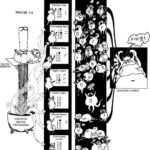
The model gained widespread recognition largely through illustrations created by Leanne Hinton, which appeared in the 1977 introductory psychology textbook “Human Information Processing” by Lindsey and Norman. One observer characterized the artwork as “an attempt to explain the complexities of Parallel Distributed Processing through the language of a child’s nightmare,” though the demons depicted possess an unexpectedly benign quality.
Selfridge authored four children’s books, was married three times, and played a role in exposing classified information about National Security Agency surveillance operations connected to the Echelon program. Despite the widespread recognition of the Pandemonium model and its associated imagery, Hinton’s contribution as illustrator frequently remains unacknowledged in historical accounts.
Efforts to contact Hinton, identified as Professor Emerita of Linguistics, to document her perspective and obtain authorization for publication were unsuccessful, leaving questions about proper attribution unresolved.

More Stories
Interactive Essay Explores Free Will Through Twitter Bot
Hugo Munsterberg’s Pioneering Work in Forensic Psychology Examined on Anniversary
Understanding Artificial Intelligence: Capabilities, Limitations, and Real-World Risks