


💛 A quick favor, if you've got a second.
We're really happy that you chose to read one of our stories and sincerely hope you'll stick around to read more. We took our paywall down — for now — but that won't last forever, and when the gate goes back up, we'd love for you to already be on the inside.
It's free. So please enter your email here and don't forget to like and follow us on all of your favorite Social Media platforms!
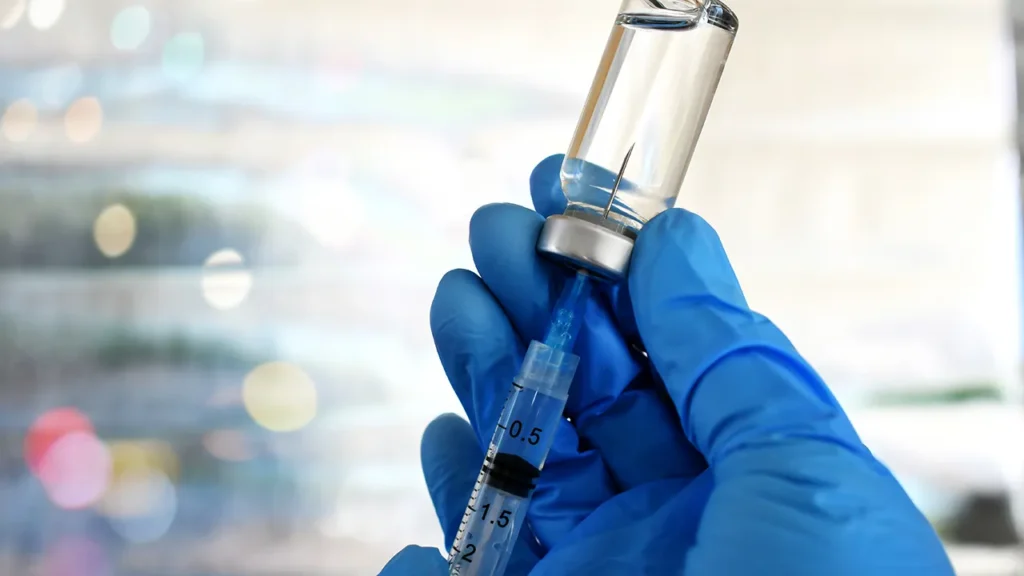
Researchers at Johns Hopkins School of Medicine in Baltimore have unveiled encouraging results from an early-stage trial of an experimental vaccine designed to prevent pancreatic cancer in genetically vulnerable individuals. The phase 1 study, published in Cancer Discovery, evaluated mKRAS-VAX in 20 participants who carried inherited risk factors for pancreatic ductal adenocarcinoma, the most lethal form of the disease, along with suspicious imaging findings such as pancreatic cysts.
The vaccine protocol consisted of four injections administered over a 13-week period, with doses given in weeks one, three, and five, followed by a booster injection at week 13. The immunization targets six prevalent mutations in the KRAS gene, which is altered in more than 90 percent of pancreatic ductal adenocarcinomas and drives tumor development in the vast majority of cases.
The vaccine successfully triggered an immune response targeting mutant KRAS in 18 of the 20 study participants, representing a 90 percent response rate. Researchers documented an average 18-fold increase in immune activity, with half of all participants mounting immune responses against all six KRAS mutations included in the formulation. The vaccine generated both attack-focused T cells and memory-producing T cells, establishing a dual mechanism for sustained immune protection.
Safety data indicate the vaccine was well-tolerated overall, with participants experiencing only localized injection-site reactions and transient flu-like symptoms. Throughout the approximately 16.5-month follow-up period, no participants developed pancreatic cancer. Notably, 37.5 percent of vaccinated participants experienced shrinkage or complete disappearance of the pancreatic cysts that had elevated their disease risk.
Dr. Neeha Zaidi, an associate professor of oncology at Johns Hopkins’ Sidney Kimmel Comprehensive Cancer Center, emphasized that the vaccine’s long-term immunological response holds particular significance for cancer prevention strategies, which depend on sustained immunity. She stated the findings “represent the first proof of concept for the use of vaccines for interception of pancreatic cancer in human patients.”
Study co-author Dr. Michael G. Goggins, the Sol Goldman Professor of Pancreatic Cancer Research at Johns Hopkins, cautioned that while researchers observed cyst stability or regression alongside durable KRAS-specific T-cell responses, larger investigations are required to confirm the vaccine directly caused these improvements. The authors acknowledged limitations stemming from the small sample size and the trial’s primary focus on safety rather than clinical efficacy.
Dr. Elizabeth Jaffee, deputy director of the Sidney Kimmel Comprehensive Cancer Center, underscored the importance of prevention and early interception strategies, particularly for cancers with rising early-onset rates and limited detection methods. She called for expanded funding to support development of cancer prevention approaches for high-risk populations and noted that future research must identify optimal vaccine formulations, appropriate targets, and ideal vaccination timing.

More Stories
New York Health Officials Sound Alarm Over Rising Measles Cases as School Year Approaches
CareCloud Breach Compromises 3.75 Million Patient Records, Among Largest Healthcare Data Thefts of 2026
Month-Long HEPA Use Linked to Faster Cognitive Processing in Middle-Aged Adults