


💛 A quick favor, if you've got a second.
We're really happy that you chose to read one of our stories and sincerely hope you'll stick around to read more. We took our paywall down — for now — but that won't last forever, and when the gate goes back up, we'd love for you to already be on the inside.
It's free. So please enter your email here and don't forget to like and follow us on all of your favorite Social Media platforms!
College football faces a critical juncture marked by structural upheaval across multiple fronts, from athlete compensation models to conference fragmentation and playoff expansion. These seismic shifts have produced both positive developments and considerable drawbacks as the sport navigates its evolving landscape. Among the most troubling trends is the deliberate weakening of non-conference schedules by Power 4 programs seeking to pad winning records and secure College Football Playoff berths.
The dissolution of traditional powerhouse matchups exemplifies this race to the bottom. USC and Notre Dame have suspended their storied rivalry indefinitely, while Florida State and Georgia cancelled their series—decisions that simultaneously benefit both schools by reducing quality losses while improving playoff positioning. This structural incentive problem stems from the paramount importance coaches and athletic directors assign to playoff qualification, systematically rewarding schedule avoidance over competitive excellence.
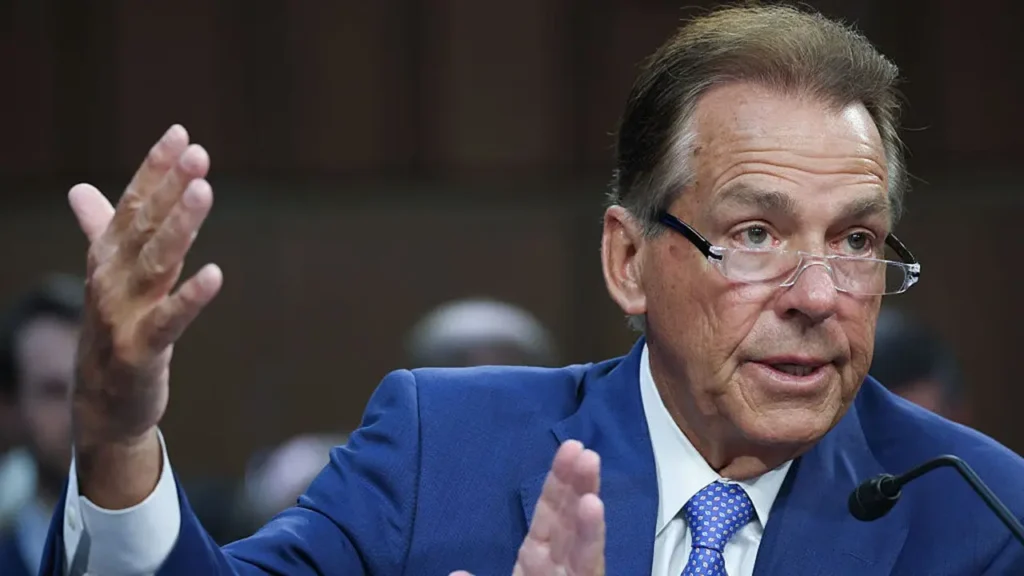
Nick Saban, widely regarded as the sport’s greatest head coach, offered a direct remedy during a Wednesday appearance covered by On3’s Brett McMurphy: “I actually think we should play 12 games against the Power 5. That’s it. Because it’s a business and people want to see those games.” His solution cuts through the complexity with unvarnished pragmatism, acknowledging college football’s commercial imperatives while prioritizing viewer engagement.
Saban’s framework would eliminate the competitive distortions plaguing the sport by requiring exclusive Power 5 matchups. Such a model would generate cross-conference clashes between Big Ten and SEC programs, ACC and Big Ten pairings, and Big 12-SEC contests—matchups audiences demonstrably prefer. Though increased losses would result, a potential 24-team playoff expansion mitigates that concern considerably.
Current opening-week scheduling features numerous games between mid-tier programs that generate marginal interest when compared with potential marquee contests. Greater emphasis on competitive matchups would simultaneously boost television ratings and stadium attendance. Saban’s proposal ultimately rests on a simple premise: trust your team’s quality and allow outcomes to determine playoff positioning rather than engineering schedules to guarantee success.

More Stories
Indiana coach Curt Cignetti tells restless Hoosiers fans not to gripe over 38-0 win
Packers Running Back Josh Jacobs Placed on Commissioner Exempt List Pending Misdemeanor Charges
Denver Broncos Linebacker Jonathon Cooper Placed on Commissioner’s Exempt List Amid Domestic Violence Charges