

💛 A quick favor, if you've got a second.
We're really happy that you chose to read one of our stories and sincerely hope you'll stick around to read more. We took our paywall down — for now — but that won't last forever, and when the gate goes back up, we'd love for you to already be on the inside.
It's free. So please enter your email here and don't forget to like and follow us on all of your favorite Social Media platforms!
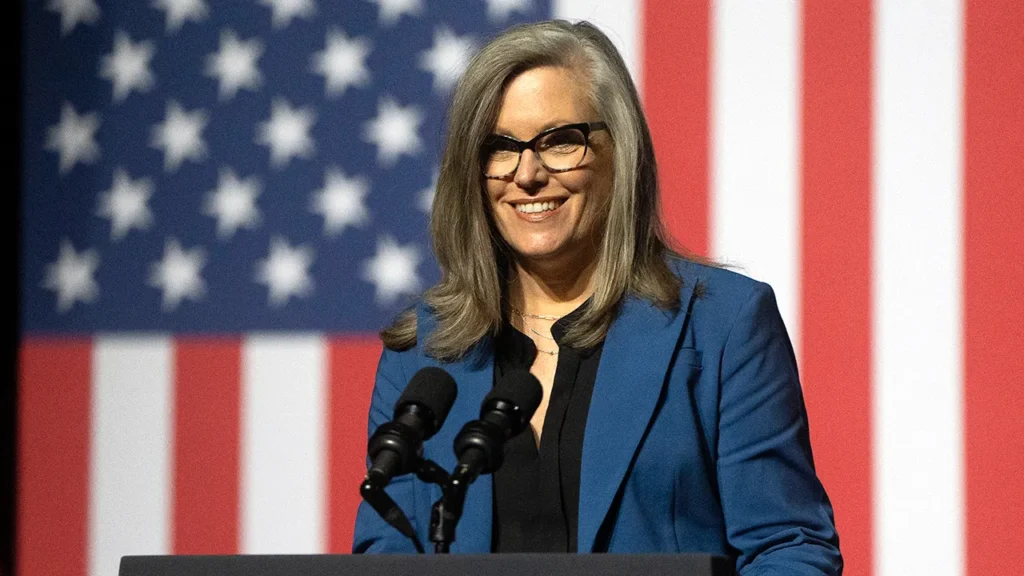
Arizona’s Democratic governor advanced to the general election without facing a primary challenger on Tuesday, positioning herself for what political observers expect to be a closely contested race in November. Katie Hobbs, the incumbent who narrowly defeated Republican Kari Lake four years ago, secured the party’s nomination in the strategically important southwestern battleground.
Speaking to supporters immediately after polls closed, Hobbs acknowledged the challenging contest ahead while expressing confidence in her campaign. “I’ve never lost an election, but I’ve also never won one alone. This will be a close race, but I’m excited to be in this fight with all of you to keep Arizona moving forward,” she said in a social media post.
Hobbs has accumulated substantial financial resources heading into the general election, spending approximately $7 million on primary advertising despite running unopposed. The governor’s campaign messaging emphasized Arizona’s economic performance under her leadership and her willingness to work with the Republican-controlled state legislature on bipartisan initiatives.
On the Republican side, Rep. Andy Biggs—a former House Freedom Caucus chairman backed by President Donald Trump and Turning Point USA—faces competition from Rep. David Schweikert, contractor Scott Neely, and business owner Ken Miceli. The Democratic Governors Association has pledged resources to support Hobbs, with Kentucky Gov. Andy Beshear characterizing Arizona as “an incredibly competitive battleground.”
Third-party candidates from the Libertarian Party, Green Party, and No Labels movement will also appear on the general election ballot, potentially influencing the outcome in a closely divided state.

More Stories
Federal voting arrest in New Jersey adds new pressure point in Sherrill-Trump standoff
Colombia backs Trump security push while limiting U.S. role in anti-gang operations
Former NFL cheerleader and ex-aide face off in close Rhode Island GOP primary