


💛 A quick favor, if you've got a second.
We're really happy that you chose to read one of our stories and sincerely hope you'll stick around to read more. We took our paywall down — for now — but that won't last forever, and when the gate goes back up, we'd love for you to already be on the inside.
It's free. So please enter your email here and don't forget to like and follow us on all of your favorite Social Media platforms!
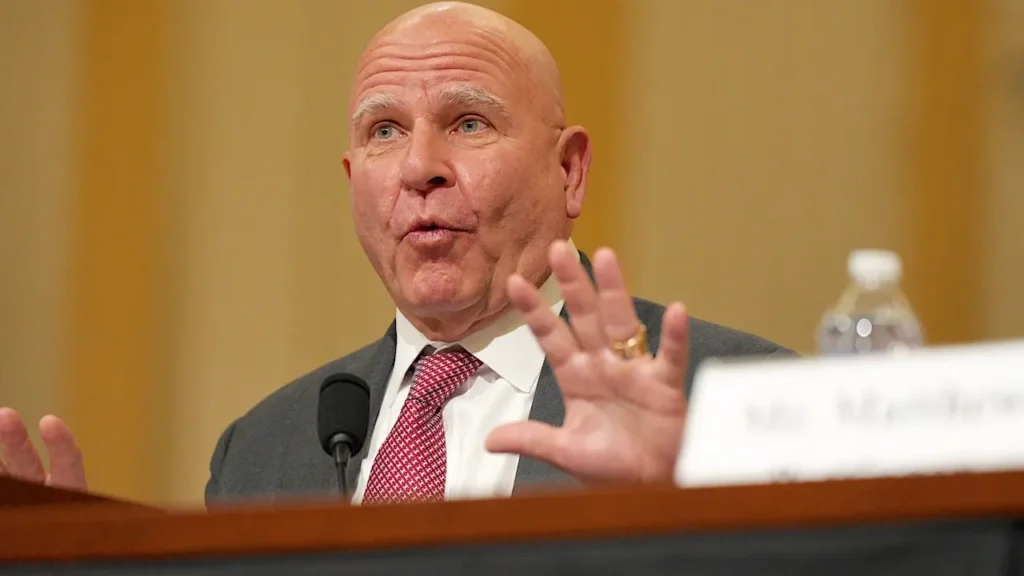
H.R. McMaster, who served as national security advisor during the Trump administration, told lawmakers Tuesday that America’s counterintelligence infrastructure has severely lagged in confronting threats from Beijing and Moscow. Speaking before the House Intelligence Committee during a hearing assessing how national security challenges have evolved over the past quarter-century since the Sept. 11 attacks, McMaster characterized decades of government policy as “extraordinarily negligent.”
McMaster’s testimony centered on the argument that counterterrorism consumed federal attention after 2001, allowing rival powers to exploit American vulnerabilities. He specifically highlighted Russian President Vladimir Putin’s ambitions to restore Moscow’s geopolitical standing and China’s integration into the World Trade Organization, which accelerated Beijing’s economic expansion and military modernization. China leveraged those advantages to develop intelligence operations and influence campaigns while enlisting U.S. technology companies and private equity investors to advance artificial intelligence projects for the People’s Liberation Army, McMaster stated.
The former official outlined a pattern of intellectual property theft and infiltration, accusing Chinese operatives and military-affiliated scientists of systematically extracting American technical expertise and know-how. McMaster further condemned U.S. financial institutions for investing in Chinese firms linked to military and cyber operations, characterizing such capital flows as “underwriting our own demise.”
Other witnesses corroborated McMaster’s assessment that post-9/11 institutions remain inadequately structured to address state-sponsored espionage and cyber threats. Seth G. Jones, a national security expert, noted that organizations like the National Counterterrorism Center and state fusion centers excel at information sharing but lack sufficient capacity to identify and disrupt government-backed operations within U.S. borders.
Frank Cilluffo, director of Auburn University’s McCrary Institute for Cyber and Critical Infrastructure Security, testified that counterintelligence strategy must evolve beyond traditional espionage concerns. Modern threats now target technology firms and infrastructure operators whose leadership never anticipated defending against foreign intelligence services, Cilluffo explained, calling for expanded coordination between government agencies and private industry.
The hearing represented a broader congressional inquiry into whether intelligence agencies can adequately address emerging threats including artificial intelligence, cyberattacks, influence operations, autonomous systems and economic coercion.
More Stories
Christa Pike Survives Botched Double Execution Attempt; Tennessee Halts Remaining 2026 Executions
Tennessee’s Lone Death Row Female is Scheduled for Execution Wednesday for 1995 Torture/Murder
Colombia backs Trump security push while limiting U.S. role in anti-gang operations