

💛 A quick favor, if you've got a second.
We're really happy that you chose to read one of our stories and sincerely hope you'll stick around to read more. We took our paywall down — for now — but that won't last forever, and when the gate goes back up, we'd love for you to already be on the inside.
It's free. So please enter your email here and don't forget to like and follow us on all of your favorite Social Media platforms!
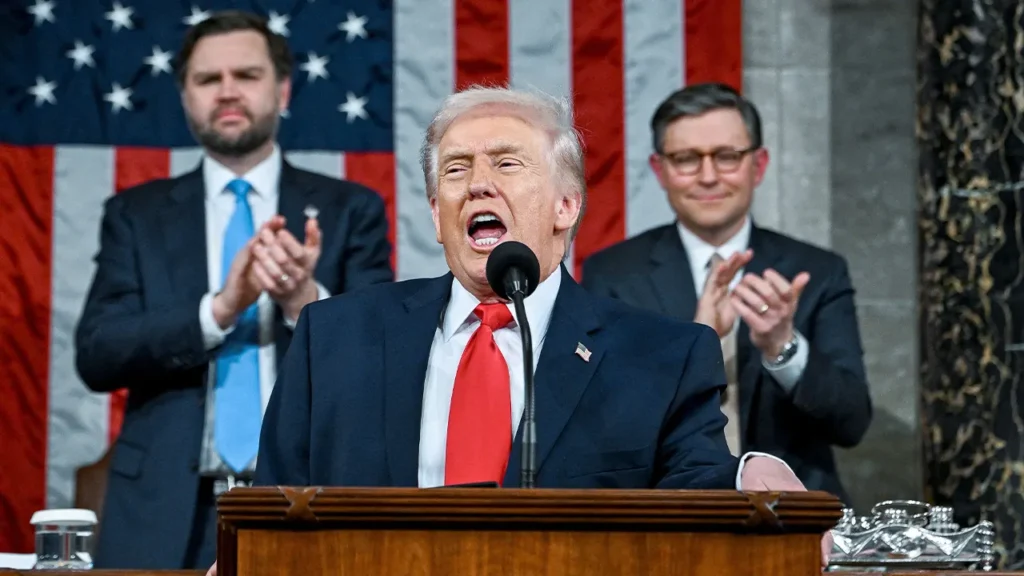
President Donald Trump is mobilizing support within House Republican ranks to advance the SAVE America Act through the budget reconciliation process, a legislative maneuver designed to bypass Democratic obstruction in the Senate. The national debt has surged to $39.5 trillion, prompting fiscal conservatives to question the bill’s proposed spending increases and demand corresponding budget cuts before they pledge their votes.
Speaker Mike Johnson of Louisiana is leading the effort to incorporate election integrity provisions into a broader reconciliation package, which would require only a simple Senate majority rather than the 60 votes typically needed to overcome a filibuster. The measure also includes approximately $73 billion in additional national security funding amid ongoing tensions with Iran and stalled diplomatic negotiations.
Trump took to Truth Social on Monday to personally urge all House Republicans to support the budget resolution this week, framing it as essential to advancing the SAVE America Act alongside aid for farmers and military funding. The president emphasized that the legislation would inject $95 billion in government spending through 2036 and called for party unity on the issue.
Resistance from the conservative flank has emerged swiftly, with Rep. Eric Burlison of Missouri declaring his opposition due to the absence of spending offsets and language defunding Planned Parenthood. Representatives Andy Ogles and Tim Burchett of Tennessee also expressed reservations about moving forward without identified payfors, though both indicated willingness to engage further with the administration.
The budget framework currently lacks any spending reduction provisions, triggering immediate alarm among deficit-conscious lawmakers who view additional expenditures without offsetting cuts as fiscally irresponsible. A senior House GOP aide cautioned that abandoning the payfor requirement would contradict years of warnings about fiscal crisis, calling such reversal politically expedient but substantively wrong.
Members of the House Freedom Caucus have signaled conditional support, insisting that the final legislation include the complete SAVE America Act without dilution of its core provisions on voter identification and citizenship verification. Some conservative members, including Budget Committee Representative Marlin Stutzman of Indiana, have embraced the reconciliation approach as a necessary trade-off between fiscal and election security concerns.
The SAVE America Act would establish a federal voter ID standard and require proof of citizenship during voter registration, provisions that have stalled in the Democratic-controlled Senate where the bill faces unified opposition. Democrats contend the measure constitutes voter suppression, making passage impossible through traditional legislative channels without Republican concessions.
Budget reconciliation carries strict parliamentary rules enforced by the Senate parliamentarian, a nonpartisan official charged with determining which provisions comply with existing chamber rules. House GOP leaders must navigate these restrictions while attempting to include election provisions historically considered outside the scope of budget legislation.

More Stories
Colombia backs Trump security push while limiting U.S. role in anti-gang operations
Former NFL cheerleader and ex-aide face off in close Rhode Island GOP primary
Trump Threatens FCC Action Against NBC’s Welker Over Endorsement Coverage